
New university admissions system for 2018
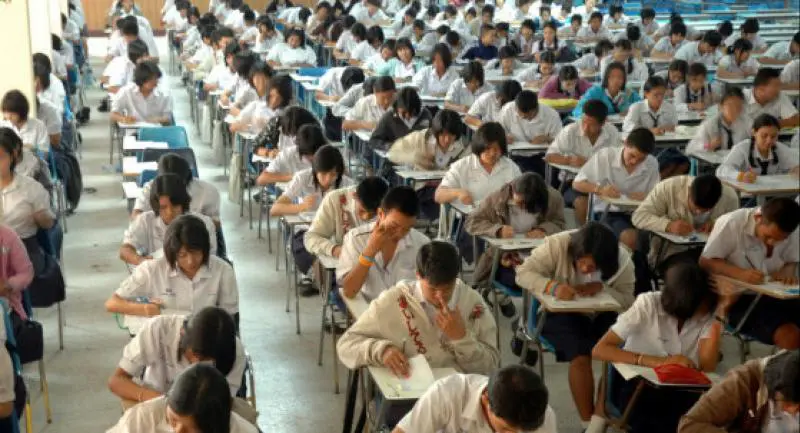


A NEW, streamlined university admissions system will take effect from 2018 – if approved by the government, the Council of University Presidents of Thailand (CUPT) said on Sunday.
It will incorporate systems for quotas, clearing-house and direct admissions.
Speaking as CUPT chairman, Mahidol University president Udom Kachintorn said the new system would solve the often expensive problem of students taking too many university entrance exams, as well as too much emphasis on tutoring schools rather than normal classes.
He said students would be able to apply for a quota system, with university places reserved for specific students such as those living in areas around a particular university or those having special abilities
“They will have to present their portfolio in the interview test for consideration to be selected,” Udom explained. “If they, however, decide on the university they are qualified for, they would have no right to apply for the clearing-house system and direct admission.”
He said students could also take the central exams for reserved seats in the quota system. The quota system will open from October to December.
If students failed to get a reserved seat, they could apply for the clearing-house system, which opens twice – in early May and then June.
“The clearing-house system would use scores from the central exams including the Ordinary National Education Test (O-NET), the General Aptitude Test (GAT) and Professional and Academic Aptitude Test (PAT), the nine ordinary subjects test, and specific subjects for the particular academic branch,” he said.
Under the new system, students would know their scores before submitting applications for four preferred universities. If not selected in the first round, they could apply for another four universities in the second round of the clearing-house process.
If students still had not decided on any university in the clearing-house system, they could apply for direct admission by universities.
“In the direct admission, universities are not allowed to use their own tests. They have to consider the candidate’s central exam scores,” he said.
O-NET, GAT and PAT exams had been retained for the new system, he said, because they reflected the real proficiency and knowledge of each student, according to CUPT research. However, schools should amend their teaching so students are capable of sitting the central exams, which they can take only once a year.
He said the proposals for the new system would be handed to Education Minister Dapong Ratanasuwan on November 9 for consideration.
