
Thai coronation ceremonies as varied as they are ancient
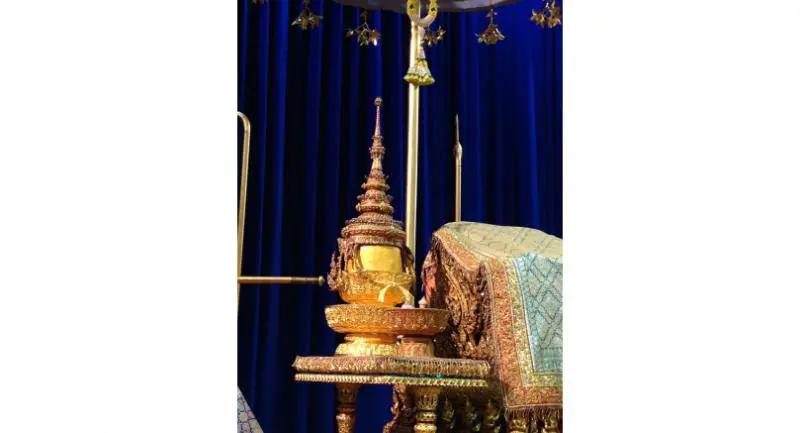


IT IS widely expected that the coronation ceremony for His Majesty King Maha Vajiralongkorn, or King Rama X, will not be held before the cremation of the late King Bhumibol Adulyadej in late 2017, and a date has yet to be announced.
Traditionally, a coronation is held, but not all Thai monarchs have gone through the ritual.
The coronation is a formal investiture of regal power. In Western cultures, the ceremony involves the placing of a crown upon the head of the monarch and the presentation of other items of regalia.
In the Kingdom, a coronation was held for the first time since the Sukhothai era for Maha Dhamaraja I.
A coronation in Thai culture was influenced by Hindu elements to demonstrate the King’s divine power. Initially, the coronation referred to ancient India’s Mahabharata epic, in which Hindu deities crowned the god Indra.
In the Rattanakosin era, there were plenty of Buddhist and Hindu religious elements in the coronation ceremony.
Many kings of the Chakri dynasty held coronation ceremonies for the formal investiture after an accession to the throne.
King Rama I, King Rama IV and King Rama V adjusted the details for their coronations in accordance with the circumstances of their respective eras.
King Rama IV allowed foreign guests to attend the grand audience while King Rama V commanded the audiences at the ceremony to stand up and bow, rather than the ancient practice of prostration.
After the 1932 revolution, which turned the absolute monarchy to a constitutional monarchy, a coronation was held on May 5, 1950 when His Majesty King Bhumibol crowned himself at the Grand Palace. While many of the royal and religious traditions in the ancient ritual were short and simplified, the occasion was still a model coronation ceremony.
King Rama IX famously said after his coronation: “We shall reign with righteousness, for the benefit and happiness of the Siamese people.”
King Rama IX’s coronation was also held for his consort to become Queen. After his coronation was completed, the late King conducted the ceremony for Queen Sirikit, anointing her with lustral water and elevating her to Queen.
