
State bodies in new bribe claim
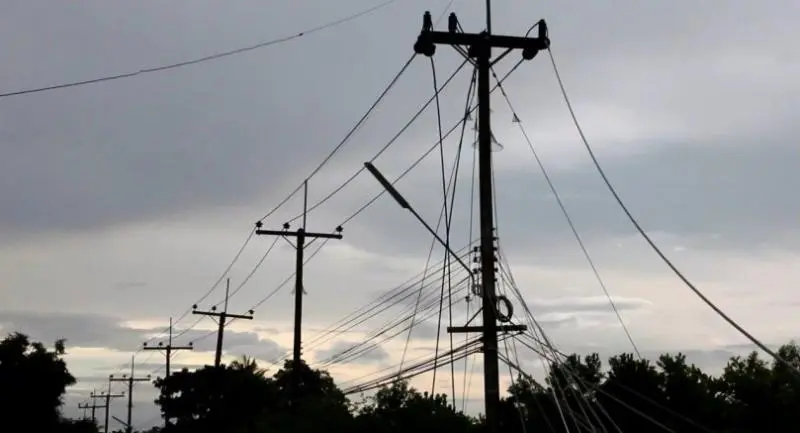


The MEA, PEA and TOT embroiled in US cable firm’s admission it made illegal payments in Thailand and other countries.
A NEW corruption scandal has hit three more state enterprises days after the national carrier, Thai Airways (THAI), was rocked by allegations that it was paid US$38 million (Bt1.3 billion) in bribes by UK aircraft engine-maker Rolls-Royce.
In the latest disclosure from the US Justice Department, Thailand’s Provincial Electricity Authority (PEA), Metropolitan Electricity Authority (MEA) and TOT Plc were named as agencies that received bribes from US-based General Cable for the sale of cables and wires to Thailand from 2002 to 2013.
In response to the disclosure, PEA governor Semsakool Klaikaew said yesterday the authority’s board had set up a committee to gather more details on the alleged bribery case.
The PEA has also asked the Justice Ministry to have a representative join the committee, which is due to conclude an initial investigation within 15 days, and seek more details from the US Department of Justice on the case.
“We still don’t know exactly which projects were involved in the case. We need more details,” he said.
Semsakool said the PEA places orders for electric cables every year and follows government procedures and regulations. One of the conditions for the procurement of electric cables is that they must be locally produced.
According to the US Department of Justice’s statement on December 29, 2016, General Cable Corp of Kentucky made a non-prosecution agreement to pay $20 million in penalties for improperly paying government officials in Angola, Bangladesh, China, Indonesia and Thailand to gain business.
This violated the US Foreign Corrupt Practices Act (FCPA).
General Cable to pay $20m fine
General Cable has admitted that some parent and subsidiary-level employees, including executives, knew that some of its foreign subsidiaries used third-party agents and distributors to make corrupt payments to foreign officials in order to obtain and retain business.
In one case, the foreign subsidiary allegedly paid bribes directly to foreign officials in 2002. General Cable has admitted that these illegal payments were discussed openly in emails.
“For example, in June 2012, a sales agent in Bangladesh emailed an executive and other employees of General Cable’s subsidiary in Thailand and said that a portion of the money that the Thailand subsidiary paid the sales agent would 'be shared by decision makers in [the] customer, concerned higher ups in [the] Ministry and some top executives at [the] bidder’,” it said.
The US document also shows that bribes were paid via a distributor who received excessive rebates, which were then used to facilitate the corrupt payments.
The rebates included more than $1.5 million paid to the Thai distributor with the understanding that the distributor would use the money, in part, for corrupt purposes in association to sales made to state-owned customers in Thailand.
TOT president Montchai Noosong said his agency would also conduct an internal investigation into this allegation pending further details from concerned authorities.
Earlier this month THAI became embroiled in a separate bribery scandal, in which about $38 million was paid by Rolls Royce for the sale of aircraft engines to the national carrier from 1991 to 2005.
The National Anti-Corruption Commission (NACC) is seeking evidence from its UK counterpart on this matter in a bid to pursue legal and other actions against those involved in receiving the bribes.
NACC chairman Pol General Watcharapol Prasarnratchakit, said the US Justice Department had already provided more information on the THAI case, and that a subcommittee would be set up to look into it further.
