
Patients waiting for organ transplants face shortages
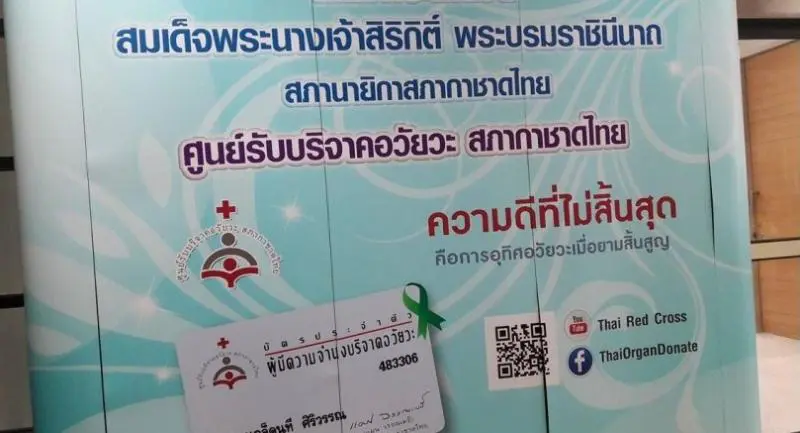


THOUSANDS of patients in Thailand are now on a life-or-death waiting list, praying every day with their family members for an organ transplant.
Despite increasingly advanced medical technology, their vital surgeries cannot take place without an act of kindness from fellow humans.
“One organ donor can give a new life to up to seven people,” Organ Donation Centre director Dr Visist Dhitavat said.
Established in 1994, the centre has recently tried to raise public awareness of the waiting list and encourage organ donations.
On Saturday, the centre organised a series of activities to mark the importance of organ donations. But perhaps the media coverage was greater a week earlier when a mother agreed to donate urgently needed organs from her brain-dead son.
Brain-dead is entirely different from a vegetative state. When a brain is dead, the brain stem has already stopped functioning and patients will not respond to any stimuli.
“I am sad that my son died. But I am partly happy that his heart saves other people’s lives and that his heart is still beating somewhere,” Yong Sirisuk said.
Her 14-year-old son suffered serious head injuries on March 17. Despite the efforts of surgeons, he was declared brain-dead a week later, which was when Yong knew organ donation was possible. “I think the donations will mean huge merit for my son. As his body will have to be cremated anyway, I have persuaded my mum and my relatives to agree to organ donations,” Yong said.
Visist said if family members did not give consent, it would be impossible to transfer the organs to patients on the waiting list.
“This rule applies even to cases where the brain-dead persons have declared an intention to donate organs,” he said.
His centre has therefore sought collaboration with various agencies in an attempt to raise public awareness and understanding of how organ donations can breathe a new life into ailing and suffering people.
“We have allocated organs to patients who need them the most. The allocations are fair and transparent,” Visist said. Over the past 23 years, more than 850,000 people have declared their intention to donate organs to others on death. In 2016 alone, up to 9,241 people came forward to express their wishes. Although the number of people willing to donate organs is not small, it is far lower than demand, given that only a small percentage of willing persons will be in a situation in which organ donations can take place.
“People who have registered for organ donation have usually taken good care of their health in the hope that their organs will be good. They want to be useful. Their good healthcare is good for them too. Most have had a long life,” Visist said. Last year, his centre registered just 220 organ donors and allocated organs to 512 patients. According to strict rules on anonymity, organ beneficiaries and their families will never know who the donors were to prevent any problems that from arising.
“We need to ensure there is nothing that can turn an organ donation into an organ sale. It’s best donors and receivers never know each other,” Visist said. He said the Thai Red Cross Society, which oversees his centre, had shouldered the expenses of organ donations while recipients handled just their own medical costs.

The Provincial Administration Department and the Land Transport Department have also contributed to the promotion of organ donation. Today, it is possible for people to declare via their national identity cards and driving licences an intention to donate their organs in the event of becoming braindead.
