
Winai warns healthcare will be ‘distorted’ by changes
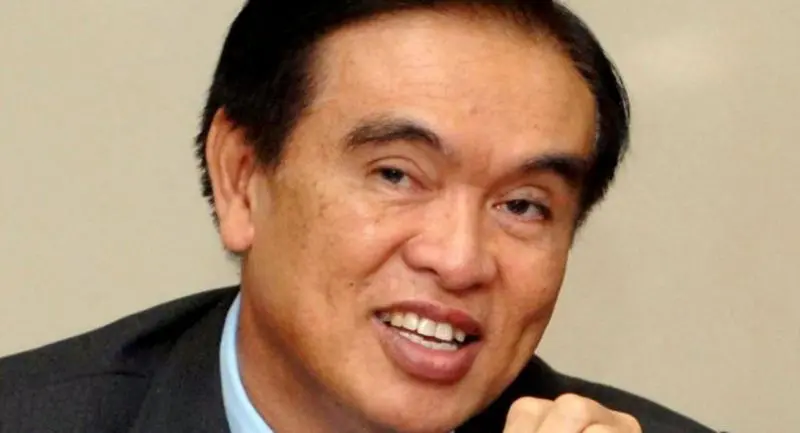


Former NHSO chief says govt needs to understand that a healthy population is good for the country as a whole.
ONGOING efforts to amend the National Health Security Act will distort the universal healthcare scheme, but should not bring about its abrupt end, according to the man who oversaw the scheme for nearly eight years.
“The essence of the scheme will be affected,” Dr Winai Sawasdivorn said in a recent interview. “Probably it’s a result of my failure in not being able to convince the government that it’s worth investing in people’s health.”
His comments came as the National Health Security Bill, which looks set to significantly affect the scheme, has reached the stage of public hearings.
The bill has raised concern about the future of the scheme, which was launched 15 years ago initially under the banner of the Bt30-per-medical-visit programme.
Winai had to leave the helm of the National Health Security Office (NHSO) under a junta order in 2015, after he clashed with several high-level health officials and prominent doctors over the scheme’s management.
Several doctors and officials affiliated with the Public Health Ministry did not agree with NHSO management. While the NHSO is in charge of managing the universal health scheme, its operations are mainly handled by state hospitals under the ministry’s supervision.
“You may criticise the NHSO, as critical comments can be used to improve the scheme,” Winai said. “But you should not try to undermine the NHSO and the scheme it has tried to defend. Without the NHSO, the scheme might have collapsed a long time ago.”
The universal scheme now offers most kinds of medical services to about 48 million Thais for free.
Winai said if the scheme was distorted, things might go back to the old days when only people described as “destitute” could receive free treatment. But several groups of academics and medical workers have campaigned for the National Health Security Act to be amended, warning that without change, the country will suffer because of the huge financial cost of the scheme.
Several doctors have also complained that the scheme has hit the quality of medical service in Thailand. In their eyes, the NHSO set up criteria and rules that were not practical.
“There are many medicines that doctors cannot prescribe to patients because they are not on the drug list authorised by the NHSO,” Dr Yong Poovarawan, from Chulalongkorn University’s Faculty of Medicine, wrote on Facebook.
He said patients also had to undergo a complicated and sometimes impossible referral process.
“I also need to emphasise that today Cambodia now offers more free vaccinations for children than Thailand,” he said. Supporters of the National Health Security Bill and changes to the universal healthcare scheme believe co-payments should be introduced.
Yong, for example, said overall medical service quality would improve if people agreed to pay for services they could afford.
Winai, however, said it was hard to determine who exactly should be entitled to free treatment.
“The people who are rich today may become poor tomorrow,” he said.
Winai and advocates say the current scheme was good in that it gives people the right to medical treatment, which meant that people were not forced to beg for treatment.
In Winai’s opinions, state hospitals should not complain about financial losses from universal healthcare.
“State hospitals are established to take care of people’s health,” Winai said. “Human resource are important. The government should understand that having a healthy population is good.
It’s well worth spending money to maintain people’s health”.
Aids Access Foundation head Nimit Tien-udom said he was worried about the National Health Security Bill’s stipulation that would boost the number of medical-service provider representatives on the National Health Security Commission.
This raised fears that the commission could in the future side with hospitals rather than patients.
Dr Thira Woratanarat, a lecturer at Chulalongkorn University’s Faculty of Medicine, recommended that the scope of free medical services be made clear via public participation to ensure the public’s acceptance.
