
Yingluck may seek asylum
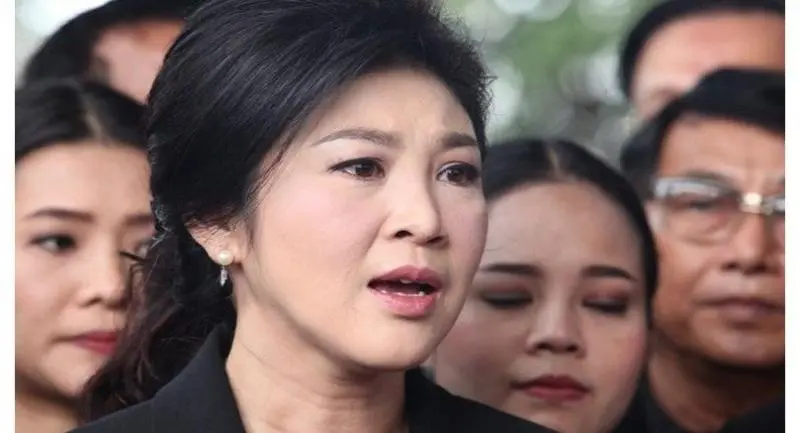


PRAWIT CANNOT CONFIRM REPORTS THAT EX-PM IS |IN LONDON; POLICE SEEK REVOCATIONJ OF PASSPORTS
POLICE HAVE begun the process of revoking convicted former prime minister Yingluck Shinawatra’s passport as confusion continues to surround her whereabouts.
Deputy Prime Minister Prawit Wongsuwan said: “I don’t know [if Yingluck is in London].”
He added that the Foreign Ministry had not given him any updated reports of Yingluck’s whereabouts, although it has been reported in foreign media that she has left Dubai and is now in London.
On Thursday, Prime Minister General Prayut Chan-o-cha said that she was in Dubai.
Dubai is a convenient place for her since her brother, former premier Thaksin Shinawatra, is living there in self-exile.
Junta leaders also said the United Arab Emirates had promised to prevent her from taking part in any political activities against the military government.
However, while authorities acknowledged Yingluck’s location as Dubai, anonymous sources have consistently suggested that the former premier had left Dubai for London in early September.
Yingluck was sentenced in absentia on Wednesday to five years’ imprisonment for her negligence in the government-to-government rice deal. She disappeared from public view in the days before August 25, when the verdict in her case was due to be read.
Three police officers have been transferred to inactive posts for their involvement in transporting Yingluck to the Cambodia border.
Police have also charged two Nakhon Pathom police officers who were found to have aided Yingluck’s flight on August 23.
None of the police officers have been charged with malfeasance of duty. They are accused of importing a car without Customs approval, as an engine number of a Toyota Camry believed to have been used in transporting Yingluck, did not show in the Customs Department’s records.
One of the officers, Pol Colonel Chairit Anurit, has been charged with faking vehicle documents, as four false licence plates were found in the sedan.
On Thursday, police searched Yingluck’s house in Soi Yothinpatthana 3 in Bangkok, and seized 17 of her personal belongings as evidence.
The evidence should help verify Yingluck’s escape if traces of her DNA found on the articles match those found in the sedan allegedly used for the escape.
In order to prevent Yingluck from further travel, deputy police chief Pol General Srivara Ransibrahmanakul said yesterday that police have contacted the Foreign Ministry and asked it to revoke her passport and to confirm to them her whereabouts. Police have also contacted Interpol to locate her, Srivara said.
The Foreign Ministry yesterday declined to confirm Yingluck’s location or whether she had sought political asylum.
The British Embassy in Thailand said “the [UK] Home Office does not comment on whether an individual is in the UK or not”.
Thaksin and his family are now in London where he has a Bt260-million house, but none of them indicated whether Yingluck is also in the UK capital.
A legal source said that an individual has full rights to seek political asylum in a destination country that he or she has some connections with.
The host country might take diplomatic relations into consideration, he said, noting that the country has the full authority to grant or reject an application.
Yingluck’s case is not unique, the source said. “Like others, she may apply for asylum at any time and the destination country will have full authority to directly consider her request,” he said.
As asylum seeking is regarded as a personal matter, authorities of seekers’ home countries usually do not involve or oppose the procedure as it could risks diplomatic ties, he said.
The Office of the Attorney-General has no authority to get involved if Yingluck seeks asylum, but will focus on extradition. The extradition request would proceed once Yingluck’s exact whereabouts is known, he added.
The British Embassy says asylum seekers to the UK must have left their countries and be unable to go back because they fear persecution.
They should apply when they arrive in the UK as soon as they think it will be unsafe for them to return to their own countries. After applying, they will have meetings with immigration officers and have interviews with caseworkers. They should usually get a decision on their applications within six months. They will not usually be allowed to work while their asylum applications are under consideration.
