
Gay couple tells how love trumps HIV
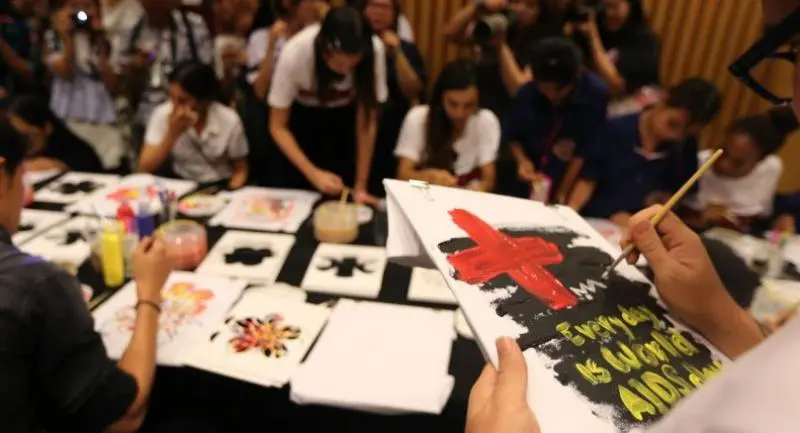


Stigma in society is more harmful than the illness, some sufferers say.
“WE DO everything other couples do,” said one of the partners in a gay relationship as they discussed their love life while living with HIV.
At first glance they seem just like any other loving couple. They were young, healthy and happy but they have a secret known only to a tight circle of their close friends – one of them is infected with HIV.
The couple, who asked to keep their identities confidential, introduced themselves as Peter and Paul. Peter is an employee of a big company, while Paul, who has HIV, runs his own business. They live together in a condo at the heart of Bangkok and are publicly open about being lovers.
“We share the same bed, eat and drink together. We kiss and make love just like other people,” Peter said in a quick synopsis of their love life. “I just have to remind him every day to take antiviral medicine.
“I don’t feel worried dating someone who has HIV, because the doctors confirmed that it was fine. HIV is not so scary and infectious as many people think – and the main reason is I love him.”
But how did they react after they discovered that Paul had HIV? At first he was shocked, said Peter, but he kept calm as he knew that HIV was not highly contagious. He later had his blood tested for HIV and consulted a doctor.
“The doctor said as long as my partner keeps taking antiviral drugs, there is a very, very low chance for me to get the virus. I was relieved by the confirmation and went on with our relationship as normal,” he said.
Paul admitted that he was initially scared to tell Peter about his illness.
“I was afraid that if he knows that I have HIV he will leave me. But I could not hold out on this secret to my lover. I am so thankful for his understanding, because not many people have this understanding and they would treat me differently if they knew this truth,” Paul said.
The stigma of being infected with HIV is still severe in Thai society, said Paul and it would destroy his reputation and life, despite the fact that HIV can now be controlled.
“Having HIV does not mean that it is the end of your life. I can still keep my health strong and continue daily life just like before, but the stigma and misunderstanding of the public about HIV is killing those who live with HIV. This is a more serious threat than the virus itself for the people who live with HIV,” he said.
Though there is now no known cure for HIV, Peter said he believed in the next few years HIV would become curable.
“For now, love is the best cure for HIV,” he said. “Paul is not sick in my eyes, as love wins over HIV.”
Peter and Paul appear to be on the right track, based on the medical knowledge shared by Dr Nittaya Panupak of the Thai Red Cross Aids Research Centre.
“There is nothing to worry about living with someone who has HIV, as long as they continue antiviral medication they can live a normal life and have a long life expectancy,” said Nittaya, chief of the Prevention Department at the Centre.
“We should not fear the people who already know that they have HIV and already receive medication, because the antiviral drug is keeping their viral load low, on a level where they cannot infect anyone even by having sex without protection with them,” Nittaya said.
“Therefore, the partner who has HIV can have a normal love life and have a family just like the other partner. They can even have children without the baby getting infected with HIV.”
She suggested that people should control any unrealistic fears they might have about a person who has HIV. Instead, they should focus on not having unprotected sex with someone who does not know whether or not they have HIV.
Also, Nittaya said everyone should have their blood tested at least once a year to ensure they have not been exposed to the virus.
Note: To mark World Aids Day on December 1, The Nation has prepared a three-part series: The first features Dr Prakong Vithayasai, the second addresses Thailand’s goal to “End Aids” by 2030, and the third covers the life of a same-sex couple in which one partner is HIV-positive.
