
Moderate Party takes political middle path


AFTER MORE than a decade of deep political division and politicians primarily being blamed for all that is wrong in the country, many people believe there is no hope in politics.
But that may be changing now that new faces are lining up to take matters into their own hands, vowing to make the country progressive.
As soon as the ban on political activities was eased and the registration of new political parties was allowed two months ago, Thai politics has seen fresh energy.
The Future Forward Party is in the spotlight with an image of youth and progressiveness. But Thailand has also seen a newcomer called the Moderate Party, which pledges to offer a solution to the conflicts plaguing the country.
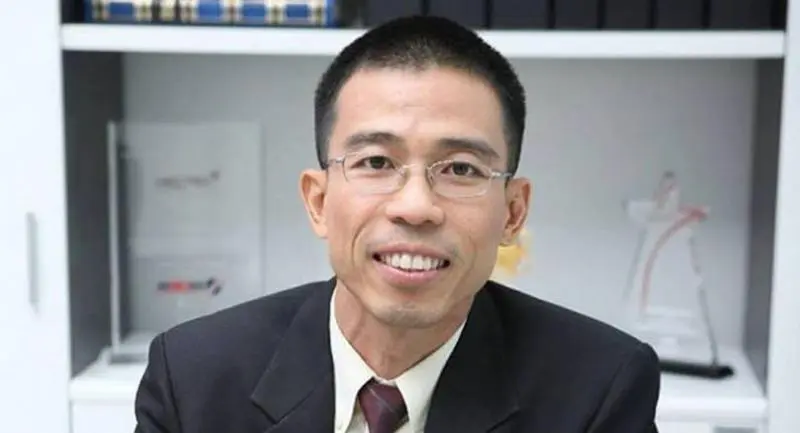
“Good people try to stay as far away from politics as they can, because politics is a bad word now,” said the party’s co-founder Chumphol Krootkaew, a former prominent research scientist and an ultra marathon runner who made a sharp turn to join politics.
“So, I want to do this to set an example that we all can be politicians, no matter how distant from it we may seem. I want people to look at politics again and see that it is a good thing.”
Chumphol said that after finishing an adventurous running programme in Nepal last year, he found pushing the limits could go beyond conquering himself. So, he thought about doing something for the greater good, he said.
The elite runner also has a close relationship with a co-founder of the most talked-about party, Future Forward, Thanathorn Juangroongruangkit, who also has a heart for extreme and adventurous activities.
Chumphol said the billionaire and his political ambition in part inspired him to come into politics. However, he decided to take a separate path and set up a party on his own, not join Thanathorn.
“I see that the moderate approach to be adopted by the Moderate Party fits better with me,” Chumphol said. “While Thanathorn is an aggressive progressive, I lean more towards the moderate progressive spectrum.”
He went on to say that studies had found that moderate parties were actually the solution to countries divided into strong left and right wings, and were successful in many countries as a medium to link people with different ideologies together. Chumphol also said he thinks he has a solution for Thailand.
“To be a moderate party, one of our key values is that we respect everyone’s beliefs and decisions. We will not try to change anyone. There’s no use,” he said. “We’d rather step over all these conflicts and put our time and energy into developing the country. When this works out, people will change accordingly.”
The party accepts people from rival political colours, yellow or red, Chumphol said. So long as they were willing to move the country forward, they were welcomed, he said.
While all this may sound too good to be true to some people, the scientist-turned-politician insisted that such a goal was achievable, especially with the help of technology.
The Moderate Party is the first party in Thailand to pledge full utilisation of modern technology in the decision-making process in politics. “Direct and liquid democracy”, Chumphol called it.
Referendums can be held as many times as necessary when everyone can vote via a smartphone or a computer, he suggested. Better yet, if voters could also opt to assign experts in a field related to each issue to make a decision on their behalf, too, he said.
Despite such a scheme that could overturn politics and the role of the members of parliament in decision-making, Chumphol said the party did not have ambitions for power and actually would not mind losing an election.
“The national interest is our first priority. The sustainability of the party is the second. And winning an election is actually the third,” he said. “So, we’re not here to just win an election. We aim more at making the country and our party better. And we hope that when we accomplish that, winning an election will come naturally.”
