
Stirring up controversy


Play
The sensual Islamic fashion outfit called "jilboobs" has brought condemnation from religious scholars and a subsequent backlash from more liberal sectors of society in Indonesia
An attempt by religious authorities to bar the practice of wearing headscarves with tight clothing has sparked a controversy in the world’s most populous Muslim-majority nation.
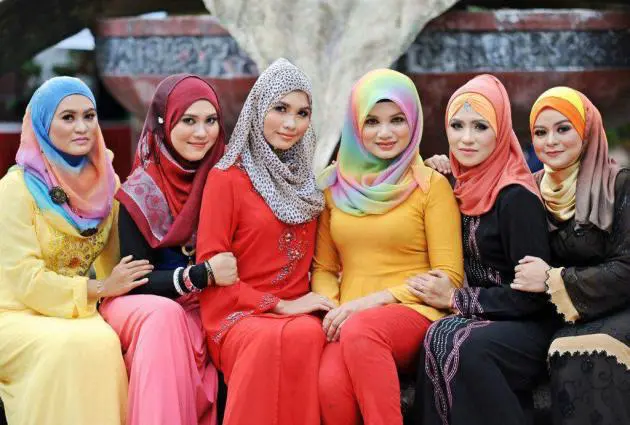
More and more women in Indonesia are adopting the Muslim headscarves, known in the country as jilbab or hijab, but some choose to combine them with clothing that accentuates breasts and bottoms.
The phenomenon of mixing Islamic modesty and Western-style fashion has come to be known, somewhat derogatorily, as jilboobs – a contraction of the jilbab, and the common slang for breasts.
The Indonesian Council of Muslim Scholars, a semi-official authority on Islam in the country, declared last month that wearing Islamic headscarves with tight garments was forbidden.
“We appreciate women who have decided to wear the jilbab,” council deputy chairman Ma’ruf Amin said. “But some of them choose to cover their heads and reveal other sensual parts,” he said. “The council strictly forbids that.
“Fatwas, or any other declaration by the council, are not binding and are often ignored by Indonesians. Reactions among Indonesian women to the declaration varied, from support, to anger, to comical criticism.
“Don’t they have anything better to do rather than comment on people’s fashion choices?” said Rahma Laela, a 26-year-old headscarf-wearing shop attendant at a glitzy Jakarta mall, where women wearing tank tops and hot pants are a common sight. “We women also want to look fashionable,” she said.
A Facebook page dedicated to posting photos of women wearing jilboobs has nearly 39,000 likes. One photo shows a woman wearing a headscarf and a body-hugging T-shirt with a sign that reads “Boy friend wanted!!”
Feminist writer Julia Suryakusuma condemned the council's “knee-jerk” reaction, and said jilboobs “are simply the convergence of trends toward religiosity with globalisation ... a fashion trend. But it is a trend that should make Muslims think more deeply about the rules they abide by,” she argued in a newspaper commentary titled “A storm in a D-cup!”
“Hardly anyone asks any questions, when in fact many could – and should. Why and by whom were women told to wear jilbab/hijab? What’s the history behind it?”
“For me, jilbab all too often stands for little more than the superficialisation of Islamic precepts, the hypocrisy of many Muslims, and even the idolising of a rule that may not even be a rule at all,” she said.
Indonesia has seen an increase in the number of women wearing Islamic dress since the fall of dictator Suharto in 1998 ushered in a democratic era. Some analysts attributed the phenomenon to rising Islamic conservativism. In recent years, a new breed of designers seeking to blend Islamic modesty with cutting-edge style has emerged in Indonesia, as part of a government campaign to turn the country into a global hub of Islamic fashion.
More than 85 per cent of 240 million Indonesians are Muslims, but the country is relatively secular.
Asma Nadia, a Muslim writer and manager of the Lingkar Pena publishing house, said the controversy over jilboobs should be a wake-up call to observant women.
“Muslim women who have decided to cover up should consider improving their outfits,” she said. “Following the Islamic dress code should not mean staying away from fashion,” she said. “Fashion and modesty can go hand-in-hand, as long as modesty is the priority.”
