
Cardinal's plea for religious tolerance


Play
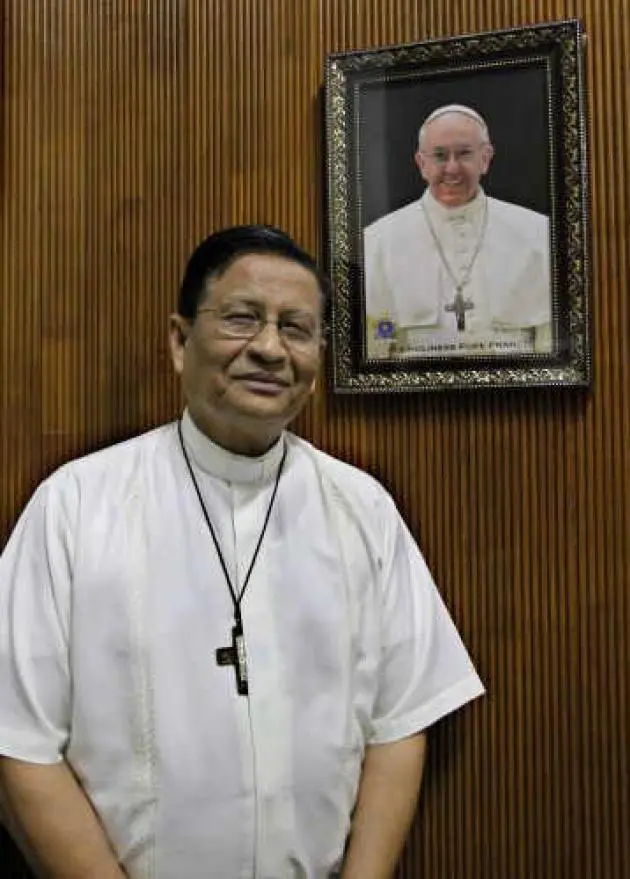
YANGON - Myanmar's first cardinal said Tuesday he would push for an end to sectarian violence in his country, two days after he was elevated to the heights of the Roman Catholic Church.
The Buddhist-majority country's first Catholic cardinal warned that religious extremism could derail Myanmar's much-vaunted reform process.
Charles Maung Bo, 66, was promoted to cardinal on Sunday by Pope Francis alongside 19 others. Many hail from the developing world as the Vatican's support shifts from its traditional European stronghold.
Overwhelmingly Buddhist Myanmar has seen a spate of communal unrest in recent years, particularly in the states of Rakhine and Kachin.
Bo called on religious leaders of all faiths to help ease tensions.
He warned that Buddhist nationalism directed against minority Muslims could drive the latter to connect with international extremist groups that would "retaliate".
"So far they have been more on the quiet side, but if they come with the force of an international community of Muslims, then violence, terrorism, suicide bombers and all these things could happen," Bo told Reuters in an interview at the red-brick cathedral in downtown Yangon, Myanmar's largest city.
Myanmar's minority religions have looked on with alarm at growing instances of intolerance from a small but increasingly vocal core of Buddhist nationalists.
Overall, Christians are thought to make up about 3 per cent of Myanmar's 51 million population - around 750,000 of them Catholics. Muslims make up another four per cent and Buddhists around 90 per cent, with other religions including Hinduism and animism.
Bo warned there were no quick solutions to solving the country's religious tensions.
"Although the problems of religious conflict cannot be solved immediately, I believe that we can solve these problems if we continue trying with noble and good spirit."
"If religious leaders show unity, their followers will gradually gain greater understanding and I think the violence will then lessen," he told AFP from his office in St Mary's Church in Yangon.
"I will make a strong effort to achieve stability in Rakhine and Kachin states where there has been unrest among different ethnic groups," he added.
Bo called for mutual understanding and urged the government to do more to curb hate speech by radical monks.
Myanmar emerged in 2011 from half a century of military rule, and the semi-civilian government has lifted curbs on freedoms of speech, association and media.
But the reforms have been accompanied by a rise in Buddhist nationalism, with monks forming groups aimed at promoting the country's Buddhist character.
Sectarian violence since June 2012 has killed at least 240 people, mostly Muslims, while almost 140,000 Muslims remain in displacement camps after their homes were destroyed.
Bo said he was optimistic about Myanmar's reform process, but warned that the military could again seize control if the peace process failed and sectarian violence continued.
"We hope that chaos won't happen," he said, calling on the military to make greater efforts to build trust with ethnic armed groups, and for more monks to speak out against extremism.
"For peace in the country the Buddhist monks also have quite a major role to play too," said Bo.
Francis appointed 20 new cardinals, 15 of whom will be eligible to vote for the next pope. It was the first time cardinals from Myanmar, Tonga and Cape Verde were appointed and the appointees from all three nations are electors.
