
Occupy within


Play
Easing into the household archaeology of another in a New York sublet
Having left New York in 1972 and travelled across the Atlantic and Pacific, down the Mississippi, the Tiber, the Thames, the Rhone, the Chao Phraya, I found myself late last year back for a lengthy sojourn in an apartment on the East River.
Like many expats who move around, I have never fully dealt with my own designs on the private lives of an array of unknown people from whom I have rented furnished apartments for more than three decades.
A digger by nature, I have held to a self-imposed honour code in most furnished rentals: touch only the surface layer – what is needed for daily life and no more. And there’s never been much temptation until a few months ago when I rented a sublet in the Big Apple.
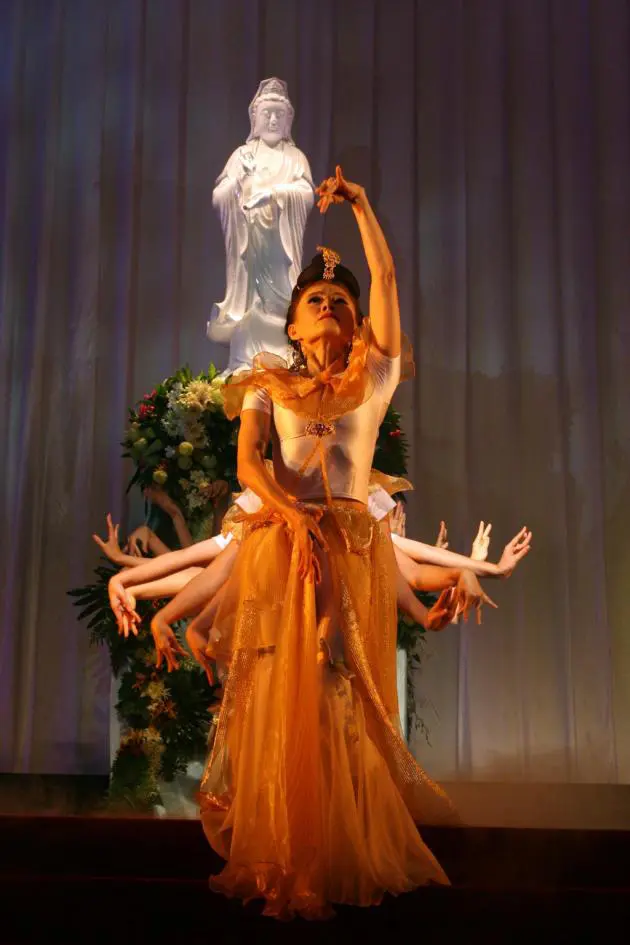
First impressions are important and I was pleased to spot a bronze of Kuan Yin, Chinese bodhisattva of compassion and forgiveness in the shadowy lobby of the apartment we finally secured.
As soon as I stepped across the threshold of No 8 A-L, sublet through an agent from a woman named Laura Palmer, I felt as if I had been invited to Occupy Within. The day was bright but the apartment, in the anterior of a post-war building on East End Avenue, was womb-like.
Imagine being suddenly transported to a domestic ambience that might have been conceived by a 15th-century cartographer. My eye moved from the long raspberry divan, adjacent to a massive antique trunk, to a terracotta Buddha, until I was taken up by a signed lithograph by Christo.
Laura Palmer’s dimensions were incarnated under cover of her household furnishings and personal objects. She was clearly a generous spirit who had learned along the road to trust the inquiring eye of strangers. “It looks as if she left herself here,” a friend observed. The apartment was filled to the brim with file boxes, sepia prints, CDs and record albums, antique French posters, stacks of well-used cook books and an extensive personal library that spilled out of every bookshelf.
A chrome Emmy Award stands atop a shelf in her apartment office. The inscription indicates that Laura Palmer received the prize in 1999 for her collaborative role as a freelancer, among a number of other contributors, on continuing NBC coverage of the war in Kosovo. She was an independent producer whose life had been transformed by the horrors of war, as I was to discover.
Palmer was one of the few women reporting from the front line during the Vietnam War, staying in Southeast Asia from 1966 until the fall of Saigon in 1975.
After her return and a sojourn in Paris, Palmer consciously stayed away from war zones. “Somehow I knew that I had to create a life from love and not from war. I wanted roots that went down to the source of water,” she wrote. She set out to help those who sought healing from painful memory – giving editorial shape to voices of victims of sexual abuse, of extreme fundamentalism, and the deeply grieving, in the wake of Vietnam. Her 1988 book “Shrapnel in the Heart” (1988) tried to palliate some of its scars, as she let the mourning speak of that war’s toll in the first person. She had also launched a syndicated newspaper column “Welcome Home” as a sounding board for Vietnam vets, their wives, families and friends.
Palmer’s mindful presence was evident everywhere in the apartment – in the video cassettes of a host of engaged individuals she had interviewed for TV productions and in the wide-range and depth of her intellectual and spiritual reading, both classic and contemporary. This library tempted me and I indulged, feeling a special kinship of thought. The protagonist of a borrowed novel could have been describing her: to know a woman’s library is “in some measure to know her mind. And this mind was noble in its reach, wide in its interests, discerning in its tastes,” the author rightly observed.
The room occupied by Palmer’s daughter down the hall echoes with board games and books including one in which she had inscribed, “To Mom, Who loves Vermeer. Happy Birthday from S.”
While standing before a Vermeer masterpiece at the Metropolitan Museum a few days later, I understood the complex appeal of Palmer’s Manhattan sublet.
When I enter her interior space I feel a Vermeer-like quality of intimacy, of whispering stillness at immediate remove from the bustling city. I am visually drawn inward by the shadowy light, the tactile qualities of furnishings, by a door ajar leading into partially disclosed spaces. Vermeer hints that this poetic interior has a subtext or maybe multiple narratives. “Pay attention,” he enjoins the spectator, with a playful twist of irony for the lovely maid or mistress dozes and her private life forever eludes.
As does Laura Palmer’s. After my wistful departure, the apartment will be completely renovated. The mille feuille of her domestic memories will probably be dispersed, with personal effects carted away to a new abode. Books that I was given here and other bits and bobs will collect dust elsewhere. This homey vessel has harboured family and friends as well as artists and activists from all over the world; we will all have moved on.
But Kuan Yin will preside on a plinth in the lobby. For me, she stands as avatar of Laura Palmer – the embodiment of her absence that occupies me.
Maryvelma Smith O'Neil is the author of “Bangkok: A Cultural and Literary History”.
