
The Peranakan renaissance
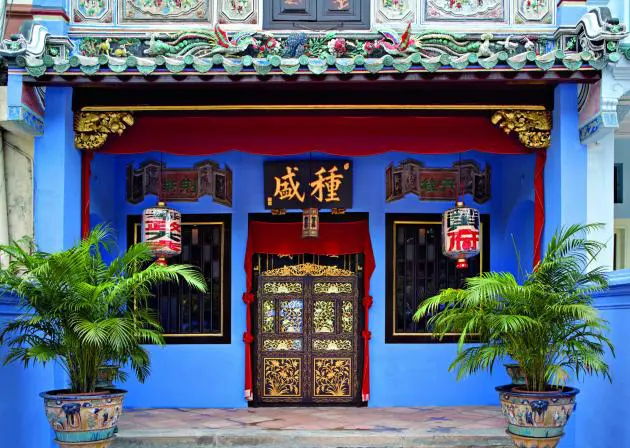


Elaborate villas from Malacca to Phuket share the inspiring stories of occupants who struggled and thrived
The Peranakan Chinese Home: Art and Culture in Daily Life
By Ronald G Knapp
Photography by A Chester Ong
Published by Tuttle
Available at Asia Books
Reviewed by Manote Tripathi
The Peranakan culture, which once thrived across Malaysia and Indonesia and extended as far as Phuket, is enjoying a renaissance as people rediscover the time-honoured charms of places like Malacca, Penang and even thoroughly modern Singapore. Ronald G Knapp documents an interesting aspect of it in his book “The Peranakan Chinese Home”.
Peranakan writers voiced concerns at the Singapore Writers Festival in November about the uncertain future of their mixed Chinese-Malay heritage. Josephine Chia, Walter Woon and Desmond Sim lamented the waning interest among youth in having Malay as a second language, or otherwise preserving their parents’ legacy.
Peranakan people (the term is Malay for “locally born”) should be able to speak Malay, they pointed out. The Peranakan Chinese are Chinese born in Southeast Asia, in the Straits Settlements of Malacca. They are descendants of early Chinese migrants and traders who escaped famine and impoverishment in southern China and, dating back to the 17th century, settled and married local women in the Straits Settlements.
The Peranakan boast a rich hybrid of southern Chinese and Malay traditions that flourished under the British administration of the Straits Settlement and British Malaya in the late 19th century and early 20th centuries. They were loyal to the British rather than China during the colonial period. Their communities were associated with wealth and influence, and can still be found in Singapore, Malaysia and Indonesia, as well as in Phuket.
To outsiders, they are “Chinese who are not Chinese”. Some call them “Chinese who dress up as Malays”.
The Writer’s Festival drew a group of nyonya – Peranakan women – clad in traditional nyonya kebaya. The modern Peranakan is often foreign-educated, speaks English as well as Malay and engages in what the visiting authors called “cascading snobbery” – they look down on newcomers, who in turn denigrate newcomers from elsewhere, such as Indians.
These days it’s easy for their children to claim they are Peranakan even if they’re Christian and speak English instead of Malay or the Hokkien patois. They make the claim because of the heightened interest in all things Peranakan.
Peranakans have formed associations to promote understanding of their culture – including the wealth of Chinese values, tradition and rituals that no longer exist in China itself. In this regard they’re seen as the custodians of China’s lost heritage.
Knapp’s book highlights that culture in the context of the old homes, furnishings and other domestic ornamentation. The Chinese side of Peranakan culture is everywhere on these pages, Malay and Western influences less conspicuous.
The rows of Peranakan shophouses and terrace houses in places from Phuket to Malacca and Singapore look similar, but are invariably characteristic of Peranakan homes that recall their origins in southeast China.
There’s a colourful history of the Peranakan homes in Phuket, which Thais tend to call “Sino-Portuguese” but in fact bear no Portuguese characteristics. Knapp suggests instead “Sino-Western” or “Sino-Colonial”.
The grand villas sharing Chinese and Western elements and prominent facades line the roads that radiate out from the core of Phuket Town.
They once all belonged to luk chin, as Thais called the locally born children of Chinese immigrants. Among these was the high-ranking official Tan Ma Siang (Prapitak Chyn Pracha in Thai).
Tan was a Peranakan, born in Phuket in 1883. By the time he died in 1949, he considered himself Thai despite his ancestry and his schooling in Penang. He was a senator but better known for boosting Phuket’s development. His mansion, perhaps the most majestic on the island, now houses the Blue Elephant restaurant.
The elegant furnishings of the homes throughout the region evoke nostalgia for a bygone era even as they demonstrate a tendency toward garish opulence. Behind the veneer is a powerful story of Chinese resilience, adaptability and self-sufficiency that is nothing short of miraculous.
The descendants of coolies, fishermen and rickshaw pullers are now notable writers, politicians and nation-builders. The book should be of considerable interest to anyone interested in Southeast Asian culture and history.
