
The shadow on Pete Townshend


Play
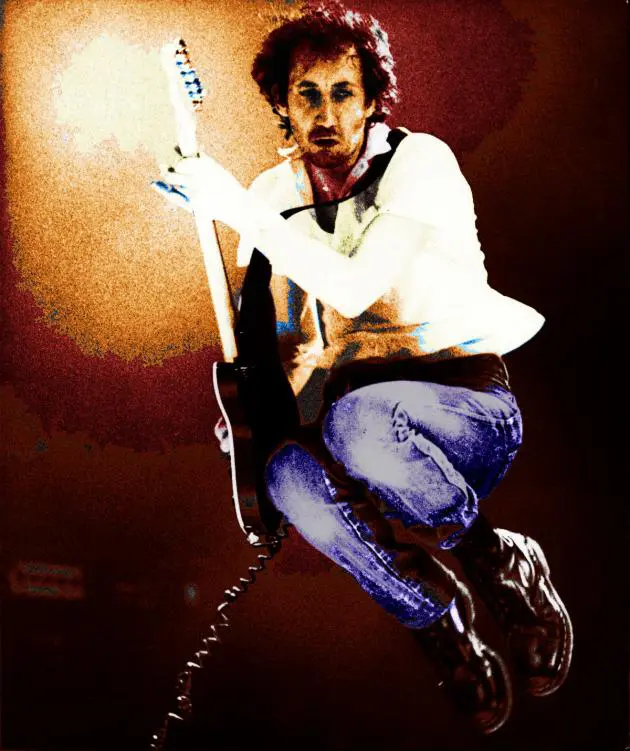
The who's leaping, windmilling, guitar-smashing godfather of punk and grunge comes across as pretentious and pathetic in a joyless memoir
A HELL OF a showman with a guitar in his hands, Pete Townshend of the Who has nevertheless always been one of rock’s most introspective songwriters, so you would expect his autobiography to be as thoughtful, incisive and poetic as his best songs. That’s not the case. For all that |gazing inward, he really hasn’t |discovered much at all, and his torment drains the book of the fun that rock chronicles should guarantee.
At 64, Townshend is as confused as ever, still unable to get over a traumatic childhood that seems to have soiled everything that’s happened since. And the book is just as jumbled, which is quite a letdown considering his way with words and the fact he was a consulting editor at Faber in the 1980s, nurturing several top authors.
Townsend calls his story “Who I Am” and yet continues to wonder who he really is. This matter of identity dogs the writer of “Who Are You” through every chapter. (Amusingly, one of the book’s early anecdotes is that an art-college pal suggested the band’s name. Townshend failed to convince Roger Daltrey, John Entwhistle and Keith Moon’s predecessor Doug Sandom that they should perform as the Hair.)
That was February 1964, and the Detours had just found out there was another group by that name, so they needed a fresh start after two years’ work. The Beatles had just exploded in North America. Townshend was a fan too, but took his musical cues from swing and the blues. In fact he lists dozens of influences in the course of the book, but of course he wouldn’t be Pete Townshend if his parents weren’t professional musicians too. They weren’t always good parents and his granny was an immoral loony, yet, after years in psychotherapy, Townshend still isn’t sure if the scarring sexual terrors he remembers ever really happened.
He frankly acknowledges that the Who were never taken seriously in the early days, without admitting that his lightweight tunes like “Happy Jack” and the now-beloved classics “Magic Bus” and “I Can See for Miles” were the reason. Not even “My Generation” could compete with the Stones’ “Satisfaction” and the Kinks’ “You Really Got Me”. The rock opera “Tommy” was deservedly overlooked in its day. It wasn’t until the double triumph of Woodstock and the “Live at Leeds” album that the Who showed some heft.
Townshend expresses gratitude that the Woodstock movie secured their place on rock’s Mount Olympus, so he’s understandably defensive about giving Michael Wadleigh, its director, a hard shove when he hovered too close to the stage. He didn’t know who he was, he says, and, as for Yippie Abbie Hoffman, who moments earlier got a chop from the neck of Townshend’s guitar, he was trying to interrupt the show with a political speech. (Jack Hoffman’s biography of his brother relates the yarn quite differently.)
Then there was the plainclothes cop that Townshend kicked off the stage at another US concert, not realising there was a fire on the premises and they wanted the hall cleared. At least Townshend spent a night in jail for that.
The man is a pinball wizard at fending off blame – or any guilt by association. No one could justly hold the Who responsible for the death of 11 fans in a crowd crush at a Cincinnati show in 1979. But, after recalling his remorse, Townshend races away from the tragedy even as he says he felt bad they had to move quickly onto their next gig.
Repeatedly he rationalises his boorish behaviour on and offstage as much as he regrets it. His demented pursuit of American actress Theresa Russell – behind the back of her boyfriend, film director Nic Roeg – is tossed off as an ill-considered whim.
Townshend is also a cipher when it comes to love in general. A decades-long marriage and the lasting relationship that succeeded it, and fatherhood, of course, attest to his basic heterosexuality, but, to the dismay of readers looking for rock-star luridness, his extramarital dalliances are rare, even with groupies. He readily admits to |lusting after Mick Jagger and offers a foggy report of a booze-addled homosexual encounter. His limp conclusion is that he’s “probably bisexual”.
As for the strange episode in 2003 when he ended up on Britain’s sex-offenders registry after he used his credit card to access a child-porn website, Townshend’s explanation that he was “doing research” can only be accepted at face value. He had in fact been campaigning against the availability of kiddie porn online, and the cops found no such muck on his computers.
At the very least, though, you have to wonder why a man who suspects he was sexually abused as a child was still probing the depths of depravity after all those years of therapy. He was a long-time disciple of the Indian guru Meher Baba as well, and not only did that fail to wean him off his anxieties, he even got sexually aroused when visiting Baba’s old bedroom!
And, as for drugs, well, Townshend sampled most and was fond of cocaine, but he usually shunned them. There’s a muddle here too, however. He writes that, in early 1982, “I needed help to break my dependence on prescription drugs and heroin.” This is the only time he mentions using heroin at all, so what else has he missed?
Despite its many flaws, “Who I Am” has much to offer rock fans, not least the encounters with the likes of Jimi Hendrix, Eric Clapton and Jimmy Page that turned out to be of considerable historic significance. For a better telling of Pete Townshend’s story, though, best look for a biographer who can actually figure out who he is.
Who I Am
>>By Pete Townshend
Published by Harper, 2013
>>Available at Asia Books, Bt315
