
Shoot like a pro


Play
The Fujifilm X-T1 takes a while to get used to but once you're mastered it, you'll wonder how you ever did without it
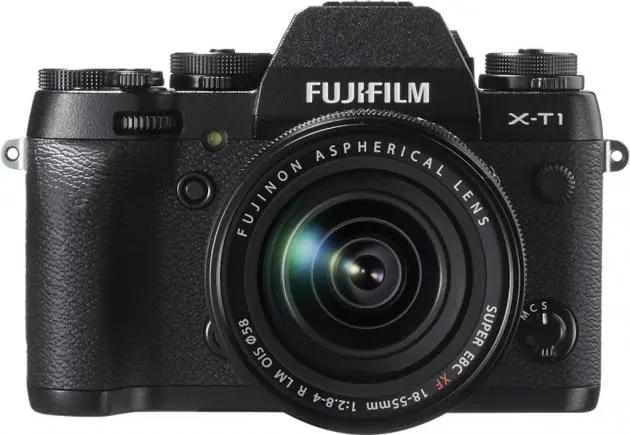
Sporting a retro-look, a solid build and good performance, the new mirrorless and interchangeable lens Fujifilm X-T1 will quickly have you capturing excellent quality photos.
However, you will need to know a little about adjusting shooting parameters first as the X-T1 doesn’t have full automatic exposure mode.
In fact, the only automatic exposure mode is Programme AE and while you will be able to capture pleasing quality photos in this mode, you’ll be able to do so much more if you learn how to adjust the settings and parameters.
Just knowing such basic shooting parameters as shutter speed, aperture and the exposure compensation dial is enough to operate the X-T1, as it has plenty of buttons and dials to control and adjust various settings without having to dig into menus.
These include a shutter speed dial, exposure compensation dial, sensitivity or ISO dial, light metering dial and drive mode dial. There are also six function buttons that can be customised for most commonly used functions. For example, you can use the Fn1 button to switch to one of five bracketing functions or select one of the advanced filters.
Another useful function button is Fn4. This is used to switch to one of 10 film simulation modes. The Q button provides easy access to various settings without needing to reference the menu.
The X-T1 features 16.3 megapixel APS-C size X-Trans CMOS II sensor with original colour array without an optical low-pass filter, thus allowing for better saturation of colours.
The camera has a die-cast magnesium body, making it sturdy and durable. The body is also dust- and water-resistant with approximately 80 points of weather sealing. Mounted with the weather resistant lens XF18-135mm f3.5-5.6 R LM OIS WR, you won’t have to worry about rain or moisture when shooting.
The X-T1 has an excellent electronic viewfinder with high-precision 2.36 million dots using an OLED panel. It has a high magnification ratio of 0.77x and it achieves a wide angle of view of 31 degrees, and with a display lag time of only 0.005 seconds.
As mentioned earlier, the X-T1 has no full automatic mode so you will need to use it either in full manual mode, Aperture priority mode, Shutter priority mode or the Programme AE (P) mode.
To activate the P mode, turn the shutter speed dial, sensitivity dial and the lens function selector to Automatic. It will then adjust both shutter speed and aperture for optimal exposure. You can also rotate the front dial command dial to select other combinations of shutter speed and aperture.
You can add impact and depth to photos using what Fujifilm calls Film Simulation, which is similar to what other brands refer to as creative style.
The film simulations include Provisita/standard, Velvia/Vivid, Asitia/soft, monochrome and sepia. For example, if you want to take a portrait outdoors, you should use the Asitia film simulation. It will enhance the hues for skin tones in portraits while preserving the bright blues of daylight sky.
If you want to take vivid nature photos, you should use the Velvia film simulation.
There are also fun shooting modes. These are grouped in the advanced filters option and accessible by turning the drive dial. They include Toy Camera, Miniature, Pop Colour, High-key, and six partial colours – red, orange, yellow, green, blue or purple.
The X-T1 has very good performance. It has a start-up time of only 0.5 seconds and an ultra fast AF speed of 0.08 seconds achieved with Fujifilm’s proprietary imaging area phase-detection. Its shooting interval is only 0.5 seconds and the shutter time lag just 0.05 seconds. The X-T1’s excellent performance can be credited to its EXR Processor II, which is more than twice as fast as the previous image-processing engine.
The X-T1 is capable of continuous shooting up to 8 frames per second thanks to the phase detection AF and motion predictive AF.
The camera also supports an Ultra High Speed UHS-II SD memory card that further enhances its image- recording speed.
We tested the X-T1 with XF18-55mm f2.8-4 R LM OIS lens and were impressed by the good details and colours.
With the f2.8 aperture, we could easily capture beautiful portraits with professionally blurred backgrounds. And the Vivid film simulation option gave us bright and colourful shots.
The X-T1 also has built-in Wi-Fi that works with Fujifilm Camera Remote app on your smartphone and tablet, allowing instant sharing on your social network sites.
Fujifilm X-T1 with XF18-55mm f2.8-4 R LM OIS lens retails for Bt54,990.
Key specs:
Number of effective pixels: 16.3 million pixels
Image sensor: 23.6mm x 15.6mm (APS-C) X-Trans CMOS II with primary colour filter
Storage media: SD memory card / SDHC memory card / SDXC (UHS-II) memory card
Lens mount: FUJIFILM X mount
Sensitivity: AUTO (Control available up to ISO 6400); Equivalent to ISO 200 - 6400 (Standard Output Sensitivity); Extended output sensitivity: Equivalent ISO 100, 12800, 25600 and 51200
Exposure control: TTL 256-zone metering, Multi / Spot / Average
Exposure mode: Programmed AE / Shutter Speed priority AE / Aperture priority AE / Manual exposure
Shutter speed: (P mode) 1/4 sec. to 1/4000 sec., (All other modes) 30 sec. to 1/4000 sec., Bulb (max. 60 min.)
Focus: Intelligent Hybrid AF (TTL contrast AF / TTL phase detection AF), AF assist illuminator available
Viewfinder: 0.5-inch, approximately 2.360K-dot OLED colour viewfinder; coverage of viewing area vs capturing area: approx. 100 per cent
LCD monitor: 3.0-inch, aspect ratio 3:2, approx 1,040K-dot, Tilt type colour LCD monitor (approx 100% coverage)
Movie recording (max): Full HD 1920 x 1080 60p / 30p, Continuous recording : up to approx. 14 min.
Terminal: Video output, USB 2.0 High-Speed / micro USB terminal, HDMI mini connector (Type C), Microphone / shutter release input: 2.5mm, stereo mini connector
Power supply: NP-W126 Li-ion battery (included)
Dimensions: 129.0mm (W) x 89.8mm (H) x 46.7mm (D), (Minimum depth: 33.4mm)
Weight: Approx. 440g (including battery and memory card)
