
Mystery of a southern palace
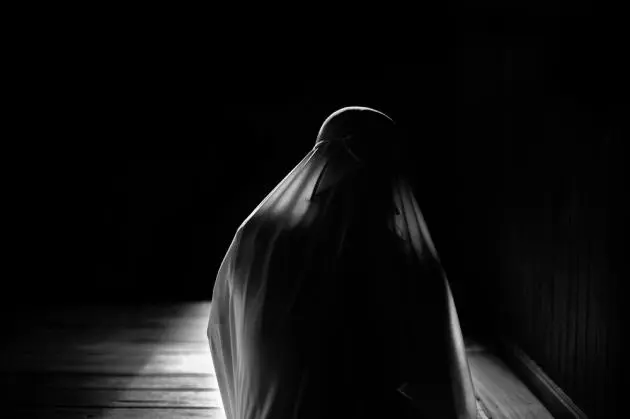


Spanish photographer Xavier Comas shares his profound experiences living in "The House of the Raja"
Spanish photographer Xavier Comas obviously needed faith, and more than a little courage, to be cycling around Thailand’s southernmost provinces in the first place. The Malay-Muslim insurrection in Yala, Pattani and Narathiwat has claimed thousands of lives, after all, in a desperate struggle for autonomy.
But “you’d have to be really unlucky to be at wrong place and the wrong time and be hit by a bomb,” says the 44-year-old. “The chances of getting hurt in a traffic accident in Bangkok are much higher.”
Besides, says Comas, there was something “calling” him there.
The story is retold in “The House of the Raja”, his coffee-table book of extraordinary black-and-white photographs, for which the restaurant Eat Me on Convent Road is hosting an exhibition.
The house of the title is a dilapidated wooden building in Narathiwat that once served as the palace of a Malay ruler, the last of his dynasty. Pedalling through the South in search of adventure, Comas came across the house unexpectedly and realised that this was the source of the spiritual beckoning he’d sensed.
“I was wandering aimlessly and by chance I was introduced to the house. Later on was invited to stay and become part of the family living there. I was able to take their pictures and explore the house.”
He ended up returning more than 14 times between 2010 and this year.
“I’m always given an impressive welcome in the deep South,” he says. “You begin to understand that life goes on despite the troubles.”
The caretaker of the House of the Raja, as the locals call it, is a Muslim shaman who performs rituals inside. It was he who invited Comas to stay and who initiated him in the building’s “hidden dimensions”. Comas gradually built up a bond of trust with the inhabitants – squatters unrelated to the former royal owner – and the missing pieces of its history eventually fell into place.
“This was a sanctuary of light and shadow,” Comas says, “a poignant reminder of the solitude and memories carved in the region’s divided soul, trapped in limbo, yearning for its forgotten splendour, held captive by its desolation. The house urged me to look into the past. I would have never imagined that, after crossing its entrance, and as the outside world closed behind me, it would draw me into the depths of my consciousness. There was something very powerful about the house.”
The first third of his book has photos of places and people Comas came across “that make you wonder”. The second has explanatory text about the house itself. And the last is filled with images that “take the reader into a realm of haunting, mystic powers and fading memories, a missing key to controversial issues of legacy, belief and identity in Thailand’s Muslim South”.
“It was like time-travelling,” Comas says. “To my amazement, there are connections between the people involved in making this book and a house in my mother’s homeland, Andalusia,” he adds, referring to the eastern Spanish region and to Thai novelist Tew Bunnag, who wrote the book’s foreword, and his editor, Narisa Chakrabongse.
“Their forefathers played a pivotal role in the southern region’s destiny, akin to the struggle of my ancestors in medieval Spain. My dear friend Hannan, who helped me delve into the house’s past, is also linked to it by family ties. In some strange way, the house has gathered us all.”
Comas’ photos have been exhibited around Europe and Asia and published in prominent magazines throughout the world. The Singapore Art Museum exhibited his installation “Pasajero” in 2009 and added his “Jiutamai” series to its permanent collection.
BOX
Meet the author
Comas will greet visitors and autograph copies of his book at Eat Me on Saturday and again on August 23 and September 6 and 20.
His photos of “The House of the Raja” will be on display at Eat Me until September 28, daily from 3pm to 1am.
Eat Me is next to the Carmelite Monastery on Convent Road, not far from the Saladaeng Skytrain Station.
Find out more at (02) 238 0931 and www.EatMeRestaurant.com.
