
Third time's a treat


Play
Sony improves on its already impressive Cyber-shot DSC-RX100
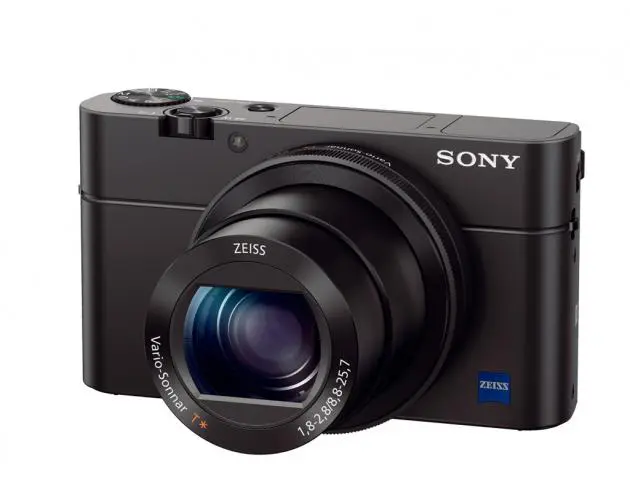
Sony has come up with a new and improved version of a camera that was already among the world’s best with the launch of the Cyber-shot DSC-RX100 III.
An update of the popular RX100 digital camera, it features a large image sensor, good performance and excellent image qualities.
When the original RX100 came out in 2012, Time magazine hailed it as one of 50 “best inventions of 2012” citing its innovative design and one-inch 20.2-megapixel-image sensor.
The new camera uses an even better image sensor while retaining the same size and pixel count. The RX100 III uses a back-illuminated Exmor R sensor that enhances quality and performance in low-light environment.
It comes with a Carl Zeiss Vario-Sonnar T lens with the widest aperture of f/1.8 and focal length of 24-70mm. Compared to the original RX100, the mark III has a wider angle of focal length and this makes it ideal for capturing landscape shots.
In addition, the RX100 III has a faster start-up time of just two seconds, compared to 2.8 seconds of the original RX100.
Another new feature is the built-in retractable SVGA OLED Tru-Finder. This electronic viewfinder is very useful for composing shots in bright sunlight as it faithfully displays what will appear in your recording, including the effects of your camera settings will have on the shot, thus allowing you to monitor the results accurately.
The RX100 III is also selfie-ready through its multi-angle 3-inch Xtra Fine LCD display. The display rotates to multiple angles, making it easy to photograph over crowds or down low to capture pets eye to eye..
Another improvement is the built-in ND filter for wider-ranging photographic expression. The 1/8 (3EV steps) ND filter allows exposure adjustment in bright scenes.
It meets today’s lifestyles by coming with a Wi-Fi function, allowing it to be connected to a smartphone for use as a remote control and to transfer shots to the phone for instantly sharing on online social networks. The RX100 III also features NFC (near field communications) technology that conveniently assists connection to an NFC-ready smartphone.
It’s faster too. The RX100 III can capture about 5/9 frames per second of JPEG shooting in single-shot mode compared to the RX100’s 2.8 fps,.
RX100 III’s excellent quality and impressive performance can be credited to its excellent and fast optics, the 1-inch-type sensor and a powerful image engine, the BIONZ X image processor. The Exmor R1 CMOS sensor is measured 13.2x8.8mm, much larger than 1/2.8-inch sensor of most compact digital cameras. The back-illuminated technology doubles light sensitivity and it works with Sony's Column A/D Conversion to reduce noise levels, which is very useful for shooting in dimly lit environments. It helps reduce noise even when high-sensitivity settings are used for capturing night landscapes or indoor scenes.
These features allow RX100 III to impressively capture the colours of the night when used in the Handheld Twilight mode. The camera fires its shutter four times to make a composite shot that looks very sharp and clear.
And despite the adds-ons, the RX100 III is compact and lightweight, allowing you to carry it in your trouser pocket. It has a footprint of 101.6x58.1x41.0 mm and it weighs about 290 grammes with battery and memory card.
Experienced users can use Manual, Program Auto, Aperture Priority, or Shutter Priority exposure settings.
It also supports manual focusing with a focus ring and this feature works well with the electronic viewfinder.
The exposure settings are accessible from the main dial. Other exposure settings also accessible from here include Superior Auto, Intelligent Auto, Scene Selection, Movie, Sweep Panorama, and Memory Recall, a user’s customisable setting.
Newcomers can start capturing excellent quality photos right away in the Intelligent Auto, as this analyses your subject and lighting environment and selects the appropriate settings.
The Superior Auto uses more shooting settings to recognise the environment and it may shoot multiple images to create a composite image.
If you want to select a scene mode on your own, use the Scene Selection to access one of several modes that include Portrait, Night Portrait, Night Scene, Sunset, Gourmet, Pet Mode and Fireworks.
The RX100 III is easy to use, thanks to the Fn button that gives you access to the shooting parameters available. For example, when you are in P exposure mode, you can use the Fn button to change exposure compensation, focus mode, focus area, flash compensation, ISO setting, metering mode and white balance mode.
The DSC-RX100 III also captures excellent quality HD movies in the XAVC S2 format, which uses MPEG-4 AVC/H.264 for video compression and linear PCM for audio compression, while saving files in a MP4 wrapper. The highly compressed files allow extensive record times. With 50Mbps Full HD (1920x1080) 60p high quality video recording, XAVC S enables beautiful video recording with minimal compression noise even in scenes with a lot of movement.
During the test, we mostly used the auto modes and found that the camera properly selected shooting setting for the current lighting environment. Shots were captured with pleasing results and well-saturated colours. Portrait shots were particularly beautiful with blurred backgrounds. And as usual the female staff went wild over the soft skin effects.
The RX100 III provides several creative style to enhance your photographic creativity, including Standard, Vivid, Neutral, Clear, Portrait, Landscape, Sunset, Night Scene, Autumn Leaves, Black & White and Sepia. As the name implies, the Vivid option captures very colourful photos.
There are also several fun effects from which to choose, including Toy Camera, Pop Colour, Retro Photo, Partial Colour, HDR Painting, Miniature, Watercolour, and Illustration.
The RX100 III performs well and fast with the autofocus taking about 0.2 seconds in a well-lit environment. I didn’t notice any shutter lag and its shot-to-shot time was also fast at about 0.2 seconds, depending on the shooting mode.
RX100 III’s battery allows you to shoot 320 shots per charge using the CIPA standard. The battery is charged within the camera, which comes without a provided separate charger.
The RX100 III retails for Bt27,990. But if you don’t want to spend that much, opt for the Mark 1 version, which Sony is now selling it for just Bt12,990.
Key specs:
Imaging Sensor: Exmor R 1.0-inch CMOS sensor (13.2 X 8.8mm) (3:2 aspect ratio) with 20.2-egapixel
Processor: BIONZ X image processor
Focal Length Conversion Factor: 2.7x
Lens: 2.9x Carl Zeiss Vario-Sonnar T lens (24-70mm) with f/1.8-2.8
LCD display: 3.0-inch (4:3) / 1,229,000 dots / Xtra Fine / TFT LCD / Tiltable (Up by approx. 180degrees, down by approx. 45degrees.)
Viewfinder: 0.39-inch SVGA electronic viewfinder(OLED), 1,440,000dots with 0.59x magnification
Focus Area : Multi point AF (25 points) / Continuous AF / Single Shot AF / Flexible spot (S/M/L)
AF Modes : Single-shot AF (AF-S) / Continuous AF (AF-C) / Direct Manual Focus (DMF) / Manual Focus
Metering Modes : Multi-segment, Centre-weighted, Spot
ISO: ISO125-12800, extendable to ISO 80-25600
Shutter Speeds: Bulb, 30 - 1/2000
Continuous Shooting Speed: 10 fps at 20.2MP
Maximum video recording: XAVC S: 60p 50M (1,920x1,080/60p)
Media Type: SD, SDHC and SDXC memory card; Memory Stick PRO Duo/Pro-HG Duo media
Interface: NFC, HDMI, Wi-Fi, USB 2.0
Battery: InfoLITHIUM NP-BX1 (3.6V) 1,240 mAh
Dimensions (Approx.): 101.6x58.1x41.0 mm excluding protrusions
Weight (Approx.): With battery and Memory Stick PRO Duo 290 g
