
Memoirs of the geisha


Play
Lessons in behaving like maiko emphasise the art of glamour and graceful behaviour
Many women of various ages are visiting shops and studios in Kyoto that offer lessons on how to dress and behave like maiko, the young entertainers of Kyoto’s hanamachi entertainment districts known for their beautiful clothing, glamorous white makeup and graceful behaviour.
Maiko are apprentice geiko, the term used in Kyoto for geisha. Maiko are usually aged from about 15 to 20 and perform Japanese dance for guests at banquets. They also train in singing, playing the shamisen and other Japanese traditional performing arts to become geiko.
Former maiko Shigeko Yasuda has plenty of practical hints for becoming a more sophisticated, charming woman through a maiko’s routine. Yasuda, 68, operates a maiko programme near the Gion entertainment district.
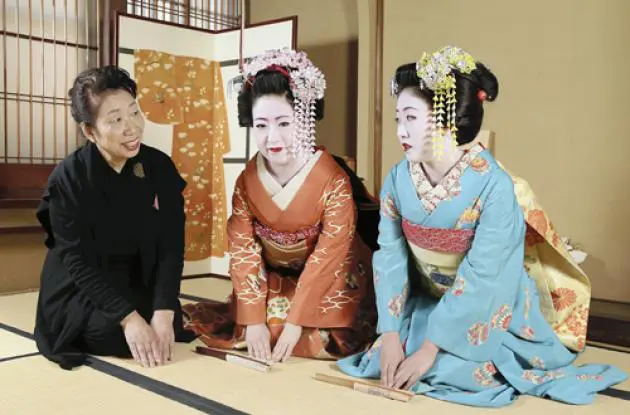
“I want you not just to wear the clothing, but also be interested in maiko’s beautiful movements, and their courtesy and rules of etiquette,” Yasuda tells her students, Mai Kuriyama, 24, and her sister Mika, 21. Neither has worn the kimono since attending their Coming-of-Age Day ceremony. Customers at Yasuda’s shop are allowed to stroll around the neighbourhood with their hair arranged, wearing makeup and kimono. A basic course lasting about three hours starts at 15,500 yen (about Bt4,000), plus tax.
The workshop begins with hair arrangement. As doing up the customer’s own hair takes too much time, wigs are usually used.
After that, the signature white makeup used by maiko is applied. First, paste powder is dissolved with water and applied to the face with a brush. The eyebrows, eyelids and lips are then accentuated with a touch of rouge.
“It’s like I’m somebody else,” Mai says, looking at her reflection in a mirror. “It automatically makes me stand straighter.”
Next the kimono is put on.
“Let’s choose kimono with motifs suited to the season,” Yasuda tells the sisters. The kimono chosen for Mika bear a pattern of temari handmade decorative thread balls on a light blue background. Its refreshing design is perfect for springtime.
Her elder sister chooses one with a large clam shell pattern on a vermilion background. Drawn in each shell are images of the seasons’ flowers and traditional elements in various colours.
After putting on the kimono and some accessories, they head to the nearby Yasui Kompiragu shrine to pray. Both wear heavy wigs and pokkuri wooden clogs, the heels of which are more than 10 centimetres thick.
“Straighten your back and pull in your stomach. Tighten your rump, too,” Yasuda instructs. “Maiko learn this posture through practising Kyomai traditional dancing.”
If a maiko stoops even slightly, she is scolded by her teachers to straighten her back.
According to Yasuda, maiko learn even courtesy and etiquette from the instructors who teach them performing arts. Also, they should always stop walking and bow whenever they see acquaintances on the streets.
“When you greet people, you shouldn’t do it while doing something else,” Yasuda says. “As you can’t remember everyone’s faces at first, you should greet anything nearby on the ground, even utility poles.”
To stand up quickly and gracefully after sitting on my heels on the floor for a long time, Yasuda advises placing one big toe on the other so your right and left legs form a V shape. Then place your hips on them.
Maiko make a habit of having an extra pair of tabi Japanese socks in the basket bags they take with them to banquets.
That way they can change their tabi if they get dirty when they’re taking off their clogs before the banquets.
Being a maiko is not just about beautiful makeup and wearing gorgeous kimono. Keeping a beautiful posture, walking and moving gracefully, having knowledge of Japanese traditional culture, showing consideration for others – acquiring these elements can make any woman more sophisticated and charming. We can use them in our daily life in Western clothes, too. The daily items used by maiko also give hints of their feminine grace.
A sankaku-bukuro, literally a triangular cloth bag, can hold your raincoat after you take it off and your folding umbrella. An ozashiki-kago is a drawstring basket that maiko bring to banquets with them, made with varying patterns and materials.
A tenugui case is meant to hold tenugui cotton towels, but it would probably look fashionable if you use it for handkerchiefs. These items can be purchased online, and at stores specialising in Japanese fashion items in Kyoto and |elsewhere.
