
Risen from the river


Under the gaze of a Chinese goddess, an historic Bangkok trading pier is restored to its former glory
AN HISTORIC century-old pier on the Thonburi side of the Chao Phraya River is being restored to its original glory, evoking the days of booming trade in goods along the waterway.
The decrepit Huo Chuan Laung (Steamer Pier) was in its time the trading hub for Chinese merchants, going as far back as the reign of King Rama IV.
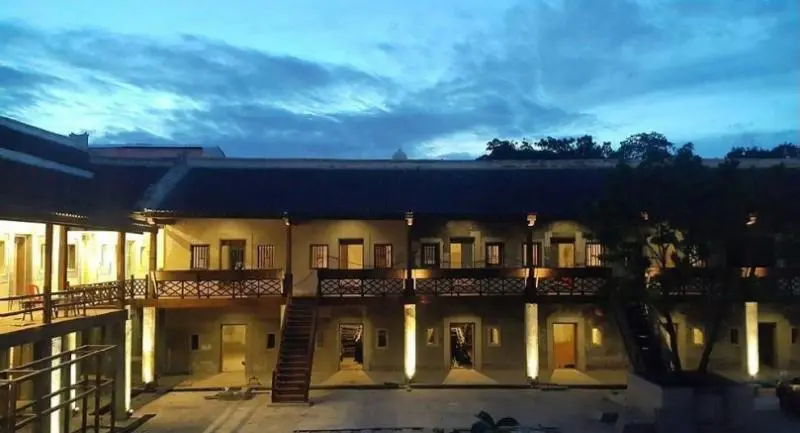
It and the adjacent former warehouses in the same soi as Wat Thong Thammachart are being fully restored as a heritage attraction and mixed-use project named Lhong 1919.

Ready to begin its new life next month as “Lhong 1919”, the 168-year-old pier Huo Chuan Laung and adjacent buildings have been given a proper heritage restoration with traditional Chinese architecture and layout intact.
Restoration experts and construction workers have been toiling for a year on the six-rai site where three buildings form a semicircle fronting onto the river.
The main central building holds a shrine to the Chinese sea goddess Mazu, known to Thais as Chao Mae Tubtim.
The Wanglee family, which owns the property and lives in the mansion next door, is ready to open Lhong 1919 to the public next month, complete with the renovated Mazu shrine, arts-and-crafts shops, a co-working space, restaurants and cafes. The site will also have an event hall, a multipurpose outdoor space and a riverside leisure area.

An artist’s conception of the fully completed Lhong 1919 site
Phraya Phisansuppaphol built the Huo Chuan Laung in 1850, giving Chinese merchants a place to dock their steamboats. The adjoining two-storey buildings housed shops and offices and served as warehouses for goods imported from Singapore, China and Hong Kong, then a British colony.
“When the Bowring Treaty came into effect in the reign of Rama IV, Siam began allowing more overseas merchants to trade here,” says project head Rujiraporn Wanglee, founder of interior-design firm PIA, which worked on the Sofitel So Bangkok, InterContinental Hua Hin and Okura Prestige Bangkok.
“Phraya Phisansuppaphol built the pier for the Chinese community in Bangkok at a time when the different groups all had their own piers. European merchants docked at the Asiatique pier, the Japanese at the Surawong pier, and members of the Siamese royal family used either the Maharaj or Raj Woradit piers.”
Once the Port Authority of Thailand was established to govern international maritime trade, the Huo Chuan Laung’s role was greatly reduced. In 1919, though, new owner Tun Lip Buey – a Wanglee family forebear – added the offices and warehouses for managing the clan’s agricultural produce, along with living quarters to lease to employees and other local labourers.

The buildings on the site were erected in the time of King Mongkut (Rama IV) and had become decrepit.
“The buildings were 168 years old and badly decayed,” says Rujiraporn. “The Wanglee offices moved out and all the lease agreements were terminated. So it was the right time to wake the place up from its long sleep.
“We haven’t dressed the buildings up in modern clothes. What’s traditional about them represents valuable heritage that should be preserved as close to the original as possible. We began last October restoring them to their original splendour.”

The classical Chinese arrangement of such structures is called San He Yuan – three buildings in a U shape with a large courtyard.
The restorers used materials and techniques similar to the ones common in 1919. The Huo Chuan Laung brims with fine Chinese architectural flourishes, including wooden floorboards supported by round timber columns.
Neither exterior nor interior walls have been painted. If the brick construction bore cracks, they were simply filled with traditional sealing caulks to prevent further damage. It’s a “sugarcane-lime plaster” – glue made from animal skin, sugarcane, soaked lime and sand, so the walls can “breathe” and better handle the humidity.
Teakwood fittings have been repaired as needed with wood from other sections of the buildings. No effort has been made to scrape fungus and moss from the exterior brick walls.

Authenticity extends to the decision to let fungus and moss stay where they were on the exterior walls.
“The structure is a wall-bearing system – the walls carry the vertical and lateral loads, right down to the foundation,” Rujiraporn explains. “Since we’re right on the river, the foundation features a waffle system of criss-crossed logs. The engineers found all of the structures in good condition, but we did reinforce the roof with a steel beam.”
Closer scrutiny of the facilities uncovered a hidden treasure. Up and down the wide concrete frames around the recesses in which doors and windows are embedded are decorative patterns in tempera pigments. These had been covered by subsequent layers of paint and only reappeared during cleaning.

Decorative paintings found beneath layers of pigment are being carefully restored.
Rujiraporn called in restoration expert Pradit Ketiwong, who with his team scraped off the upper layers and began delicately recopying the original patterns, using longer-lasting watercolours in place of tempera.
Rujiraporn says the Chinese Embassy arranged for an expert on such sites to be flown to Bangkok to assess this one and he deemed it an invaluable surviving example of Chinese heritage.
“The traditional Chinese manner of arranging three buildings in a U shape with a large courtyard is called San He Yuan. The Chinese expert said it was used in several Southeast Asian countries, but most of the buildings have been demolished.
“We discovered that the paintings in the central building, which houses the Mazu shrine, feature images of auspicious animals and flowers – peacocks and other birds, butterflies, horses, bats, pomegranate and botan blooms – which are meant to bring prosperity and happiness,” she says.

Decorative paintings found beneath layers of pigment are being carefully restored.
“The Chinese expert thought the paintings in the buildings on either side might depict scenes from Chinese literature, but so far we don’t know which stories.
“The restoration is ongoing and quite meticulous, and early visitors will be able to see the team still at work. We’re recording every part of the process and eventually we’ll publish a book about it.”
The Mazu shrine made the Huo Chuan Laung the spiritual anchor for all the Chinese merchants using the dock and for many Chinese immigrants. The wooden statue of the deity is seen in three different postures. For 167 years she’s been assuring travellers of safe journeys and possibly even wealth.

The site features a shrine to the Chinese seagoddess Mazu, which is also being renovated.
With the shrine’s restoration also continuing, the goddess currently resides at the Wanglee family residence next door. She’ll be returned to her historic place in a traditional Chinese procession on November 2, the day before Lhong 1919 opens.

Restoration project leader Rujiraporn Wanglee’s family has long owned the property.
“Everyone in my family agrees that this project isn’t about turning a profit,” says Rujiraporn. “We’re doing this because the place is worth being well preserved – it’s more than one family’s heritage, it’s an historic national treasure. As descendants of immigrants, we want to repay the country that’s been our warm and welcoming home for so long.”
HERITAGE REBORN
Lhong 1919 is on Soi Wat Thong Thammachart off Chiangmai Road, opposite Thonburi Polytechnic College.
It will open to the public on November 3 and a new pier is being constructed to provide convenient access by boat.
Find out more at (091) 187 1919 and the “Lhong 1919” page on Facebook.
