
The varied lives of vetiver
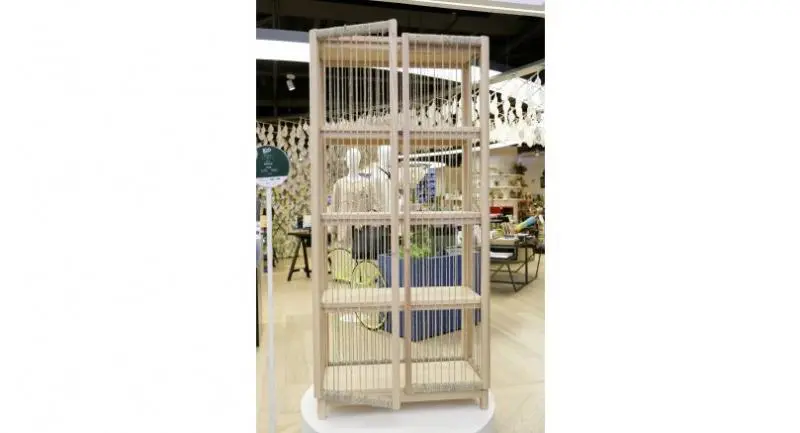


As designers and artisans pool their talents, the study grass turns out to have far more uses than expected
HIS MAJESTY the late King Bhumibol, who famously championed the use of vetiver grass because its roots bind the soil and prevent erosion, thus also helping to conserve water, would no doubt be delighted with the winners of a design competition held as part of the PatPat Project.
All of the imaginative entries – from bags and hats to home d้cor and even jewellery – were made of vetiver grass.
The Chaipattana Foundation project’s “100 Designs 2017: Vetiver Design Contest” – staged in cooperation with Siam Discovery, PTT and Siam Commercial Bank, sought to promote environmental conservation and, in doing so, give upcountry communities an additional source of income.

The entrants spent two months learning from artisans and other experts how to craft useful and attractive items from the tough weed that Thailand has brought to the world’s attention.
Then they set to work, and the results – presented this week at Siam Discovery – are often astonishing.
In the Home Decoration category, for example, freelance product designer Rattapon Anuchitanukul, 29, took top honours with his “Cat Portable” and “Cat Bed”. They’re intended for urban folks with pet felines.
“The bed is very simple but modern, as well as environmental friendly,” he said. “The weaving isn’t complicated, and the colours look natural in the different shades of each leaf. These are easy to clean and can be taken wherever you go with your cat. They could be made for dogs too by adjusting the size.”

Three Rajabhat Suansunandha University students won in the Fashion category for a line of vetiver handbags called “Domicile”. Sethphokin Sethsattaphokin, Napassorn Laomeepol and Rungnapa Pusadeethongchai are in Year 4 of their studies in industrial design.
Sethphokin said they worked closely with artisans in creating the prototypes.
“The shapes resemble those of a farmer’s hat, an oxcart and a buffalo, all of which share the characteristics of strength and durability, which are also the natural qualities of vetiver.”
“Royal initiative projects on soil and water conservation have contributed to cooperation between the public and private sectors to promote vetiver cultivation to help prevent soil erosion, absorb water and increase nutrients in the soil,” noted Bhakamol Rattaseri, secretary general of the Chaipattana Foundation.
“Thanks to its roots that penetrate so deeply into the earth, vetiver can present erosion. By applying local wisdom, handicrafts can also be made out of vetiver leaves. These will become products sold under the PatPat label, and will inspire communities to make their own to generate extra income.”
PatPat vetiver-based products have been on sale since 2009, but early examples tended to be uninteresting. The makers hadn’t yet developed proficiency.
“Nevertheless,” said Bhakamol, “we saw there was great potential in developing vetiver-based handicrafts further. Every community has its own special wisdom and unique characteristics. So we set up a training programme with the Faculty of Architecture at King Mongkut’s Institute of Technology Ladkrabang. Its students helped local people design more modern products that were better suited to market demand.
“The students meanwhile learned how to weave various patterns and to use the knowledge they gained to develop and design fine products.”
Siam Discovery also played a role in the products’ development, specifically encouraging the design of home decoration and fashion items.
“We believe that working with new design talents makes the products more modern and attractive, more remarkable and more popular with shoppers,” Bhakamol said. “At the same, it helps make people more aware of environmental issues.”
Jarupatcha Achavasmit, a lecturer in industrial design at King Mongkut’s Institute, said she was proud of her students who participated in the design contest.

“Vetiver has very special quality,” she pointed out. “It’s easy to grow, requiring only a small amount of water – and no fertiliser or insecticides. Yet it’s very useful because the long roots help prevent erosion. Every three months, the grass produces new buds.
“The leaves have traditionally been used to feed livestock and thatch roofs, but now we see ways to increase its economic value through design and innovation. One of the advantages is that vetiver grows in the soil, not water, so the fibre is dry and less susceptible to fungus than many other natural materials.
“For now there’s not enough vetiver grown to support mass production, but that’s another key point – we want to encourage more people to grow vetiver grass to conserve the soil and water. And earning money by selling the products is a plus.”
Judging in the Vetiver Design Contest was based on creativity, beauty, novelty, work quality and the potential to be reproduced for the market, meaning the items had to be both functional and cheap to make. Any other materials used had to also be ecologically sound and further development had to appear sustainable.
The contest drew 217 entrants – 123 in the Home Decor category and 94 in Fashion. The winners received Bt80,000, a trophy and a chance to develop their product for eventual sale at the PatPat Shop and Siam Discovery.
GO HAVE A LOOK
- You can see the prize-winning entries through December 3 in Living Room 2 on the fourth floor of Siam Discovery.
