
The Queen, the Couturier, and the Rise of Thai Silk
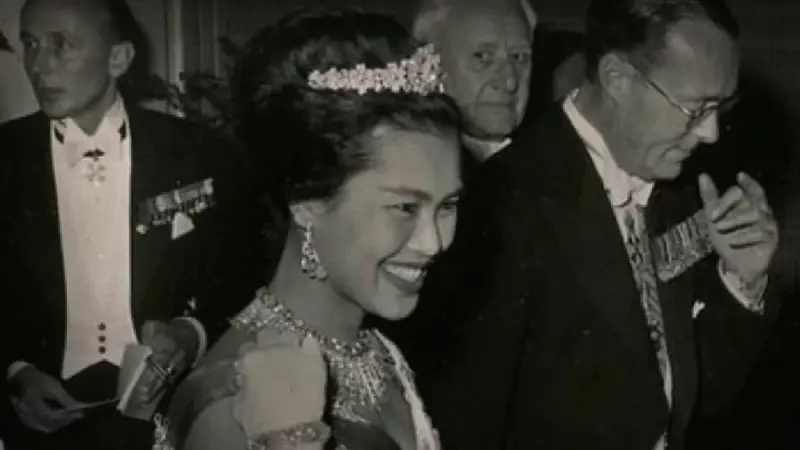


Her Majesty Queen Sirikit’s 22-year partnership with French couturier Pierre Balmain defined global elegance, launching Thai silk onto the world stage during a crucial 1960 diplomatic tour
- Queen Sirikit of Thailand initiated a 22-year partnership with French couturier Pierre Balmain to design her wardrobe for a crucial 1960 diplomatic tour.
- The collaboration was a strategic act of "cultural diplomacy," using the Queen's attire as a form of soft power to elevate Thailand's international reputation.
- Balmain was chosen for his elegant style and his ability to create Western silhouettes that specifically highlighted and respected the unique texture and beauty of Thai silk.
- The partnership's success earned the Queen global style accolades and successfully launched Thai silk as a valuable, in-demand commodity on the world market.
Her Majesty Queen Sirikit’s 22-year partnership with French couturier Pierre Balmain defined global elegance, launching Thai silk onto the world stage during a crucial 1960 diplomatic tour.
The image of Her Majesty Queen Sirikit The Queen Mother presented to the world is one of unparalleled, timeless grace.
This lasting perception, marked particularly by her striking Thai gowns tailored from intricate yet modern Thai silk, has a fascinating backstory rooted in a monumental artistic collaboration with Paris.
The partnership was between the Queen of Siam and Pierre Balmain, the celebrated French couturier nicknamed the "Architect of Movement."
Their professional relationship spanned 22 years, from 1960 to 1982, and became more than a showcase for haute couture; it was a defining moment of "cultural diplomacy" and a significant legacy of the 20th century.

Fashion as the Ultimate Soft Power
The foundations of this world-class fashion relationship were laid during the pivotal 1960 State Visits of His Majesty King Bhumibol Adulyadej The Great and Her Majesty The Queen Mother to the United States and various European nations.
Amidst the Cold War, this tour was a crucial diplomatic exercise aimed at enhancing Thailand’s international stature.

Her Majesty The Queen Mother demonstrated remarkable foresight, understanding that her own attire would serve as the most potent communication tool—a powerful form of Soft Power.
The choice of couturier, therefore, was paramount.

Why Balmain Was the Impeccable Choice
Several factors ensured Pierre Balmain was the perfect, risk-free candidate for the Queen’s diplomatic wardrobe:
A Clean and Elegant Image: At the time, Christian Dior had recently died, while Coco Chanel’s reputation was hampered by controversy from the wartime period. Balmain’s brand, conversely, was synonymous with undisputed elegance, classic structure, and refined luxury. Crucially, he already possessed experience in designing for European royalty, giving him an impeccable professional standing.

The Need for Western Expertise: Khun Urai Lueamrung, the royal dressmaker, advised the court that a local Thai designer with the necessary expertise in official Western garments was yet to emerge. Such a specialist needed to understand European court protocol and be capable of creating gowns appropriate for the vast array of occasions, climates, and ceremonial duties faced during an extensive overseas tour.

A Master of Fusion: Balmain’s genius lay in his architectural approach to design. He created flawless Western silhouettes that were specifically tailored to highlight and celebrate the inherent beauty and spirit of Thai silk. He was careful not to attempt to change the silk's unique texture or character but respected its distinct identity, perfectly aligning with Her Majesty's core vision of promoting Thai traditional handicrafts to a global audience.

The Lasting Legacy
Beyond commissioning magnificent gowns for the foreign tour, Her Majesty also conceived the idea to standardise eight distinct styles of the Thai National Costume (known as Thai Chut Phra Ratchaniyom), such as the Thai Chakri and Thai Boromphiman, giving Thai women a uniquely beautiful national dress for official use.

This great partnership—between the Queen, Pierre Balmain, and Thai textile artisans—resulted in far more than a chapter in high fashion history. It reflected the Queen Mother’s enduring commitment and her vision that was far ahead of its time.

Consequently, Her Majesty was lauded by media outlets worldwide as 'The Most Beautiful Queen' and was inducted into the 'International Best Dressed List' as one of the world's 12 most stylish women.
This global acceptance simultaneously validated her refined taste and propelled 'Thai Silk' into a term with immense commercial value and global market demand.


