
Thailand Plots Global 'Nation Brand' Rebirth Through Reinvented Cultural Festivals
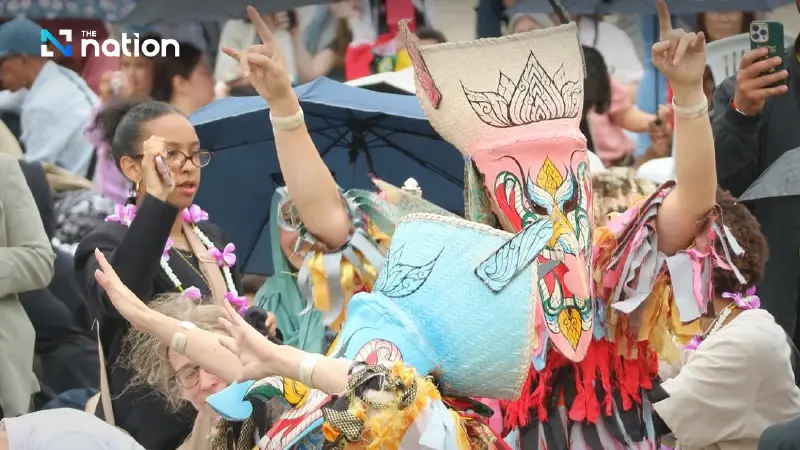


The Ministry of Foreign Affairs aims to move beyond "food and temples" to showcase Thailand as a creative "Middle Power" and a leader in social equality
- Thailand's Ministry of Foreign Affairs is spearheading a global rebranding initiative to shift the country's image from traditional tourism ("food and temples") to that of a modern, creative "Middle Power."
- The strategy centers on reinventing and unifying "Thai Festival" events held worldwide, using a new "40:60" framework that combines standardized content from Bangkok with local adaptation by embassies.
- The reinvented festivals will showcase modern aspects of Thailand, including its leadership in social equality (legalizing marriage equality), contemporary media exports like "T-Pop," sustainability, and innovation.
- The ultimate diplomatic goal is to use this cultural rebranding to attract high-value talent and establish Thailand as a significant player in international affairs.
The Ministry of Foreign Affairs aims to move beyond "food and temples" to showcase Thailand as a creative "Middle Power" and a leader in social equality.
Thailand is embarking on a sophisticated diplomatic overhaul to "rebrand" its international image, moving beyond traditional postcards of beaches and temples to position itself as a modern, creative "Middle Power" on the global stage.
The initiative, spearheaded by the Ministry of Foreign Affairs (MFA), seeks to harmonise the "Thai Festival" events held annually across the globe into a unified strategic tool.
Nikorndej Balankura, the current Thai ambassador to France and former Ministry spokesperson, argues that while Thailand’s traditional appeal remains potent, it is no longer sufficient in a rapidly transitioning world.

"The image of Thailand in the eyes of foreigners has been somewhat fragmented," Nikorndej noted.
He observed that while embassies have promoted the country for over 30 years, these events often lacked a "collective identity" or unified branding.

A Modern "Menu" of Culture
In a significant shift, the MFA rebranded its "Thai Festival" programme in late 2025. The new strategy employs a "40:60" framework: 40% of event content is a "set menu" dictated by Bangkok to ensure brand consistency, while the remaining 60% is left to the discretion of local embassies to suit specific cultural contexts.
The 2026 theme, "Creative Life and Creative Heartbeat," follows the success of the 2025 "Creative Pulse" campaign, which reached an estimated 2.5 million people across 45 cities.
The goal is to highlight Thailand’s progress in areas often overlooked by tourists, such as:

Social Progress: Highlighting Thailand as the first Southeast Asian nation to legalise marriage equality.
Contemporary Media: Exporting "T-Pop" and the "Y-series" (Boys’ Love) genre to engage younger generations.
Sustainability: Integrating global issues like the circular economy and waste recycling into festival programming.
Innovation: Promoting Thailand as a hub for digital nomads, medical wellness, and genetic engineering.

Beyond the Booth
To provide embassies with the necessary "ammunition," the MFA is coordinating with several specialist bodies, including the Tourism Authority of Thailand (TAT), the Creative Economy Agency (CEA), and the National Innovation Agency (NIA).
The visual centrepiece of this rebirth is a new mascot derived from the "@" symbol within the "Thai" logo—designed to act as a "creative landmark" or a digital "pin-drop" that encourages curiosity and interaction.

The "Middle Power" Ambition
Nikorndej outlined three long-term objectives for the project. Firstly, to make Thai Festivals "must-see" dates on local calendars, such as the Yoyogi Park event in Tokyo which draws 300,000 visitors. Secondly, to attract high-value talent in technology and healthcare.
Ultimately, however, the mission is diplomatic. As the global order is reshaped, Thailand intends to use its cultural capital to secure its place in the "equation of international rule-making."
"Thai Festivals must become the vehicle that shows the world that Thailand has changed," Nikorndej concluded. "We are a key player with a significant role on the world stage."


