
365 days and eight years of Russia`s military aggression against Ukraine


"Wake up, Russia has invaded Ukraine!", were the first words of millions of Ukrainians on February 24, 2022, at around 5 o'clock in the morning when Putin declared war on Ukraine.
Immediately, Russian troops began intensive shelling of armed forces units in the east of Ukraine, crossed the northeastern borders, and launched rocket-bomb attacks on civilian infrastructure, hospitals, and schools in Ukraine. The Ukrainian Parliament unanimously approved the introduction of martial law. Since then, every community, and every resident of Ukraine has been at war with Russia. Residential sub-districts of large cities and entire villages in the territory of Ukraine, which is 603,700 km², are under constant fire.
The events of a year ago are similar to the events of February 2014 in the Ukrainian peninsula of Crimea, where armed men in uniforms without identification marks suddenly appeared and seized the building of the Parliament of Crimea, the Simferopol airport, the Kerch ferry crossing, and other strategic objects. The Russian authorities initially refused to recognize that these armed men were soldiers of the Russian army. Later, Russian President Vladimir Putin admitted that it was the Russian armed forces.
Neither Ukraine, the Asean, nor the Kingdom of Thailand recognized the results of the "referendum" vote on accession of the Crimea to the Russian Federation. International organizations referred to the occupation and annexation of Crimea as illegal and condemned Russia's actions. Dozens of Governments, shocked by Russia's illegal activities, immediately imposed economic sanctions against Russia.

What is really behind the term "Russian world"?
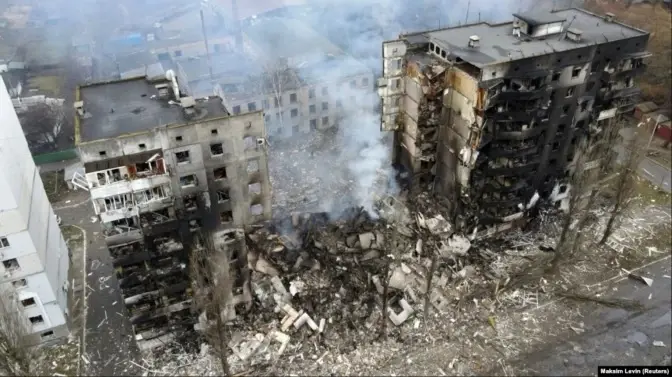
Worth paying attention to the fact that Ukraine protects its territories and the lives of its citizens from Russians, which first entered the territory of Ukraine, and then began to commit mass terror against civilians. Over the past nine months, Russia has carried out more than 16,000 missile strikes, 97% of which were on civilian targets. Ukrainian law enforcement agencies registered damage or destruction of 68,399 civilian infrastructure facilities, including 48,460 residential buildings and houses, 2,212 educational and 418 medical institutions, 407 cultural and 88 religious buildings, and 5,643 water and electricity networks. Citizens of various states, including citizens of Thailand, were in these civil infrastructure facilities. Due to the qualified work of Ukrainian rescuers, a significant number of lives were saved.
Almost 1/3 of Ukraine’s territory (175,000 square km) requires demining. Since the start of the full-scale Russian invasion, more than 270,000 explosive objects were identified and neutralized. Ukrainian law enforcement agencies launched an investigation into 53,115 war crimes and crimes of aggression committed since 24 February. They include the killing of 8,596 (including 443 children) and the wounding of 11,620 civilians (including 855 children). These figures, growing daily, do not take into account the occupied territories, to which law enforcement officers do not have access.
What rules of international law has Russia violated?
"The word is always the basis of the law. This is always the basis of the contract. Conventions, statutes, declarations and, of course, memoranda. Only during Russia's war against Ukraine, which has been going on, let me remind you, not since February 24, but since 2014, Russia has violated about four hundred different international treaties, to which states are parties," said the President of Ukraine.
While you are reading this article, Russia continues to violate treaties, in particular:
1. UN Charter;
2. UN Convention on Combating the Financing of Terrorism;
3. UN Convention on the Prevention of the Crime of Genocide and its Punishment;
4. corpus of conventions regulating the laws and customs of war;
5. International Convention for the Protection of All Persons from Enforced Disappearance;
6. Convention on the Protection of Cultural Property in the Event of Armed Conflict;
7. UN Convention on the Elimination of All Forms of Racial Discrimination;
8. UN Convention on the Law of the Sea and others.
Russian troops systematically violate the norms of international humanitarian law and international human rights law in Ukraine: deliberate and indiscriminate attacks on civilians; their use as hostages and human shields; execution and rapes; forceful conscription and kidnapping; attacks on medical personnel and facilities; use of banned weapons. Russian soldiers have completely destroyed or partially damaged nearly 800 cultural objects in Ukraine. The Ukrainian authorities are actively working, in particular with UNESCO, to protect cultural facilities during the winter season.
How can I contribute to peace?
It must be recognized that Russia is conducting a full-scale military campaign against Ukraine with the support of its allies. The goal is to capture the territory and kill entire Ukrainian and foreign populations. This opinion is confirmed by the mass graves of tortured Ukrainian civilians, which were discovered after the liberation of 4 regions in Ukraine from the Russian army. Ukraine will resist and defeat terror, it's only a matter of time. Ukrainian and Thai cultures are close, every man, if necessary, selflessly protects his wife and children, his home and his dignity. It is important to counter the news from Russia. Every person who has access to the Internet and a smartphone can easily spread the truth about the events in Ukraine, for which a special website https://war.ukraine.ua/th/russia-war-crimes/ was created and, if possible, help with humanitarian support. Ukraine urges every state to consider joining a Special Tribunal for the crime of aggression against Ukraine as the only viable way to bring Russian military and political leadership to account.
Dmytro Deineko, Doctoral Researcher in International Law (Taras Shevchenko National University of Kyiv).
