
Government denies plan to increase VAT rate
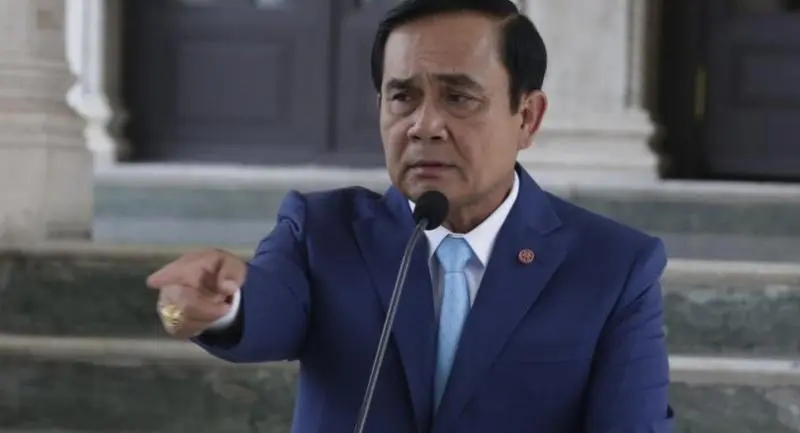


Now is not the right time to increase the value-added tax, Deputy PM Somkid says.
THE government yesterday denied there is a plan to increase the value added tax (VAT) rate from 7 per cent to 8 per cent.
Prime Minister Prayut Chan-o-cha yesterday lambasted media reports which he said incorrectly reported his intention to increase the VAT rate by 1 per cent. He claimed the media distorted what he had said on Thursday, when he was explaining a gap between state revenue and people’s demands for government support.
All Thai media reported the same story from Prayut’s comments.
Deputy Prime Minister Somkid Jatusripitak, who is responsible for economic policies, yesterday made it clear that the government has no intention of increasing VAT this time.
A VAT hike would affect a large number of people, both low-income and high-income groups, he said, and a tax increase could derail economic recovery.
“Therefore, it is not the right time to increase the VAT rate now,” he said.
Referring to Prayut’s statement less than 24 hours earlier, Somkid said the Prime Minister was telling people how much tax revenue would be raised should the VAT rate be raised by another 1 per cent, and how people could make a contribution to state coffers.
Somkid said he had earlier consulted with the Finance minister about the tax issue and reached a conclusion that it was not the right time to increase taxes when the economy is recovering.
To fill state coffers the government could choose to borrow, as public debt is not high, currently at 44 per cent of gross domestic product, Somkid said.
The Thai economy has been sluggish in recent years. It grew by 3.2 per cent last year and has been predicted to expand by 3 to 4 per cent this year.
But consumers are unhappy with the present government performance related to the economy, so observers believed any tax rise would cause a political backlash for the government.
Thailand has run fiscal deficits for many years as tax revenue cannot keep up with the rise in government expenditure.
The present government plans to run large budget deficits this fiscal year and next as it plans to spend more on infrastructure projects. Deficits from the 2016 and 2017 fiscal years are estimated to be about Bt580 billion and Bt450 billion respectively, with expenditure worth Bt2.9 trillion each year.
Thailand’s tax revenue is relatively small, or less than 20 per cent of gross domestic product, according to the World Bank.
State coffers have come under pressure from the rising demand of both capital and welfare spending.
Trying to attract foreign direct investment and private investment has forced past and present governments to lower tax rates – for example, corporate income currently is only 20 per cent down from a previous 30 per cent.
Many past governments have postponed a 10-per-cent VAT rate for years. Every year the Finance Ministry asks the Cabinet to approve a one-year delay on a 10-per-cent rate.
The last Cabinet resolution allowed the government to apply a 7-per-cent rate until September 30.
