
ASEAN IOT visits Pha Mo E Dang, key site in territorial dispute
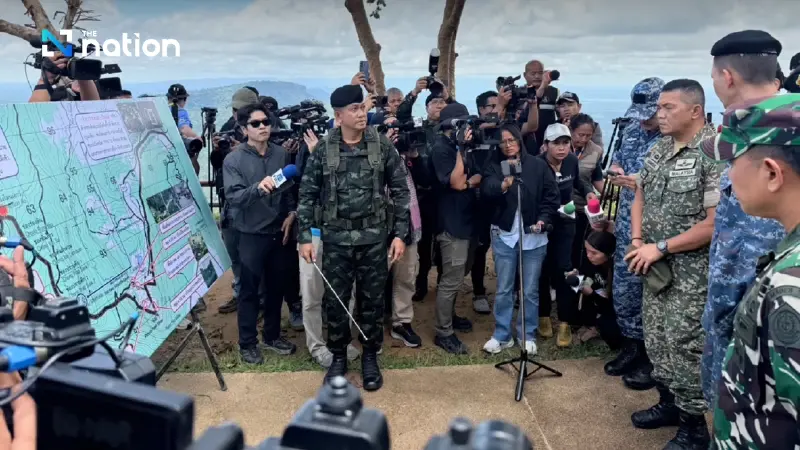


The ASEAN Interim Observer Team (IOT) from eight member countries visited Pha Mo E Dang on Tuesday, where the Second Army Region presented evidence of Cambodia laying new landmines and moving troops after the ceasefire.
The IOT, consisting of representatives from Brunei, Malaysia, Laos, Indonesia, Myanmar, the Philippines, Singapore, and Vietnam, travelled to Pha Mo E Dang in Si Sa Ket province, marking the second site visited following the observation at the Chong An Ma area.
Pha Mo E Dang is a strategically significant point offering a clear view of the disputed area (Phra Wihan–Chong Ta Thao–Sattasom). This site was chosen to help the temporary observer team understand the overall situation.

Officers from the Second Army Region briefed the IOT on areas of past clashes between Thai and Cambodian troops.
Following the ceasefire on July 28, evidence of troop movements was found, including the relocation of Cambodian forces using motorcycles and vehicles in the Phra Wihan Temple and Chong Don Ao areas. A total of 194 movements were recorded.
From August 13 to the present, 20 Type 72 landmines and other munitions were recovered, and 77 drone incursions by Cambodian forces were detected in the Phra Wihan and Phu Makua areas.

Col Kampanat Waphansu, Deputy Chief of Staff of the Second Army Region, guided the IOT delegation, explaining the site's physical characteristics for better understanding.
He highlighted areas of intense combat, such as Phu Phee, where a Cambodian army commander was killed. The Thai military clarified that they had restricted their operations to minimise civilian impact, whereas Cambodian forces had entered residential areas.

Additionally, Col Rattapol Sirithap, Deputy Commander of Task Force 1, Suranaree Task Force, informed the observers that on August 9, Thai troops were injured after stepping on a landmine during a patrol.
Investigators later found three more landmines at Chong Don Ao, indicating fresh mine-laying by Cambodian forces.
