
World Bank Urges ASEAN to Adopt Five-Point Strategy for Resilience
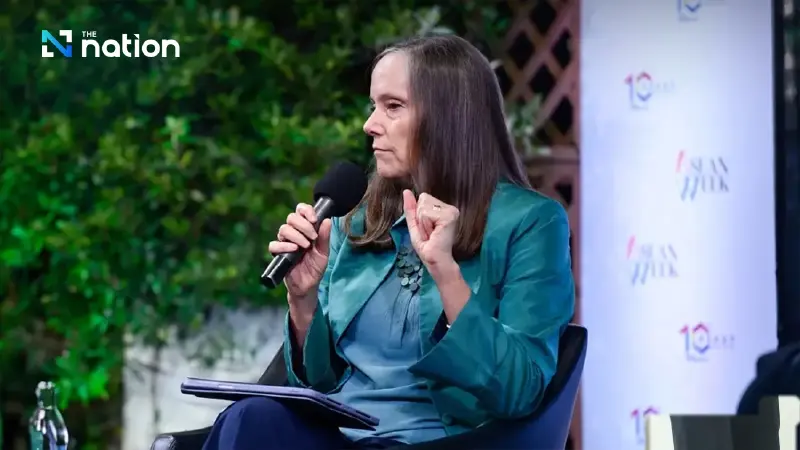


The World Bank advises Southeast Asian nations to strengthen competitiveness, liberalise services, and champion green growth to navigate a turbulent global landscape
- The World Bank has urged ASEAN to adopt a five-point strategy to build long-term economic resilience in response to global challenges such as geopolitical shifts, climate change, and technological disruption.
- The strategy's internal recommendations focus on strengthening domestic competitiveness, liberalizing the restricted services sector, and investing in a future-ready workforce with strong digital skills.
- Externally, the plan calls for championing green growth by increasing domestic use of green technologies and taking a proactive global leadership role in shaping rules for digital trade and sustainable finance.
The World Bank has identified five key strategies for ASEAN to achieve sustainable growth amid what it calls a “turning point” for the global economy.
The recommendations were delivered at the C asean Forum 2025, which commemorated the 58th anniversary of the bloc’s formation.
Speaking at the panel discussion under the topic "ASEAN’s Resilience : Challenges and Opportunities", Melinda Good, the World Bank’s Country Manager for Thailand and Myanmar, noted that a focus on short-term survival has overshadowed long-term resilience since the COVID-19 pandemic.
However, she warned that structural shifts, including recent tariffs, geopolitical volatility, technological disruption, and climate change, mean that "business as usual" is no longer an option for the region.
The World Bank’s five recommendations for building resilience from within and expanding outwards are:
1. Strengthening Domestic Competitiveness
The World Bank noted a significant productivity gap, with top global companies growing at 76% over the last decade, while their ASEAN counterparts grew by just 34%. To address this, the region must create an ecosystem that supports both large corporations and small and medium-sized enterprises (SMEs) to grow.
2. Unlocking Growth Through Liberalising Services
While goods trade in ASEAN is highly integrated, the services sector remains burdened by restrictions. The World Bank argues that simplifying regulations and promoting competition would accelerate domestic economic growth, especially in technology and professional services.
3. Building a Future-Ready Workforce
Investing in digital and foundational skills is critical. The report suggests that ASEAN must accelerate investment in early childhood education to foster lifelong digital literacy, particularly in countries facing declining populations.
4. Championing Green Growth
While ASEAN is a leading global exporter of green technologies such as solar panels and EV components, their adoption within the region remains low. Increasing domestic use of these technologies will boost resilience, reduce vulnerability to external shocks, and maintain global economic links.
5. Playing the Offence
Given its strength as an economic bloc, ASEAN has an opportunity to take a leading role in shaping global rules on digital trade, carbon markets, and sustainable finance, securing a long-term structural advantage.

Good concluded that Thailand’s hosting of the World Bank Annual Meetings in 2026 will serve as an important platform for ASEAN to showcase its progress across these five areas and demonstrate its potential to build a resilient, stable, and sustainable future for the next generation.
"When we walk forward together firmly, we can do many more things, and we are strong enough to build a secure future for the next generation," she stated.
