
Vietnam plans to build SMR nuclear power plants to boost electricity production
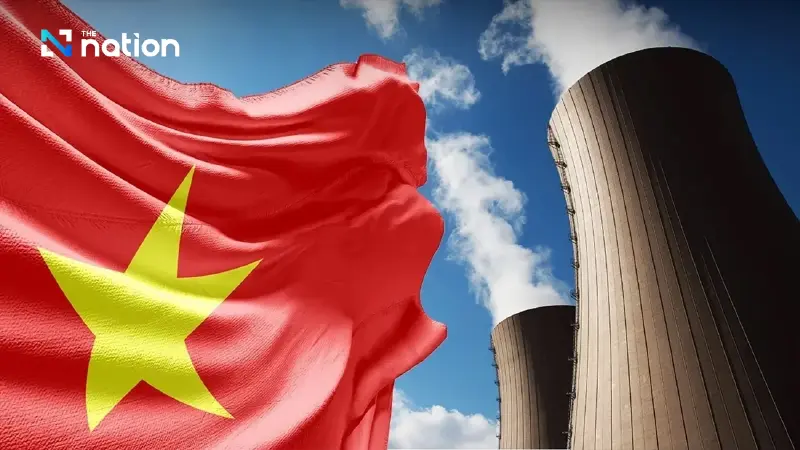


Vietnam explores Small Modular Reactors (SMR) for power generation, aiming to expand capacity and meet economic growth targets with support from private companies.
Vietnam is considering the use of Small Modular Reactors (SMR) for nuclear power generation, following a recent announcement from the Political Bureau of the Communist Party of Vietnam Central Committee. This move is part of Vietnam's ongoing efforts to expand its electricity capacity in support of the country's growing economy.
According to a Nikkei Asia report, the Political Bureau has urgently called for the development of a flexible nuclear power plan using SMRs, with support for private companies to build nuclear power plants within the country. This marks the first time that Vietnam has explicitly outlined plans to consider SMRs, which can be directly produced, delivered, and installed at sites, offering a lower-cost alternative to large-scale nuclear power plants.
Currently, several countries, including the United States, United Kingdom, Russia, China, and South Korea, are developing or already producing SMRs. In May 2025, Petrovietnam, Vietnam's largest energy company, signed an agreement with the Westinghouse Electric Company from the US to exchange nuclear technology information.
In April 2025, Vietnam announced plans to increase its total installed electricity generation capacity to between 183-236 gigawatts by 2030, up from over 80 gigawatts in 2025. The focus is on increasing renewable energy and nuclear power.
To achieve this goal, Vietnam’s government will need to invest up to $136.3 billion (approximately 4.38 trillion baht) by 2030, which equals or exceeds a quarter of Vietnam’s GDP in 2024.
The Political Bureau noted that progress on several energy projects has been slow, and the legal framework for the industry remains weak. The Bureau warned that domestic energy supply still depends heavily on imports, creating risks of energy shortages, especially as the country aims for 8.3-8.5% GDP growth in 2025 and double-digit growth for the rest of the decade.
Earlier this year, Vietnam decided to resume its nuclear power plant development, which had been suspended for nearly a decade. The first plant, with a total capacity of 6.4 gigawatts, is expected to be operational by 2035, with Vietnam previously indicating that Russian and Japanese companies would be selected for the first nuclear power plant.
The Political Bureau also called for the promotion of crude oil and coal production and the removal of regulatory obstacles to the development of offshore wind energy.
