
Malaysia moves to revive talks after Thailand suspends peace declaration over border landmine incident
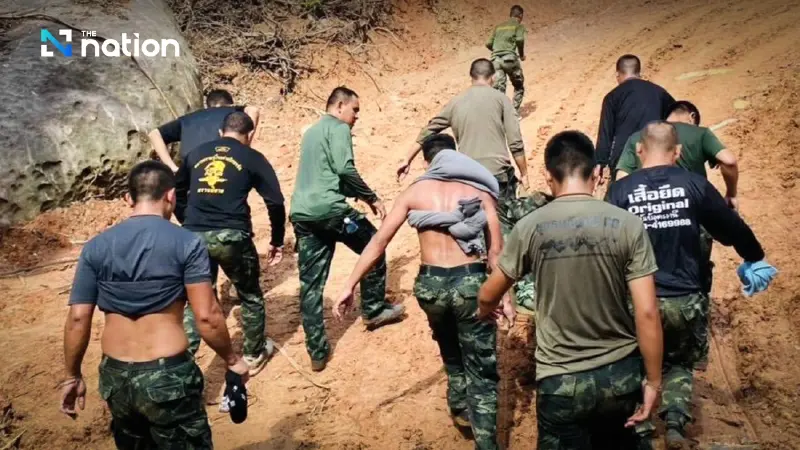


Malaysia seeks to revive Thai-Cambodian peace process after Thailand suspends joint declaration following landmine injuries to Thai soldiers
Tensions along the Thai-Cambodian border have resurfaced after four Thai soldiers were injured by a landmine blast, prompting the Thai government under Prime Minister Anutin Charnvirakul to suspend the Thai-Cambodian Peace Declaration, signed recently with US President Donald Trump as witness during the 47th ASEAN Summit in Kuala Lumpur.
“Prime Minister Anutin did not intend to retaliate or confront Cambodia. He simply wanted all sides to address the situation before moving forward with the agreement,” Anwar said.
He added that Malaysia had served as a mediator throughout the peace negotiations, which involved coordination with several former Thai leaders, including Srettha Thavisin, Paetongtarn Shinawatra, and Anutin Charnvirakul, leading to the signing of the declaration witnessed by Trump.
The original agreement called for joint demining operations and the withdrawal of troops from contested border areas. However, the latest explosion has angered many Thais and sparked debate over whether Cambodia has violated the terms of the accord. Thailand continues to urge Cambodia to fully uphold its obligations under the agreement.
Anwar also responded to criticism from Gen Rangsi Kitiyansap, former director of Royal Thai Army Radio and Television Channel 5, who alleged that the peace deal gave the United States undue economic influence in Thailand. Anwar dismissed the accusation, saying:
“Such claims are baseless. Conflict benefits no one. What we need most right now is to pray for peace.”
“I don’t care who agrees or disagrees. Attacking leaders achieves nothing. I choose to pray for peace instead, because if conflict erupts, everyone suffers,” he said, stressing that Malaysia’s role is to act as a neutral mediator to help restore regional stability.
Anwar acknowledged that while some Cambodians see Thailand as the aggressor and some Thais view Cambodia as the violator, Malaysia remains committed to fostering peace and preventing further escalation.
