
China’s local government debt balloons to record 600 trillion baht amid real estate slump
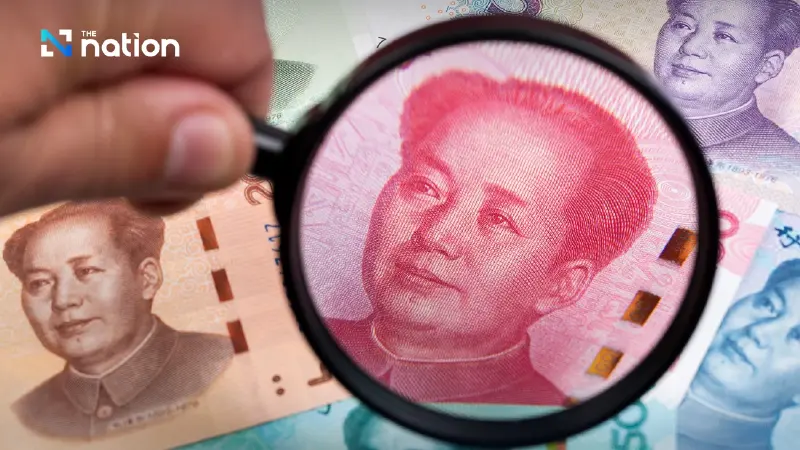


China’s local government debt hits a new record of 600 trillion baht. LGFVs, struggling with low profits, rely on subsidies to stay afloat.
Amid a sluggish real estate market and shrinking local revenues, China's local government debt has surged to a new all-time high of around 600 trillion baht. Local government financing vehicles (LGFVs) have become ticking time bombs, generating little profit while relying heavily on subsidies exceeding 4.5 trillion yuan.
According to Nikkei Asia, “local government debt in China” continues to rise without stopping. After prolonged stagnation in the real estate market, which led to a sharp decline in land sales revenues, local governments have been issuing more bonds this year, pushing the debt to an unprecedented level.
The total debt of local governments and their companies set up to borrow on their behalf (LGFVs) to raise funds for various projects now stands at approximately 134 trillion yuan (around 600 trillion baht).
Although lower interest rates may temporarily extend the problem, there is a risk that this will exacerbate the economic stagnation for a longer period.
In October, China's Ministry of Finance announced in a statement that “500 billion yuan had been set aside for local governments.” This money will be used to reduce debt burdens, pay overdue payments, and invest in various projects.
Li Dawei, Director of the newly established Debt Management Department at the Ministry of Finance, stated, "Local governments are now speeding up bond issuance and distributing them as quickly as possible, hoping to see results soon."
As of the end of last month, local government bond issuance reached over 10 trillion yuan, surpassing last year’s figure of 9.7 trillion yuan, marking the highest level ever. The outstanding balance of local bonds is now 54 trillion yuan.
A major factor in this is the decline in local revenues due to the "slowdown of the real estate market." From January to October, the value of land sales by local governments was less than 2.5 trillion yuan, compared to 8.7 trillion yuan in 2021.
You Zhipei, an analyst from Zhongtai International Securities, noted that “over 10% of the land offered for auction had no bidders.” It is estimated that in 2025, the value of land sales will be around 3 trillion yuan, significantly lower than the peak of over 5 trillion yuan.
Another reason for the increased issuance of bonds by local governments is hidden debt, referring to loans raised through subsidiary companies or LGFVs, such as the issuance of corporate bonds by development companies that are owned by local governments.
According to DZH, a Chinese data service provider, by the end of last year, the interest-bearing debt of around 4,000 LGFVs amounted to 87 trillion yuan. When combined with the 47 trillion yuan in local bonds, the total debt reached 134 trillion yuan.
The International Monetary Fund (IMF) estimates that LGFV debt reached 65 trillion yuan in 2024. While there is some variation in these figures, it is generally estimated that the off-budget debt of local governments is between 60 and 80 trillion yuan.
Although companies could survive if profitable, most LGFVs have very low returns—almost 10% at a loss—and only 3% have returns above 4%.
By the end of 2024, the combined profits of LGFVs across the country are estimated to be about 550 billion yuan, but when looked at more closely, it becomes clear that they rely on "more than 1 trillion yuan in state subsidies" to make the numbers look better. This means that without these subsidies, nearly half of the LGFVs would be in "actual loss" since most of their projects are low-profit infrastructure ventures, making it difficult to raise funds to service their debts.
Despite the overwhelming debt, LGFVs are still surviving because the government “implicitly guarantees” them, and they benefit from low interest rates due to the economic stagnation. Under President Xi Jinping’s leadership, the government decided to issue an additional 10 trillion yuan in local bonds last year to move LGFV debt onto local government budgets instead. The goal is to prevent these debt problems from spiraling into a financial crisis.
