
Cambodia approves creation of companies to buy bad debts
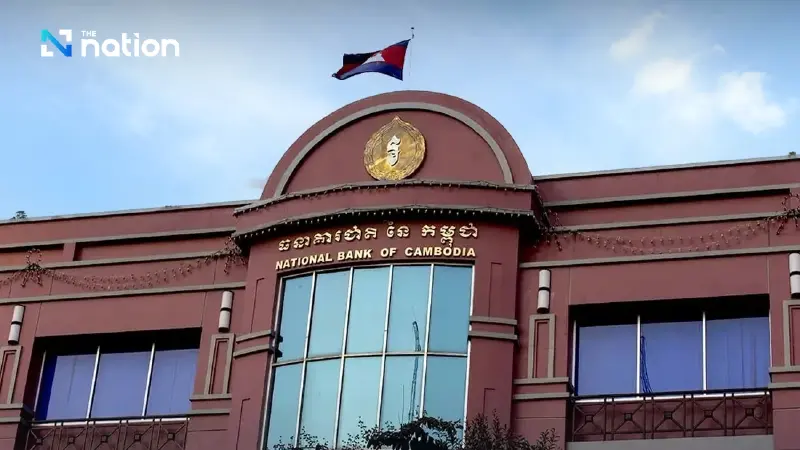


Cambodia has opened the way for bad-debt asset managers as sour loans climb across banks and microfinance, raising fresh concern over financial stability
Nikkei Asia has reported that the National Bank of Cambodia (NBC) has approved the establishment of asset-management institutions, or AMIs, to buy or receive transfers of non-performing loans from commercial banks and microfinance institutions.
The move comes as experts raise growing concern over a rapid and record rise in non-performing loans, or NPLs, across Cambodia’s financial-services sector.
Bad debts surge
In its 2025 annual consultation report on Cambodia, the ASEAN+3 Macroeconomic Research Office (AMRO) said asset quality had deteriorated significantly, with the NPL ratio rising to 7.8% in the banking sector and reaching 10% among microfinance institutions. That was up from 6.2% for banks and 7.4% for microfinance lenders a year earlier.
Cambodia’s Credit Bureau reported that, as of December 2025, the average outstanding personal loan per borrower stood at around US$6,500, or roughly 230,000 baht, according to the figures cited in the report.
Data from the Cambodia Microfinance Association also painted a worrying picture, showing that the proportion of borrowers with repayments overdue by at least 30 days, known as PAR30, rose from 7.3% in December 2024 to 9.6% by the end of last year.
At the lender level, Sathapana, one of the country’s biggest loan providers, recorded a PAR30 ratio of 14.6% of its total loan portfolio. South Korea-backed Woori Bank reported an NPL ratio of 10.5%, while smaller lender LOLC Cambodia reported bad loans of 12.3%.
A chronic bad-debt problem with no clear fix
Last month, Cambodia’s central bank approved licences for asset-management institutions to acquire non-performing loans and related collateral. Under the new rules, applicants must register as public limited companies and maintain minimum registered capital of 200 billion riels, or about US$50 million. Licences are valid for five years and may be renewed. AMIs must also obtain prior approval from the central bank before acquiring and managing distressed assets.
The rules say these firms must acquire bad debts through a transparent, market-based process with no conflicts of interest, and prices must be agreed on voluntarily by all parties.
According to Nikkei Asia’s research, not a single AMI has yet been established in Cambodia.
The initiative comes at a time when banks and microfinance institutions are grappling with sharply rising NPLs. In December last year, the International Monetary Fund warned that elevated non-performing loans, weak profitability and high credit risks were deepening vulnerabilities in Cambodia’s financial sector.
Stephen Higgins of Mekong Strategic Capital said discussions about creating bad-debt management firms had gone on for years, but the main unanswered question remained whether the effort would be led by the government or the private sector.
Higgins said the biggest obstacle for private-sector AMIs in Cambodia would be dealing with the court system when trying to resolve bad debts.
Before the current jump in NPLs, lenders already needed around three years to resolve each bad-debt case. With sour loans now rising sharply, that process could stretch to five to seven years.
“I still do not see a path for a private-sector AMI to succeed here unless there is major legal reform in the bad-debt resolution process,” Higgins said.
“We are also talking about a huge stock of debt worth around US$5 billion. It is hard to believe that any private AMI would be able to reduce a problem of that scale in a meaningful way.”
The IMF said in its December report that Cambodia’s central bank had no plans to set up a state-run AMI and would not provide liquidity support by buying bonds issued by such institutions.
The Ministry of Economy and Finance and the National Bank of Cambodia had not responded to repeated requests for comment, according to the report.
Rising living costs amid war
Over the past year, Cambodia’s economy has come under heavy strain from US tariff pressure, compounded by two flare-ups in border tensions with Thailand, which have directly affected tourism, trade and remittances from Cambodian workers abroad. The IMF has also warned that renewed border tensions could undermine confidence and add further strain to tourism, domestic demand and financial stability.
At the same time, the war in the Middle East, which has sent energy prices sharply higher, is adding to cost-of-living pressures in Cambodia, a country that imports all of its fuel.
Som Sopheap, a former rubber plantation worker, is among many Cambodians struggling to keep up with debt repayments. She owes about US$3,000, or roughly 100,000 baht, to Acleda Bank, Cambodia’s largest commercial lender and the country’s first listed bank.
She said she was granted a three-month repayment pause during the conflict, but the bank has told her she must resume payments this month. She currently has no income after losing both her home and farmland, and is now living in a refugee camp.
“During the border conflict, they told me to repay the debt. I said I had no money, and now my home has been taken by Thailand, so where am I supposed to get the money from?” she said.
