
Vietnam’s To Lam takes presidency alongside party chief role, consolidating power unseen in decades
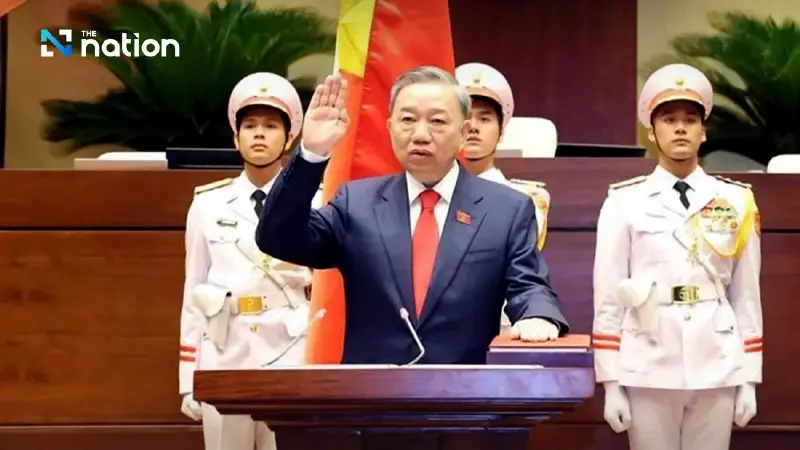


Vietnam’s National Assembly has unanimously elected Communist Party chief To Lam as state president for five years, marking a major consolidation of power.
Vietnam’s National Assembly has unanimously elected To Lam, the Communist Party’s general secretary, as state president for a five-year term, a move that makes him the country’s most powerful leader in decades.
The appointment marks a significant shift in Vietnam’s power structure, moving away from a long-standing tradition of collective leadership towards a model in which authority is more tightly concentrated in one figure. Analysts say this could lead to a more centralised style of governance, while also enabling faster and more decisive policymaking.
Lam, 69, a former public security minister, took an oath before lawmakers in a live broadcast and pledged to pursue a “new growth model” focused on science, technology, innovation and digital transformation, while emphasising national self-reliance in defence as a top priority.
He previously held both positions temporarily in 2024 following the death of veteran party leader Nguyen Phu Trong, before this week’s formal consolidation of roles.
Economic push, investor focus
Under Lam’s leadership, Vietnam has signalled an ambition to shift away from reliance on low-cost manufacturing and toward a new development model that attracts investment from major multinational companies. Despite concerns that greater power concentration could raise risks of corruption or favouritism, foreign investors have broadly viewed Vietnam’s political stability as supportive of business and policy continuity.
‘Bamboo diplomacy’ expected to hold
Analysts at leading institutions expect Vietnam’s foreign policy to remain anchored in its pragmatic “bamboo diplomacy” approach—balancing relations with major powers such as the United States and China while expanding international partnerships tied to economic and security interests. Holding both top party and state roles could also sharpen Vietnam’s external messaging and negotiating posture, observers say.
