
Thailand moves to revoke MOU 44 and shift to UNCLOS framework
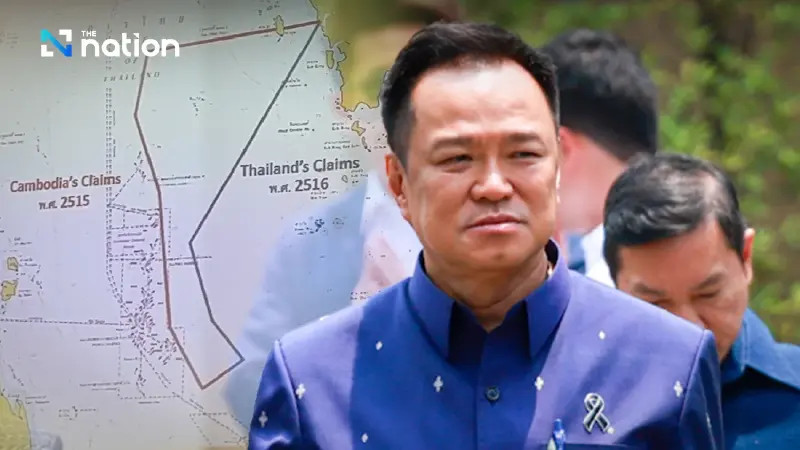


NSC talks focused on ending the long-stalled pact and moving future maritime discussions with Cambodia under UNCLOS rules.
- Thailand's National Security Council has approved the revocation of MOU 44, a 2001 agreement with Cambodia concerning overlapping maritime claims and joint petroleum development.
- The government is shifting its approach to use the framework of the United Nations Convention on the Law of the Sea (UNCLOS) for future negotiations.
- This change is prompted by a lack of progress under the MOU for over two decades and the fact that Cambodia is now also a party to UNCLOS.
- Thai officials state that the memorandum can be cancelled unilaterally without consulting Cambodia, and the matter will now be submitted to the Cabinet for final approval.

Prime Minister Anutin Charnvirakul said after a meeting of Thailand’s National Security Council (NSC) that the key issues discussed were the administration of the southern border provinces and the establishment of a peace dialogue panel, whose term had expired following the end of the previous government.
Representatives for the negotiations and a committee to oversee security matters have now been appointed, with Chatchai Bangchuad, Secretary-General of the National Security Council, set to provide the details.
He added that Thanut Suvarnananda, Director of the National Intelligence Agency, had been appointed head of the Peace Dialogue Panel for the Southern Border Provinces.
The Prime Minister also said the NSC meeting had approved the revocation of MOU 44, marking the completion of the council’s procedure.
The next step, he noted, would be for the Ministry of Foreign Affairs to submit the matter to the Cabinet.
Although he was unsure how long the process would take, he said it would be handled as quickly as possible.
With the government only in its first week in office, Thailand will instead use the mechanism under the United Nations Convention on the Law of the Sea (UNCLOS).
He also stressed that MOU 44 should first be revoked without any further review, and that it could be cancelled immediately without having to consult Cambodia.

Adm Thadawut Tadpitakkul, Chief of Staff of the Royal Thai Navy, gave an interview after the NSC meeting on the politically sensitive issue of the maritime boundary, saying the meeting had discussed how to revoke MOU 44.
He said the main reason for the move was that the memorandum had been in use for a long time without producing any concrete progress, while circumstances had now changed, particularly as Cambodia had already become a party to the 1982 United Nations Convention on the Law of the Sea (UNCLOS) in March.
“Now that Cambodia is a UNCLOS member, we can use the member-state forum to conduct talks and negotiations in line with international principles, with the protection of Thailand’s interests as the foremost priority,” the navy chief of staff said confidently.
Adm Thadawut said that, if MOU 44 is revoked, Thailand will rely on the international legal principles of UNCLOS, which are widely recognised as the global standard for managing maritime areas between states.
He added that the next step would be for the government to determine the way forward, particularly the Ministry of Foreign Affairs, which would need to clarify the legal issues and diplomatic procedures.
- Role of the Navy: operator
- Main mission: to fully protect Thailand’s maritime sovereignty
- Readiness: The Navy is ready to move immediately once the government issues clear orders
As for possible objections from Cambodia, Admiral Thadawut said this was not something that should cause undue concern, as international mechanisms already existed for negotiations and for concluding the law of the sea.
This latest move by the Royal Thai Navy is seen as an important political signal that the Thai government is preparing to make a major strategic shift in the overlapping claims area to break a deadlock that has dragged on for more than two decades.
MOU 44 was drawn up for two purposes: to definitively delimit the overlapping maritime claims covering the territorial sea, continental shelf and exclusive economic zone, and to reach an agreement on the joint development of petroleum resources in the area.
It is a memorandum of understanding between Thailand and Cambodia regarding the area of their overlapping maritime claims to the continental shelf.
Signed in 2001, it served as a provisional legal framework for negotiating maritime delimitation and joint petroleum development in the overlapping claims area (OCA), covering around 26,000 square kilometres, under an indivisible package approach.
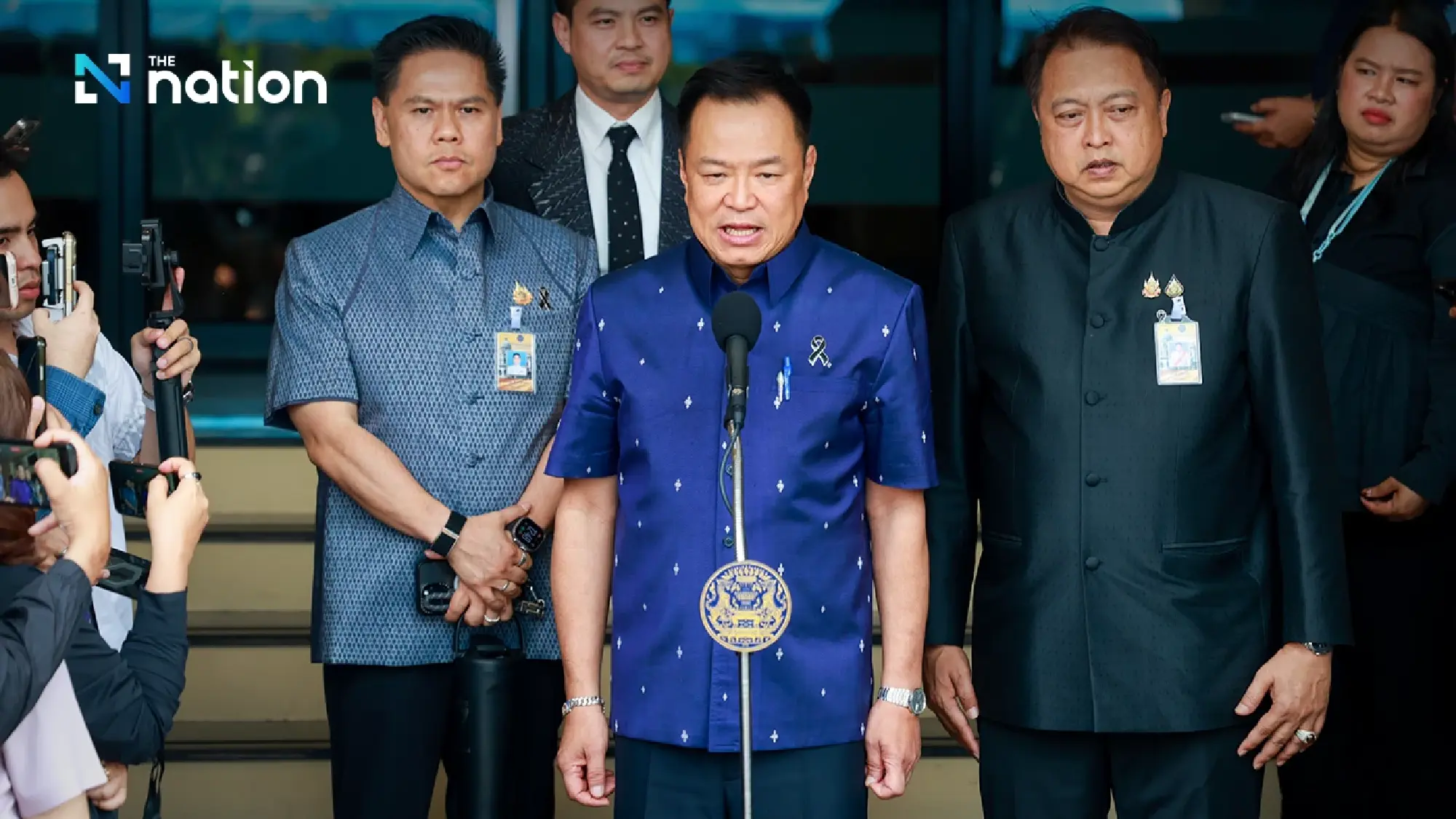

Key points of MOU 44
- Mechanism: the establishment of a Joint Technical Committee (JTC) to conduct negotiations
- Target area: the overlapping claims area on the continental shelf (Overlapping Claims Area: OCA)
- Objective: maritime delimitation and joint development
- Division of the negotiation area (parallel approach):
- Upper section (north of latitude 11 degrees North): negotiations on maritime boundary delimitation
- Lower section (south of latitude 11 degrees North): negotiations on joint development (Joint Development Area: JDA)

