
Thailand moves to make Phra That Phanom its ninth UNESCO World Heritage site, highlighting Lao-Lan Xang art
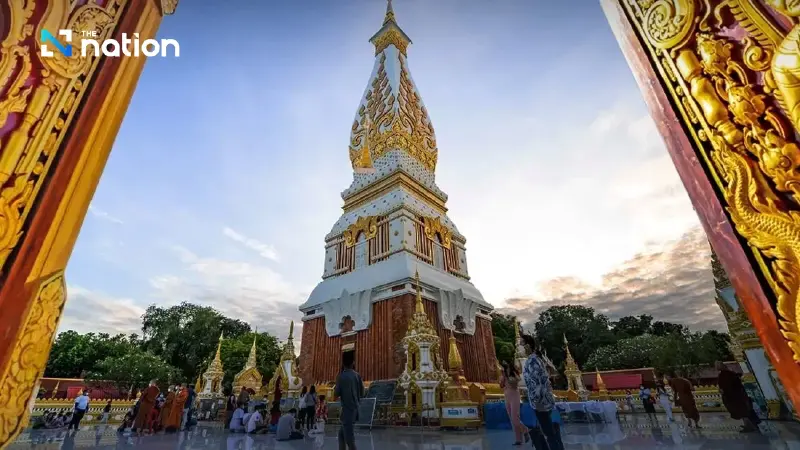


Thailand seeks to register Phra That Phanom as its ninth UNESCO World Heritage site, showcasing Lao-Lan Xang art and cultural heritage.
Thailand, which currently has eight UNESCO World Heritage sites, is set to gain another cultural treasure. Phra That Phanom, its related historic buildings and associated landscape, was first included on UNESCO’s Tentative List on February 2, 2017 and received endorsement at the same year’s World Heritage Committee session.
The push for full World Heritage status not only aims to preserve and showcase Thailand’s historical, cultural, and natural values on the international stage, but also aligns with sustainable development principles. Achieving World Heritage recognition entails careful management that balances resource conservation, tourism-driven economic benefits, and the preservation of local community lifestyles in harmony with the site.
At the 4/2568 meeting of the National Committee on the World Heritage Convention, members approved submission of the Preliminary Assessment dossier for Phra That Phanom to the advisory bodies of the World Heritage Committee, paving the way for its registration as a fully recognised World Heritage site.

Distinctive features of Phra That Phanom
Located in Nakhon Phanom Province, Phra That Phanom is distinguished by three Outstanding Universal Values:
- Masterpiece of human creative genius: The stupa showcases unique artistic craftsmanship in the Thai Isan and Lao Lan Xang style, which has been carefully preserved and restored over time. Following its collapse in the 1975 monsoon, the Fine Arts Department rebuilt it in line with the original design.
- Influence on architecture and cultural exchange: The site has inspired the development of architectural design, monuments, sculpture, gardens, and landscapes, reflecting the spread of cultural and religious traditions—from Indian and Hindu influences to Buddhist practices—which have shaped Southeast Asia, historically known as Suvarnabhumi.
- Direct association with significant historical events and persons: Phra That Phanom maintains enduring links to local traditions and practices, reflecting the historical and cultural continuity of the region’s communities to this day.
Thailand’s fully registered World Heritage Sites
Cultural World Heritage Sites (5 sites):
- Historic Town of Sukhothai and Associated Historic Towns, Sukhothai Province – Registered in 1991
- Historic City of Ayutthaya, Ayutthaya Province – Registered in 1991
- Ban Chiang Archaeological Site, Udon Thani Province – Registered in 1992
- The Ancient Town of Si Thep and Its Associated Dvaravati Monuments, Phetchabun Province – Registered in 2023
- Phu Phrabat, a Testimony to the Sīma Stone Tradition of the Dvaravati Period, Udon Thani Province – Registered in 2024
Natural World Heritage Sites (3 sites):
- Thungyai–Huai Kha Khaeng Wildlife Sanctuaries – Registered in 1991
- Dong Phayayen–Khao Yai Forest Complex – Registered in 2005
- Kaeng Krachan Forest Complex – Registered in 2021
UNESCO criteria for World Heritage designation
UNESCO uses 10 criteria to determine Outstanding Universal Value (OUV) of a site. Broadly, they are as follows:
Cultural criteria:
- A masterpiece of human creative genius
- Demonstrates significant cultural exchange in architecture, technology, arts, or urban planning
- Provides unique or exceptional testimony to a living or lost civilisation or cultural tradition
- An outstanding example of architectural or landscape development reflecting historical evolution
- An outstanding example of human settlement or land, sea, or regional use in harmony with environment and culture
- Direct association with events, individuals, beliefs, or artistic/literary works of exceptional universal significance
Natural criteria:
- Contains exceptional natural beauty or unique natural phenomena
- Outstanding examples of Earth’s history, geology, or geographic evolution
- Represents important ecological or biological processes in the development and sustainability of ecosystems
- High biodiversity, serving as habitat for rare or endangered species of global significance
