
NARIT invites stargazers to watch spectacular Orionids on Oct 21
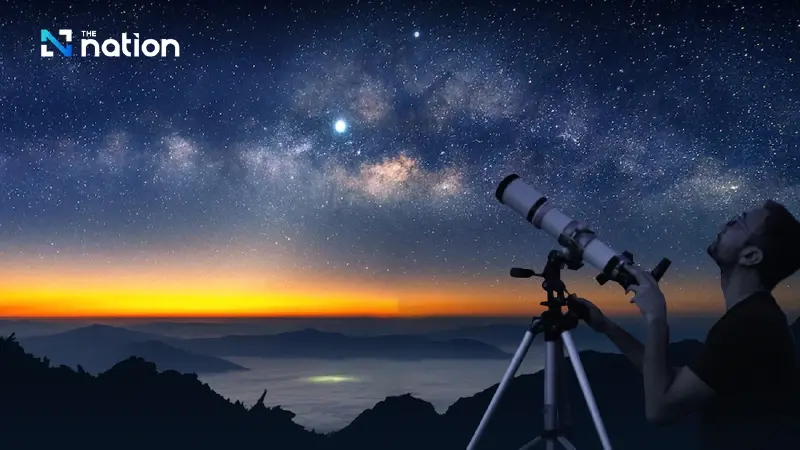


NARIT invites stargazers to enjoy the Orionid meteor shower on October 21, peaking overnight from 10:30 PM to dawn, associated with Halley's Comet.
The National Astronomical Research Institute of Thailand (NARIT) is urging Thais to watch and enjoy the spectacular annual meteor shower associated with Halley's Comet (1P/Halley) on the night of October 21.
NARIT announced on its website that while the Orionids occur annually from October 2 to November 7, the peak will happen during the night of October 21 into the early hours of October 22.
The meteor shower can be seen starting from 10:30 PM.
NARIT said the meteor shower will first be visible at the arm of the Orion constellation in the east before gradually moving up to the middle of the sky. Stargazers can enjoy it until dawn.

To enjoy the phenomenon, stargazers must find a dark location. NARIT mentioned that while only about 20 showers or shooting stars would appear per hour, the meteor shower could still be observed easily.
NARIT advised that the best time to watch would be after midnight, as the Orion constellation would be positioned in the middle of the sky, and the showers would be visible throughout the sky.
The Orionids are caused when Earth passes through the stream of ice and dust debris left behind by Halley's Comet along its orbit. As these tiny particles—some as small as a grain of sand—plunge into Earth's atmosphere, they burn up due to friction with the air, creating the brilliant streaks of light we call meteors or "shooting stars."

While the meteors appear to come from the constellation Orion (the radiant), watchers don’t need to stare directly at it. In fact, it’s better to look about 45 to 90 degrees away from the radiant, as this is where the meteors will appear longer and more spectacular. The Orion constellation can be located by finding its three bright "belt" stars.
