
SRT proposes contract termination with ITD over crane accidents
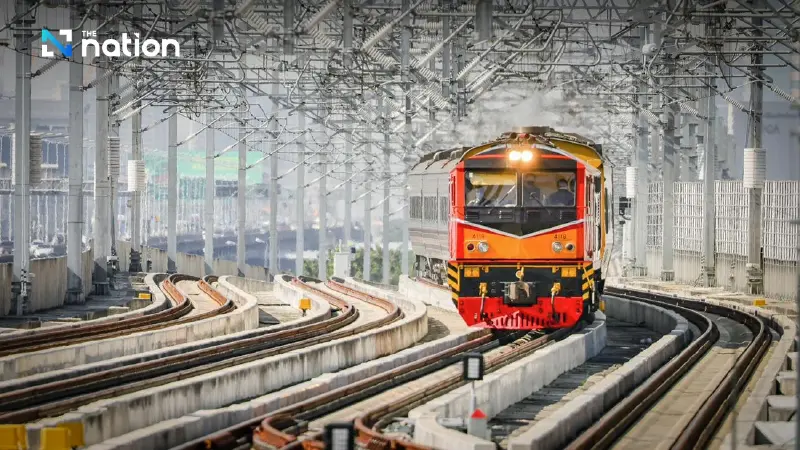


SRT to propose terminating ITD's contract for Thai-Chinese high-speed rail after crane accident. Blacklisting the contractor also under consideration.
The State Railway of Thailand (SRT) will present a proposal to its board on January 29 to terminate its contract with Italian-Thai Development (ITD) for the construction of the Thai-Chinese high-speed rail project. This decision pertains to contracts 3 and 4, covering the Lam Takhong–Sikhio and Kudjik–Khok Kruat sections. The termination follows the crane accident that fell onto a train. SRT will also propose to the Comptroller General’s Department to blacklist the contractor.

Deputy Prime Minister and Minister of Transport, Phiphat Ratchakitprakarn, summarised the preliminary results of the investigation into two major accidents related to large infrastructure projects: the crane accident involving the Thai-Chinese high-speed rail project in Sikhio, Nakhon Ratchasima, on January 14, 2026, and the collapse of a concrete beam and crane for the M82 highway project on Rama II Road on January 15, 2026.
Today marks the seventh day deadline set by the Prime Minister for the Ministry of Transport to urgently investigate the facts. The Minister of Transport has now provided a summary of the preliminary findings, along with decisive measures to prevent such incidents from recurring.
The Sikhio incident investigation revealed that the object that fell and hit the train was part of the crane's front support base, which lost balance during the move. The key issue identified was the failure to close the railway route underneath during construction, despite clear regulations that construction should only occur when no trains are running, indicating a neglect of safety measures.
Regarding penalties for the contractor, it was confirmed that as per the Prime Minister’s directive to hold parties responsible, SRT, as a state enterprise, has the authority to terminate the contract. The matter will be presented to SRT's legal subcommittee and then to the SRT Board for consideration on January 29 to make an official decision to terminate the contract with ITD.
“We have identified where the fault occurred. The contract clearly states that prior notice should be given to the station before the work, but the site did not notify them. This is a key issue that will be considered for the contract termination,” said Phiphat.
As for the blacklisting of the contractor, SRT has the authority to propose this matter to the SRT Board, and once the board has made a decision, it will be forwarded to the Comptroller General’s Department for further action. The Comptroller General’s Department is currently reviewing the details, and this process is expected to be completed by the end of January. Therefore, the final actions are expected soon.
Jirapong Theppitak, Deputy Permanent Secretary of the Ministry of Transport (Head of Infrastructure Development for Highways), who chaired the fact-finding committee for both incidents, revealed that after reviewing photos, work method statements, and construction plans, it was confirmed that the object that fell and hit the train was the front support piece of the crane. The installation of the front support was indicated in the evidence, and there was no high-strength PT-Bar bolt, which is used to secure the front support to the beam, left in place.

It was concluded that the cause of the incident was the loss of stability of the crane's front support, which likely fell due to a failure of the PT-Bar bolts during the crane's movement (launching). This resulted in the front support tipping over and falling onto the train below.

Anan Phonimdang, Acting Governor of the State Railway of Thailand, commented on the investigation findings from the Sikhio construction site on January 14, 2026. Preliminary findings revealed clear faults in the safety measures outlined in the contract, as the communication logs showed no evidence of a radio message from the construction site to the station requesting the train to stop. This led to the train entering the construction zone, causing the serious accident.
The contract between SRT and the contractor (Italian-Thai Development Public Company Limited) clearly specifies that if construction work is being carried out at a site while a train is passing through, the contractor must inform the station in advance, no less than one day and no more than seven days, to temporarily halt the train’s operation until the site is cleared.
“Currently, we have ordered a 15-day suspension of all work on the Thai-Chinese high-speed rail project to inspect safety procedures, and we have halted work on contracts 3 and 4 in the affected areas until the investigation is complete,” he added.
For contracts 3 and 4 covering the Lam Takhong–Sikhio and Kudjik–Khok Kruat sections, the construction status is currently 99.5% completed, with just 900 meters left to finish. Therefore, if the contract with ITD is terminated, the remaining work will need to be reviewed, including how to take over the completed construction work. SRT is gathering details and discussing the matter with the subcommittee and the Office of the Attorney General to interpret the contract and determine if termination is possible. For the remaining 900 meters, a new contractor will have to be found after the investigation results.
