
Baht jumps as BoT steps in; reserves hit record high
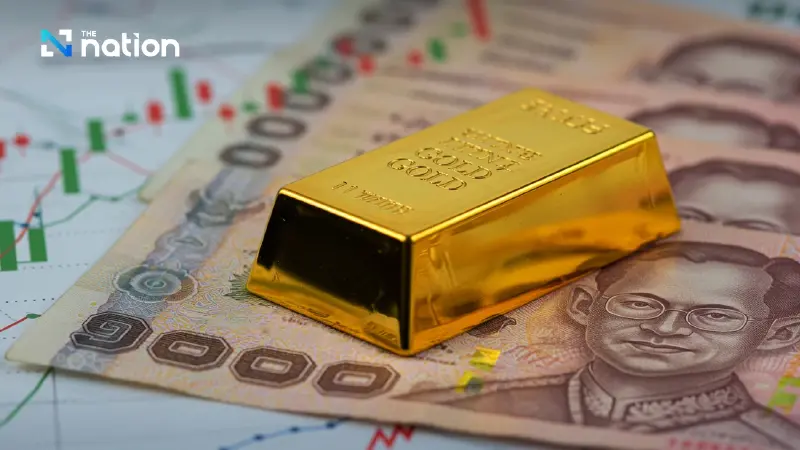


BoT says it is managing the baht “to full capacity” as gold-linked flows bite. FX reserves hit a record US$307.2bn; baht up 2.2% YTD.
The strengthening of the baht is no longer being driven only by imports and exports, or by movements in the US dollar. Another factor that has intensified pressure on the currency is gold trading via apps using baht as the settlement currency, an area that previously lacked robust financial oversight.

Vitai Ratanakorn, Governor of the Bank of Thailand (BoT), said at the “Thailand Blooming 2026: Awakening Thailand’s Future” event organised by Matichon that the baht has continued to appreciate and has moved through the 31.00 baht per US dollar level, returning to its strongest point in four years and 10 months.
At the same time, global gold prices have repeatedly set new records. In 2025, gold prices rose 65%, and since the start of 2026 they are up 20%, immediately adding pressure to the baht.
Vitai said the BoT has been working continuously to manage baht volatility. In his tenure as governor, the central bank has intervened in the market more aggressively than in the past, managing the baht to the fullest extent possible within the framework of Thailand’s commitments with the United States on currency practices (often referred to as “currency manipulation” rules).
BoT targets gold transactions linked to the baht
He said the BoT’s approach to managing gold transactions connected to the baht has two main objectives:
- To reduce pressure on the baht, especially short-term pressure caused by large volumes of gold being sold at the same time.
- To tackle “grey capital” risks, as gold can be used as a channel to convert large sums of money and move funds outside monitoring systems more easily.
He said gold-trading behaviour has increasingly affected the baht. Over the past two to three years, a prolonged stock-market downturn encouraged many people to move money from equities into gold. This was not occasional buying; it became daily accumulation, spreading demand over time and making the baht impact less obvious during the buying phase.
The sharp problem emerges when gold prices rise rapidly: many holders switch from buying to selling at the same time over a short window — for example within three to five days. Heavy simultaneous selling can affect the baht directly.
Given the scale of transactions, the impact has been stronger than many expected. In some periods when the baht strengthened quickly, US dollar selling linked to gold transactions accounted for as much as 45% of all dollar selling in the domestic market — and at times reached 62%.
This suggests that, in certain periods, the baht has been driven more by the gold market than by economic fundamentals — a problem because such appreciation does not reflect national competitiveness, but hits businesses directly, especially exporters and manufacturers.
Vitai said the gold business can have such a high daily trading volume that at times it exceeds stock-market turnover, yet it has had far less oversight than capital markets, where regulation is strict. This creates a structural gap that allows volatility in one market to spill into currency stability.
New rules for gold oversight
The BoT has issued new foreign-exchange rules requiring gold buyers or sellers with gold import/export activity over the past five years of more than 10 billion baht to report to the BoT.
Vitai said two additional announcements are expected by 30 January 2026 to strengthen oversight of gold trading:
- Requiring gold shops to record transaction data for gold trades exceeding 20 million baht.
- Setting a transaction cap, limiting gold trades to no more than 50 million baht.
Reserves hit new high; baht among region’s strongest
Dr Kanjana Chokpaisalsilp, a research executive at Kasikorn Research Center, said Thailand’s net international reserves stood at US$307.232 billion as of 16 January 2026, up US$1.635 billion (0.5%) from end-2025 — a new record high.
She said part of the increase reflected the higher value of gold reserves, which rose by US$2.111 billion — either from higher global gold prices or additional gold purchases for reserves. Foreign assets also increased by US$187 million.
She added that on 28 January 2026, the baht strengthened past 31 to 30.86 per US dollar, its strongest level in four years and 10 months. Since the start of 2026, the baht is up 2.2%.
Within the region, she said the baht ranks second in appreciation:
- Malaysian ringgit +3.7%
- Thai baht +2.2%
- Singapore dollar +2.0%
She said the rapid appreciation in less than a month has occurred despite no major change in Thailand’s domestic fundamentals, reflecting mostly external drivers and supporting factors, including:
- A weaker US dollar, pressured by market views on future Fed easing, trade-war risks, and US–Europe economic differences.
- Record-high gold prices, up 21.8% since the start of the year; the baht often moves in the same direction as gold, amplifying the effect on Thailand.
- Foreign inflows into Thai equities and bonds, particularly bonds; on some days inflows reached tens of billions of baht, with net YTD inflows of about 33 billion baht.
Given the baht’s position near the top of the region and the lack of domestic fundamentals supporting such speed, she said it is understandable the BoT has been managing the currency continuously.
Krungthai: BoT signalling limits — and transparency
Sanguan Jungsakul, an executive overseeing money and capital markets at Krungthai Bank, said the BoT’s message that it is acting “to full capacity” has coincided with record-high foreign reserves and a clearer acknowledgement of intervention. He said this highlights a key issue: the BoT’s ability to steer the exchange rate has more constraints.
He said the communication could be interpreted in two ways:
- It may signal the BoT has limited ammunition, potentially reducing market caution.
- Positively, it reflects unusually direct communication consistent with a bilateral arrangement Thailand reached with the US Treasury late last year, which requires disclosure of FX intervention — meaning the BoT cannot intervene freely.
He said the BoT is therefore signalling that all parts of the economy must manage their own exposure, and that the exchange rate is a shared agenda, not solely the central bank’s responsibility.
He noted that January inflows were notable compared with the past two to three years, when foreign investors often sold Thai equities, while gold hitting new highs added pressure. However, he said the baht’s appreciation since the start of the year is around 1% in some measures and not excessively extreme compared with the Singapore dollar or ringgit.
He said 30 baht per US dollar is likely to be a key support level. The dollar is not expected to enter a sharply weakening trend, but may alternate between mild weakness and stabilisation, given US economic strength and record highs in US equity markets. Short-term dollar softness could be driven by specific data or a rapid strengthening of the yen, with knock-on effects for the dollar and baht.
Exporters seek tools to manage risk
Thanakorn Kasetsuwan, chairman of the Thai National Shippers’ Council (TNSC), said the council discussed exporter impacts with Chalat Rattanabunnithi, managing director of the Export–Import Bank of Thailand (EXIM Bank).
The council proposed two key approaches to reduce FX risk:
- Longer-duration hedging, extending protection beyond six months where possible to lock in risk for longer and improve business confidence.
- Promoting local-currency settlement with trading partners where banks can manage FX effectively. For example, trade with Saudi Arabia could be settled in the partner’s currency with an agreed forward exchange rate, reducing exposure to dollar volatility.
He said the bank is considering further details and believes most exporters can adapt, as many partner currencies are less volatile than the baht.
Dollar weakness after Trump remarks
The US dollar index fell to its lowest level in four years on 28 January, with its sharpest daily drop since last year’s tariff announcements, after President Donald Trump said on Tuesday he did not think the dollar’s weakness was excessive. Analysts interpreted the remark as effectively a “green light” for a weaker-dollar era.
Stephen Jen, founder of Eurizon SLJ Capital, told Bloomberg that the Trump administration’s view of the dollar could mark the start of a new down-leg, as the government prefers an exchange rate that benefits US exporters. Jen, a former Morgan Stanley currency strategist and the originator of the “dollar smile” concept, said many market participants may be unprepared — especially those accustomed to a strong dollar alongside a strong US economy — and may struggle to picture a weaker dollar even as the economy remains resilient.
Trump told reporters in Iowa that the recent dollar weakening was positive for US businesses. While similar views have appeared in past US policy thinking, the comments still rippled through global FX markets from Tuesday, as they were read as an acceptance of the dollar’s sharp recent decline.
