
China executes 11 members of notorious Ming scam clan
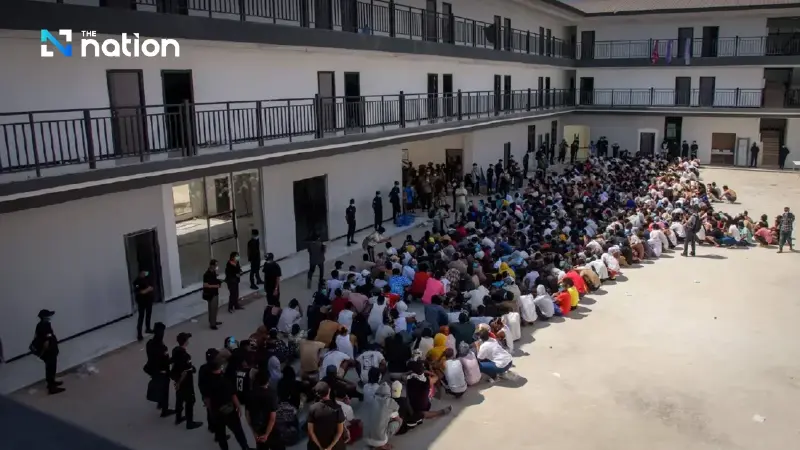


China executes 11 members of the Ming family involved in scam business. Over 20 others face prison sentences for fraud, trafficking, and gambling.
China has executed 11 members of the Ming family, who were heavily involved in fraudulent activities along Myanmar's southeastern border. According to a BBC report based on local Chinese media, these executions took place after the family was convicted of a wide range of crimes, including murder, kidnapping, fraud and running illegal gambling operations.
The Ming family was one of several criminal clans operating in Lawkai, a region that transformed from a small, poor town to a hotspot for casinos and sex work. The family’s fraudulent empire collapsed in 2023, when they were arrested and sent back to China by ethnic armed groups that had taken control of Lawkai, during clashes with the Myanmar army.
Executions send strong signal to scammers
The executions have sent a clear warning to others considering similar fraud schemes, and Chinese authorities have also released confessions from some of the arrested individuals as part of a state documentary. This documentary emphasises China’s commitment to eliminating scam networks.
These scams were often conducted online, and the victims — many of whom were Chinese nationals — lost billions of dollars in fraudulent schemes, many of them targeted by trafficked workers forced to participate in scams. According to the United Nations, hundreds of thousands of people were trafficked for these scams in Myanmar and other Southeast Asian countries.
The Ming family’s empire
The Ming family was one of the few clans in the region with mafia-like control, having risen to power in Lawkai in the early 2000s, after the armed group leaders of the city were toppled during a military operation led by Min Aung Hlaing, who later became Myanmar’s military leader after the 2021 coup.
Ming Xuechang, the head of the family, ran one of Lawkai’s most notorious scam centres, known as Tiger Villa. Initially, the family’s main sources of income were gambling and prostitution, but they eventually turned to running online fraud operations. Many victims were kidnapped and forced into scam labour.
Testimonies from freed workers reveal that inside the scam centres, conditions were harsh, with tight security and a culture of violence, including frequent beatings and torture.
Other family members face prison sentences
Along with the 11 executions, more than 20 other members of the Ming family have been sentenced to prison, with sentences ranging from 5 years to life imprisonment. These members were convicted of their roles in the family’s criminal operations, including the trafficking and abuse of workers.
The Myanmar military reported in 2023 that Ming Xuechang, the family leader, took his own life while attempting to escape arrest by authorities.
International concern over scam operations
These criminal networks have raised concerns globally, especially over the ability to regulate the growing online scam industry. The Chinese government has been working with international organisations to address trafficking and fraud, which remain major issues in the region, particularly in areas like Myanmar, Cambodia, and Laos, where Chinese influence is relatively low.
The Ming family’s downfall is unlikely to be the last, as other families involved in similar activities continue to operate across the region.
