
Corrections Department identifies new inmate suspected of monkeypox
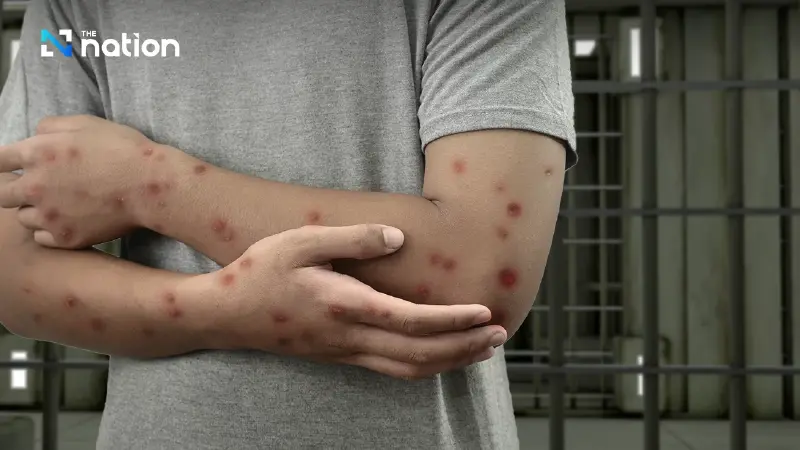


A new inmate at Thonburi Special Prison is suspected of having monkeypox. The inmate has been transferred to the hospital and high-risk prisoners are isolated to prevent spread.
On February 14, 2026, the Department of Corrections issued a statement confirming that an inmate at Thonburi Special Prison showed symptoms consistent with monkeypox and was promptly transferred to the Corrections Hospital for treatment. The inmate, who entered the prison on January 20, 2026, exhibited high fever and necrotic tissue on the foot, prompting medical staff to suspect monkeypox. The condition was later confirmed through a laboratory test, leading to immediate action.
The prison has since isolated the high-risk inmates and implemented the “Bubble and Seal” approach to prevent the spread of the virus. This includes quarantining newly admitted inmates, reviewing their medical history, and closely monitoring for symptoms such as fever, sore throat, muscle pain, back pain, swollen lymph nodes, and the appearance of fluid-filled blisters or pustules.
As of now, no other inmates have been reported with monkeypox symptoms. The Department of Corrections, Corrections Hospital, Thonburi Special Prison, the Ministry of Public Health, and the Department of Disease Control are working together to manage and monitor the situation closely. The Department of Corrections has instructed all prisons and detention centers to strictly follow the health guidelines and procedures set by the Ministry of Public Health to prevent further outbreaks.
Monkeypox is a contagious viral disease that originates from animals, especially primates and rodents, and has recently spread to humans in several countries, including Thailand. Though it shares similarities with smallpox, it is generally less severe, but still poses a health risk.
Symptoms of Monkeypox:
Early stage:
- Fever
- Headache
- Body aches
- Fatigue
- Swollen lymph nodes
Later stage (rash):
- Red rash, typically appearing on the face, arms, legs, palms, soles, and sometimes in mucous membranes such as the mouth, eyes, or genital area.
- The rash evolves into fluid-filled blisters or pustules and eventually scabs.
- The disease typically resolves on its own within 3 to 4 weeks, and individuals are no longer contagious once the lesions have scabbed over.
Transmission and Spread of Monkeypox:
- Contact with the rash or bodily fluids of an infected person
- Airborne transmission through coughing or sneezing
- Contact with animals carrying the virus
- Pregnant women can pass the virus to their babies via the placenta
- Sharing personal items contaminated with the virus, such as bed linens or towels
- Undercooked meat from infected animals
Prevention of Monkeypox:
- Avoid unprotected sex
- Wear a face mask
- Avoid contact with wild animals from areas with outbreaks
- Wash hands frequently
- Do not touch bodily fluids of infected individuals
- Ensure meat is thoroughly cooked
- Clean clothes and bedding regularly
Information on monkeypox is provided by:
Prof.Dr.Sasisopin Kiertiburanakul, Department of Infectious Diseases, Ramathibodi Hospital, Mahidol University, and RAMA CHANNEL.
