
Court acquits ‘Am Cyanide’ in third murder case over 2020 poisoning allegation
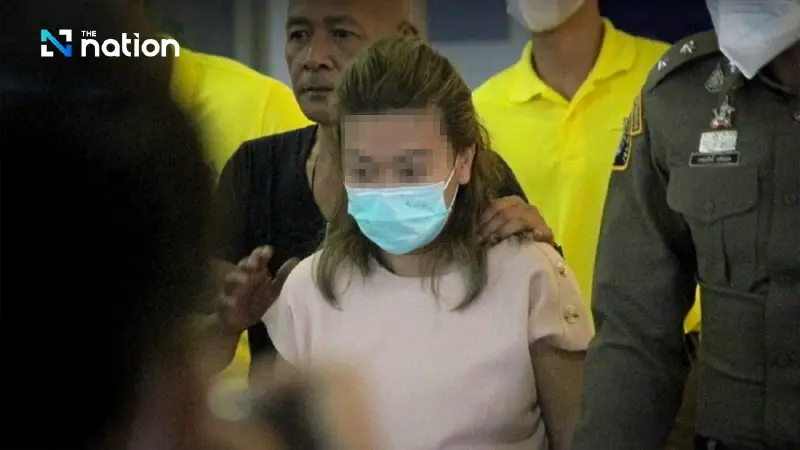


The Criminal Court acquitted Sararat “Am Cyanide” Rangsiwuthaporn in her third murder case, citing insufficient evidence linking her to cyanide possession in 2020.
The Criminal Court on Wednesday acquitted Sararat Rangsiwuthaporn, widely known as “Am Cyanide”, in the third murder case brought against her over the alleged poisoning of a female engineer in 2020, with her lawyer saying the ruling could serve as a basis for fighting other pending cases.
The ruling was delivered on Wednesday, at Courtroom 710 of the Criminal Court on Ratchadaphisek Road in Bangkok. Prosecutors from the Criminal Litigation Division 8 had charged Sararat in black case number Or.274/2568 with premeditated murder and related offences.
Court accepts cyanide exposure but finds gaps in prosecution case
The case concerned allegations that between August 22-23, 2020, Sararat had mixed cyanide into a drink and given it to 36-year-old Nittaya Kaewbuppha, causing her death from circulatory and respiratory failure. Prosecutors alleged that the motive was linked to the victim’s assets.
In its ruling, the court said witness testimony confirmed that Sararat had been seen visiting the victim at a hospital construction site in Nakhon Pathom province, and that witnesses clearly remembered her face. The court therefore found that Sararat’s claim that she had never gone to see the victim at the construction site was unsupported by evidence.
Regarding the night of the incident, one witness, who was a creditor of the victim, testified that he had visited her dormitory and saw the victim and the defendant sitting and talking together in the hall on the ground floor. The victim reportedly told him that she had pawned her car for 150,000 baht and would repay him the following day after first depositing the money in the bank. However, the witness did not actually see whether the victim had that money in her possession. He also said the victim had invited him to have dinner with the defendant, but he declined, and later learned that she had died.

The court also considered the medical evidence. The doctor who conducted the autopsy testified that it could not be conclusively determined whether the victim had died from cyanide poisoning because no test for cyanide had been carried out, as there had been no suspicion at the time that the death was linked to the substance. However, a doctor from Siriraj Hospital with expertise in toxin detection told investigators that, based on photographs of the body and the post-mortem findings, the symptoms were consistent with cyanide poisoning.
The court said the Siriraj doctor’s opinion was academically sound and consistent with the findings of the forensic pathologist, as well as with witness testimony stating that the victim had been in good health. It therefore accepted that the victim had indeed received cyanide and that her death was unlikely to have been caused by illness.
Possession evidence seen as insufficient
However, on the question of motive, the court said the evidence showed that the victim had pawned two cars to the defendant. After the victim’s death, the defendant informed the victim’s husband that the vehicles could be redeemed for 150,000 baht. The court said this left reasonable doubt as to whether the defendant had intended to unlawfully obtain the victim’s assets, as alleged by prosecutors.
The key issue, the court said, was the prosecution’s inability to prove that Sararat possessed cyanide at the relevant time. Investigators found evidence that she had ordered cyanide on August 9, 2022. But in this case, the prosecution could not establish that she had cyanide in her possession in 2020, nor how she had obtained or used it. The court said each case must be considered on its own facts.
It further ruled that judgments in other cases could not be used against the defendant in this one. Since the evidence was insufficient to prove the charges beyond reasonable doubt, the court acquitted Sararat and dismissed the petitions filed by three claimants seeking damages. It also ruled that she was not required to pay compensation. However, the court ordered that she remain in custody pending appeal.
Lawyer says ruling may shape defence in other cases
Than Nicha Eksuwanwat, Sararat’s lawyer, said the court had found the prosecution’s evidence insufficient, particularly on the issue of cyanide possession in 2020, when the victim died.
She said the court also viewed the acceptance of the cars as collateral as a normal legal right, and noted that after the victim’s death the defendant had informed people close to the deceased and allowed relatives to redeem the vehicles. As a result, the court found no clear conduct indicating robbery or unlawful seizure of property.
The lawyer said the court had therefore given the benefit of the doubt to the defendant. She added that although the court had acquitted Sararat, defendants in cases carrying the death penalty can still be held in custody during the appeal process, while prosecutors retain the right to appeal.
On the strategy for other pending cases, the lawyer said the allegations could broadly be divided into two periods: cases occurring before August 9, 2022, before evidence of cyanide purchases emerged, and cases after that date. She said each case would depend on its own evidence and the court’s assessment.
Two earlier convictions already handed down
Sararat has so far faced a total of 15 cases, including 14 murder charges and one attempted murder charge.
The Criminal Court has previously ruled in two other cases against her. In the first, involving the death of share-circle organiser Siriporn Khanwong, 33, the court sentenced her to death. In the second, involving the death of Police Senior Sergeant Major Nipa Saenchan, 38, the court sentenced her to life imprisonment.
