
Six fault lines push Thai health system closer to crisis
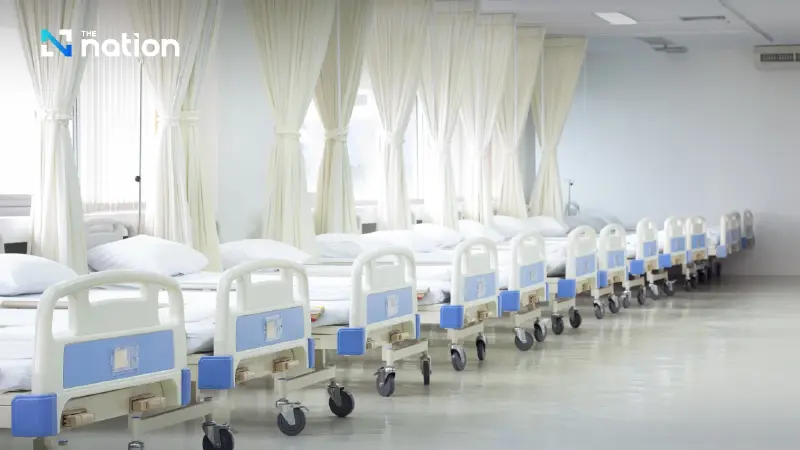


Thailand’s health system faces mounting strain as hospital losses, staff shortages and tighter budgets threaten patient access, service standards and bed capacity
Thailand’s healthcare system is facing six major pressures that are beginning to affect services, with some hospitals now at risk of having to reduce the number of beds they operate.
Hospitals in many areas are struggling with financial losses, forcing them to cut costs by limiting staff numbers and potentially reducing bed capacity. Medical personnel are also facing heavier workloads, raising concerns over service standards and patient safety. Patients, meanwhile, may find it harder to access treatment and could increasingly have to rely on referral systems to nearby hospitals, while treatment options may be confined to what can be reimbursed under existing benefit packages.
Prof Dr Somsak Tiamkao, a neurologist and director of Srinagarind Hospital at the Faculty of Medicine, Khon Kaen University, said the problems in Thailand’s health system were now approaching a critical point. He said the current situation was becoming increasingly visible to patients, as reflected in efforts to keep treatment workloads from rising further so that the amount paid by health funds per RW would remain sufficient throughout the year.
At the same time, the number of patients and the burden of illness continue to increase, while hospitals are trying to reduce spending through measures such as cutting recruitment and reducing the number of beds in service. He said these policies would directly affect patients’ access to care, while service providers would also be hit.

He summarised the likely consequences in six key areas.
1. First, workloads for medical personnel will increase because staffing levels are being limited in order to reduce organisational costs.
2. Second, patient access to treatment will no longer be as convenient as before. However, he said this is also something that should have been done long ago, because it is the right approach. A strong and efficient referral system is needed, one that gives patients confidence they will receive appropriate, timely and safe care.
3. Third, the care patients receive will have to remain within national treatment guidelines and the standards of the National List of Essential Medicines. If a hospital provides treatment that may be clinically appropriate but falls outside the essential medicines list, it cannot be reimbursed by the universal healthcare fund or the Social Security Office. As a result, hospital administrators are unable to approve treatments outside the covered benefits, because doing so would worsen financial losses.
4. Fourth, patient safety and treatment standards may be affected to some extent by lower staffing levels and by a reduction in inpatient admissions. He said this stems from a national policy aimed at keeping service volumes from rising above the previous year, in order to ensure that the closed-end budget allocation remains sufficient to pay hospitals at the promised rate. If the number of services measured in RW increases, reimbursement per RW will fall.
5. Fifth, hospitals suffering heavy losses may be forced to reduce the number of beds they operate as a way to cut costs. This would make it more difficult for patients to access care. He said such a development had never happened before and that the capacity of nearby hospitals would therefore need to be strengthened in terms of personnel, funding and equipment.
6. Sixth, more patients are likely to be transferred back to hospitals closer to home in order to reduce the costs borne by large hospitals, since the more patients they treat, the greater their losses become. He said this direction is correct in principle, but the Public Health Ministry must strengthen local hospitals so they are ready in terms of staff and medicines for patients needing continued treatment. He also called for greater use of telemedicine linking health-promoting hospitals, community hospitals and larger hospitals, as well as medicine delivery direct to patients’ homes.
Dr Somsak urged all sides to work seriously to find a solution that would ensure the long-term sustainability of Thailand’s health system, keep patients safe, allow providers to continue operating and prevent hospitals from sinking deeper into losses. He stressed that healthcare is an issue that affects everyone.
