
Doomsday Glacier collapse could put Bangkok and 7 million in flood zone
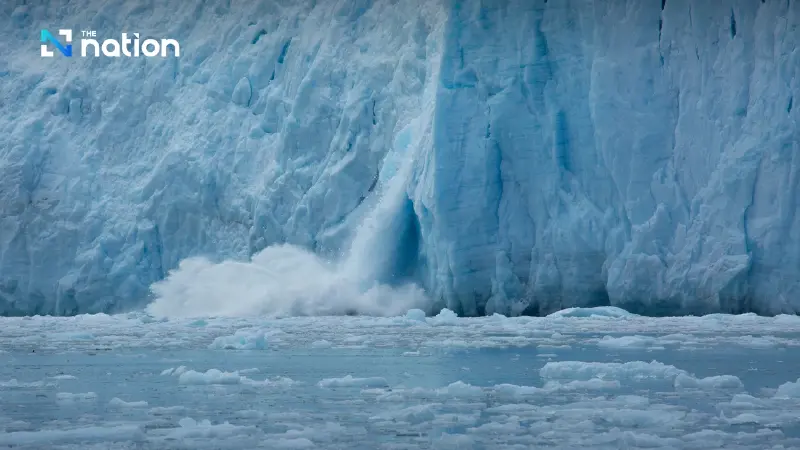


Thwaites Glacier in Antarctica is melting fast, raising sea-level risks that could flood Bangkok and surrounding areas and affect more than 7 million people.
Thwaites Glacier in West Antarctica, covering more than 192,000 square kilometres, has been dubbed the “Doomsday Glacier” because it acts as the final barrier preventing the West Antarctic Ice Sheet from flowing into the ocean. But the glacier is now melting rapidly, raising fears that many coastal cities around the world could eventually be submerged.
At present, Thwaites is losing ice mass at a rate five times faster than in the 1990s. This has been driven by an imbalance between snowfall accumulation and the volume of ice flowing into the Amundsen Sea. Each year, the glacier is estimated to lose around 50 billion to 80 billion tonnes of ice, an enormous amount even by Antarctic standards.
A model from the University of Edinburgh suggests that by 2067, the Doomsday Glacier could be losing as much as 180 to 200 gigatonnes of ice a year. That level of loss would be comparable to the amount of ice currently melting across the whole Antarctic continent, underlining how climate change may be progressing faster than previously expected.
A key reason for the glacier’s fragility lies in the landscape beneath it. The bedrock below Thwaites slopes downwards inland, creating a deep basin that allows warmer ocean water to flow beneath the ice sheet and erode it from below. These warm currents force the glacier’s grounding line to retreat and weaken the support holding the remaining ice in place.
Researchers say these deep troughs beneath the glacier are a major weak point that could trigger marine ice sheet instability. Once that process begins, the retreat could become a chain reaction that is extremely difficult to stop. The speed at which ice flows into the ocean would then increase as the glacier retreats into deeper water.
Using radar and underwater sensors, scientists have found that the Doomsday Glacier is melting much faster than they had expected. Although some data suggest the ice cliff may be more stable than initially feared, tides carrying warm water beneath the ice are continuing to open cracks and thin the glacier.
Sea-level impact
The melting of Thwaites is already contributing about 4% of global sea-level rise. While that may seem modest, global sea levels have already risen by around 23 centimetres since the late 19th century, increasing the frequency of coastal flooding and storm surges.
If Thwaites were to collapse completely, global sea levels would rise immediately by around 65 centimetres. That alone would be enough to dramatically reshape coastlines worldwide and damage vital infrastructure. Although the full process could take decades or even centuries, the effects would begin to become visible within our lifetime.

According to an analysis cited in the report, if the Doomsday Glacier were to disappear today, tens of millions of people living along coastlines would be affected. Bangkok and its surrounding areas would be among the hardest hit, with more than 7 million people exposed to flooding.

Shanghai is also identified as one of the most vulnerable cities. More than 600,000 people there already live below sea level, and if sea levels rose by just 60 centimetres, another 4.7 million residents could face flooding. The city’s delta landscape also leaves it vulnerable to land subsidence.
In India, Kolkata would see millions more people exposed to flooding, as would Ho Chi Minh City and Tokyo if the glacier disappeared today. Dhaka, the capital of Bangladesh, could see its population swell by 50 million by 2050 as rising seas drive people inland after coastal farmland is damaged by saltwater intrusion.

Even wealthy countries would face enormous costs. In the United States, flood protection for New York could cost as much as US$52 billion, while giant storm barriers at the harbour could require up to US$119 billion.
The United States also has a warning from Hurricane Katrina, which showed that flood protection systems are never foolproof. More than US$140 billion was spent on disaster recovery after that storm, and such losses could become more frequent and more severe as sea levels continue to rise. Yet people are still moving into vulnerable coastal cities such as Miami, fuelling more real estate development in high-risk zones.
Thwaites acts like a stopper holding back the wider West Antarctic Ice Sheet. If it were to collapse fully, it could pull the rest of the ice sheet down with it, potentially raising global sea levels by several more metres.
As more land ice flows into the sea, rising ocean temperatures would also cause seawater to expand, pushing sea levels even higher. This process would combine with melting from Greenland, making the overall sea-level crisis worse than Thwaites alone would cause.
For that reason, the collapse of Thwaites would not simply mean the loss of one glacier. Scientists say it could mark the beginning of the end for the entire West Antarctic ice system. They describe Thwaites as a planetary warning system now sending one of the strongest danger signals yet, even though the exact timing remains uncertain.
Some researchers have proposed climate engineering ideas, such as building underwater curtains or giant seabed barriers to block warm water from reaching the glacier. But such ideas remain highly uncertain in terms of feasibility and possible side effects on marine ecosystems.
Most scientists agree that cutting global greenhouse gas emissions remains the highest priority in order to slow ocean warming before it reaches the point where the glacier can no longer be stabilised. They warn that actions taken now will help determine what coastal cities look like in 50 or 100 years.
