
Northern, northeastern Thailand choke on PM2.5 as 40 provinces exceed safety limit
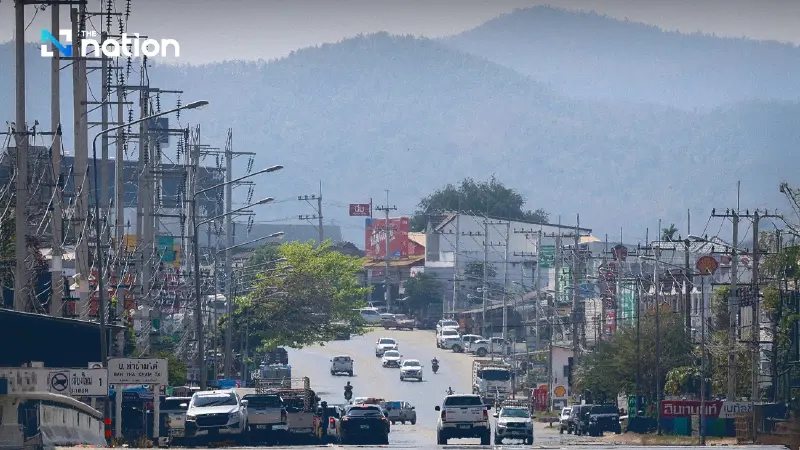


PM2.5 levels exceeded the safety standard in 40 provinces on April 17, while Thailand recorded 4,656 hotspots, with the North and Northeast worst hit.
Thailand’s Pollution Control Department reported at 5pm on April 17, 2026 that PM2.5 levels had exceeded the standard in 40 provinces, with the North and Northeast facing the most severe conditions. Thailand also recorded 4,656 hotspots on April 16, according to GISTDA satellite data.
The provinces where PM2.5 was above the standard were Chiang Rai, Chiang Mai, Nan, Mae Hong Son, Phayao, Lamphun, Lampang, Phrae, Uttaradit, Sukhothai, Phitsanulok, Tak, Kamphaeng Phet, Phichit, Phetchabun, Nakhon Sawan, Uthai Thani, Chai Nat, Sing Buri, Lop Buri, Saraburi, Ang Thong, Suphan Buri, Samut Songkhram, Bueng Kan, Nong Khai, Loei, Udon Thani, Nakhon Phanom, Nong Bua Lamphu, Sakon Nakhon, Mukdahan, Khon Kaen, Kalasin, Maha Sarakham, Roi Et, Amnat Charoen, Chaiyaphum, Yasothon and Ubon Ratchathani.
By region, PM2.5 levels in the North were above the standard in most areas, ranging from 58.2 to 238.3 micrograms per cubic metre. In the Northeast, readings also exceeded the standard in most areas, at 25.6 to 220.3 micrograms per cubic metre. In the Central and western regions, seven areas were above the limit, with readings of 28.8 to 57.3 micrograms per cubic metre. The East was generally in the good range at 17.1 to 30.9 micrograms per cubic metre, while the South also remained good at 15.7 to 23.2 micrograms per cubic metre. In Bangkok and surrounding provinces, monitoring stations run by the Pollution Control Department and the Bangkok Metropolitan Administration recorded moderate conditions at 18.4 to 37.0 micrograms per cubic metre.
Health advice issued by the authorities said the general public should monitor their health, cut back on outdoor activities or use protective equipment. People requiring special care should reduce time outdoors and seek medical advice if symptoms develop. In red-zone areas, residents were advised to avoid outdoor activity as much as possible or wear protection, and to consult a doctor if they experience health problems.
The authorities said the public can follow the latest conditions through Air4Thai.com, airbkk.com, and the Air4Thai and AirBKK applications.
GISTDA said Thailand recorded 4,656 hotspots on April 16 based on Suomi NPP satellite data from the VIIRS system. Of those, 2,697 were found in conservation forest areas, 1,206 in national reserved forests, 325 in agricultural land, 232 in agricultural reform land, 183 in communities and other areas, and 13 along highways.
Among neighbouring countries, Laos recorded the highest number of hotspots at 5,942, followed by Myanmar with 1,914, Vietnam with 745, Cambodia with 207 and Malaysia with 66.
