
PM2.5 spikes in 38 provinces as North and Northeast face health risks
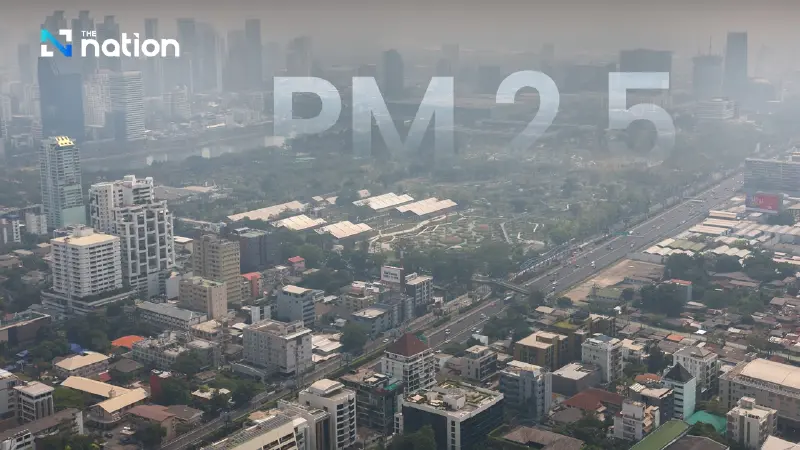


PM2.5 pollution hit red levels in 38 provinces on April 22, with the North worst affected as hotspots and cross-border haze raised fresh health concerns.
Thailand’s air quality remained a serious concern on Wednesday (April 22), with PM2.5 levels exceeding the standard in many areas, particularly in the North, where readings peaked at 125.4 micrograms per cubic metre.
According to the Centre for Air Pollution Mitigation (CAPM) at 5pm, PM2.5 levels were above the safety standard in 38 provinces nationwide.
The North, which was worst hit, recorded PM2.5 levels above the standard in most areas, with readings ranging from 43.8 to 125.4 micrograms per cubic metre. Red-level pollution was reported in several provinces, including Chiang Rai, Chiang Mai, Mae Hong Son, Lamphun and Lampang.
In the Northeast, PM2.5 levels were above the standard in most areas, with readings ranging from 22.0 to 72.2 micrograms per cubic metre.
The Central and western regions also recorded PM2.5 levels above the standard in most areas, with readings ranging from 25.5 to 60.9 micrograms per cubic metre.
In Bangkok and surrounding provinces, air quality was at a moderate level, with readings ranging from 18.7 to 33.8 micrograms per cubic metre.
The East and the South recorded very good air quality.
Authorities said the high number of hotspots remained the main cause. Data from the Suomi NPP satellite, using the VIIRS system on April 21, showed 1,284 hotspots across Thailand.
The highest number was found in protected forest areas, with 709 hotspots, followed by national reserved forests with 299 and agricultural land with 174.
Neighbouring countries also continued to record high numbers of accumulated hotspots. Myanmar reported the highest total, at 1,810, followed by Laos and Vietnam, contributing to transboundary haze affecting Thailand.
In the seven-day outlook for April 23 to 29, authorities warned that 17 northern provinces would require close monitoring, with PM2.5 levels expected to rise further between April 23 and 25. Pollution in the Central and western regions is also forecast to increase steadily throughout the week.
By contrast, conditions in Bangkok, surrounding provinces and the Northeast are expected to improve gradually, with dust levels showing signs of easing.
With PM2.5 levels reaching the red category, which poses health risks, the public has been advised to reduce the time spent outdoors. Those who need to go outside are urged to wear N95 masks.
Vulnerable groups, including children, older people, pregnant women and those with underlying health conditions, have been told to avoid going outdoors altogether. Anyone experiencing symptoms such as coughing, breathing difficulties or eye irritation should seek medical advice immediately.
The public can follow the latest air quality updates via the Air4Thai and AirBKK websites and applications, while hotspot updates are available through GISTDA’s disaster monitoring platform.
