
Oil storage nears capacity as Energy Ministry weighs Jet A-1 export easing
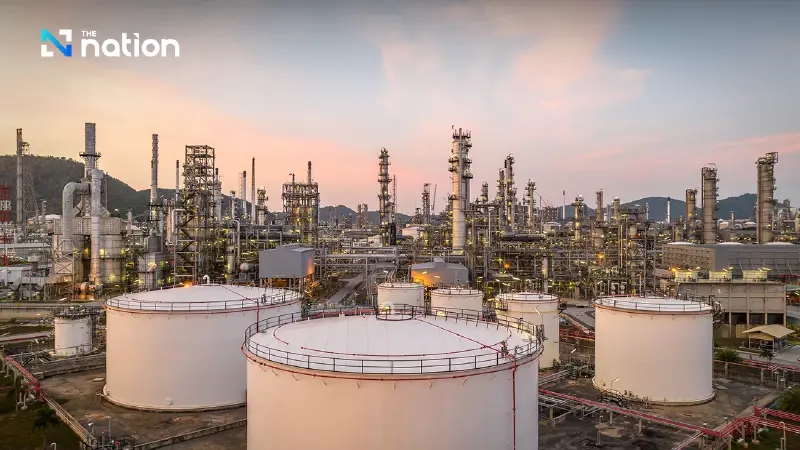


Thailand may relax Jet A-1 export restrictions after fuel storage tanks neared capacity, as refineries continue running at full output while diesel demand weakens.
Reports indicate that Thailand is beginning to face a problem of oil storage tanks nearing capacity, with limited space left, as refineries continue operating at full production. Some refineries are said to be running at more than 100% of capacity, as high as 110%, in order to produce enough fuel to meet public demand in line with government policy.
At the same time, diesel demand has fallen sharply. During the early stage of the Middle East war, domestic diesel consumption averaged as high as 84 million litres per day, compared with about 67 million litres a day under normal conditions. Refineries would usually produce about 74 million litres a day, which would be enough to meet regular demand.

However, at some points during the Middle East conflict, diesel demand surged to as much as 100 million litres per day. Now, though, demand has dropped sharply, averaging only about 50 million litres a day for the past two to three weeks. During parts of the Songkran holiday, daily diesel consumption fell to around 32 million litres, even though all six of Thailand’s refineries have continued to operate at full capacity, producing an average of 78 to 84 million litres a day.
This has left output exceeding demand by roughly 27 to 30 million litres a day for some time, causing oil stocks to build up to the point where tanks are close to overflowing. IRPC’s refinery is expected to reach full capacity by the end of April, while the GC and Thai Oil refineries are expected to fill their tanks in early to mid-May.

As a result, the country’s six refineries are seeking a relaxation of the government’s ban on exports of all fuel products, including petrol, gasohol, base gasoline, high-speed diesel and Jet A-1 aviation fuel.
The initial request is for permission to export Jet A-1 first, as this would not affect the needs of the general public, who mainly use petrol, gasohol and diesel. More importantly, some Asean countries, such as Vietnam and the Philippines, are beginning to face shortages of aviation fuel.
Thailand, by contrast, has sufficient production capacity and is now beginning to see excess supply. In 2025, average domestic consumption of Jet A-1 stood at 17.23 million litres per day.

Energy Minister Akanat Promphan said the ministry was now considering a review of oil export measures after being informed by refiners that storage tanks were close to overflowing. However, he insisted that diesel production must not be reduced and that diesel exports would remain suspended to avoid another shortage.
He said the ministry may start by relaxing export restrictions on aviation fuel, particularly Jet A-1, as neighbouring countries are now facing jet fuel problems. This, he said, presents a good opportunity for Thailand to earn export income from aviation fuel, which could then help support diesel management while also freeing up more storage space for diesel.
A conclusion is expected soon, as the ministry needs to consider the overall picture carefully to ensure that the oil situation does not become problematic again.
