
Police raid Koh Phangan villas, law office in foreign nominee crackdown
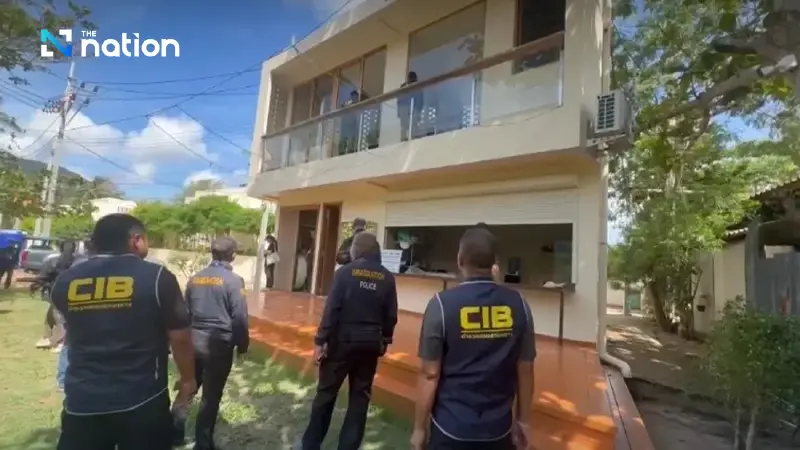


Authorities raided luxury villas, a law office and shops on Koh Phangan as Thailand steps up scrutiny of suspected foreign nominee property and tourism businesses.
Authorities raided luxury villas, a law office and shops on Koh Phangan on Wednesday as part of a widening crackdown on suspected foreign nominee schemes used to control property and tourism businesses on the island, ahead of Prime Minister Anutin Charnvirakul’s inspection visit to Surat Thani and Phuket.
Officials from several agencies launched the operation on the morning of May 13, targeting at least five key locations on the island. The targets included a law office allegedly serving as a coordination centre to help foreign nationals acquire or control real estate, as well as luxury villas and commercial premises.
Law office suspected of supporting nominee property deals
Investigators are examining whether legal and corporate structures were used to allow foreign investors to control property through Thai nominees.
The operation is part of the government’s broader effort to tackle nominee arrangements, in which Thai nationals are allegedly used as front shareholders or legal owners to help foreigners operate businesses or hold assets in sectors restricted under Thai law.


Luxury villa ownership under investigation
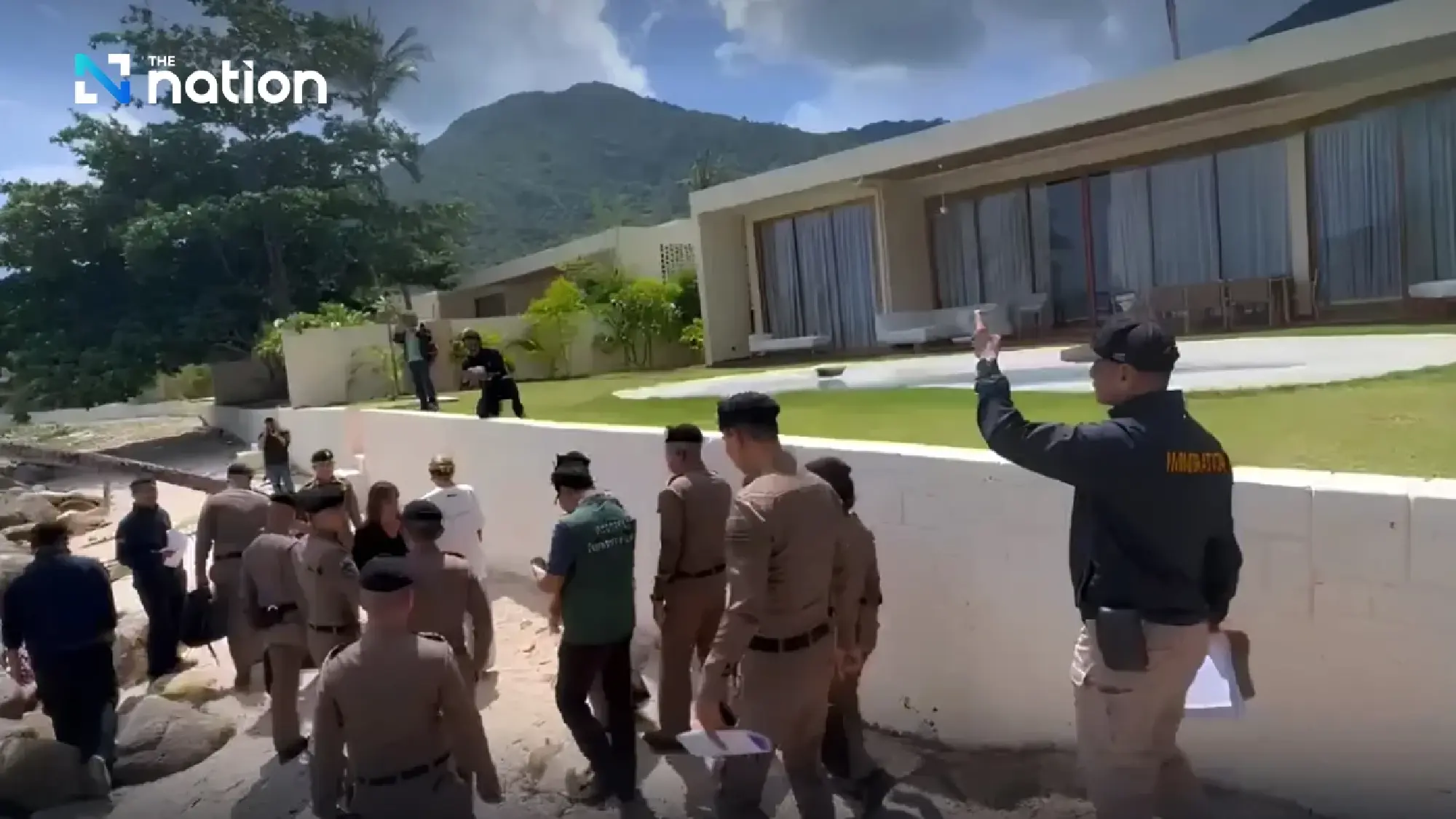
One of the locations searched was a luxury villa complex in Moo 7, Koh Phangan subdistrict, Surat Thani province.
The property, comprising around six villas, is owned by a company and is now being examined to determine whether its ownership rights were legally obtained.
The searches were overseen by Pol General Samran Nualma, deputy national police chief, and Pol Lieutenant General Noppasilp Poolsawat, commissioner attached to the Office of the National Police Chief.
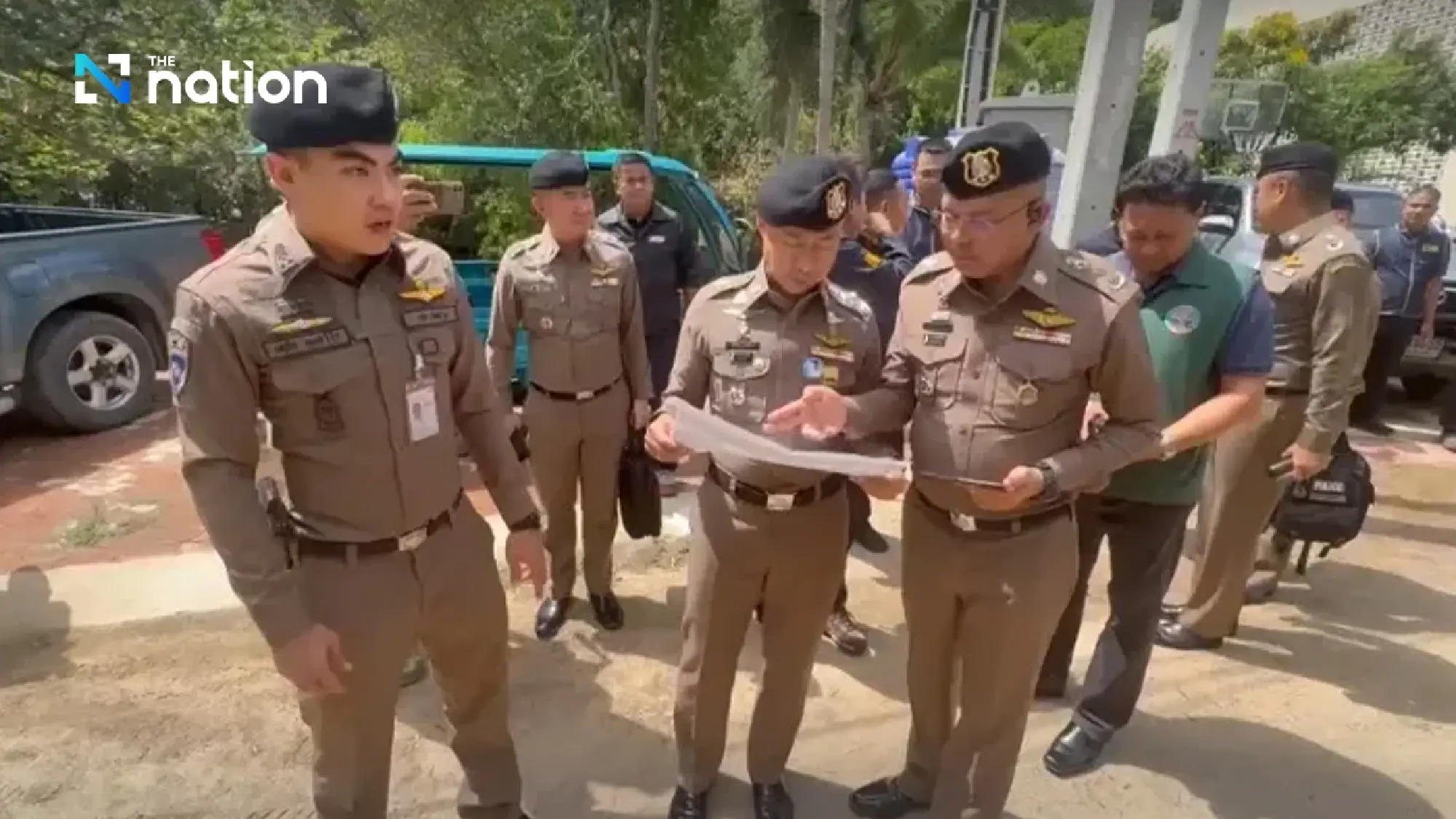

DSI and DBD screen more than 11,400 firms
The raids come as the Department of Special Investigation and the Department of Business Development step up audits of businesses on Koh Phangan and nearby Koh Samui.
Authorities are reviewing more than 11,400 companies in Surat Thani, with the DSI flagging 34 companies on Koh Samui and Koh Phangan for deeper investigation. Each of these companies reportedly holds assets worth more than 100 million baht.
The main focus is on real estate, hotels operating without permits and tourism-related businesses that may be restricted to Thai nationals under the Foreign Business Act.
Financial checks target Thai shareholders
Officials are also tightening financial scrutiny of Thai shareholders in companies with foreign investment.
The DSI is applying a “financial credibility” test by comparing the reported income of Thai shareholders with their multi-million-baht investments. The aim is to determine whether these shareholders genuinely have the financial capacity to invest, or whether they are merely lending their names to foreign operators.
The crackdown also follows recent enforcement actions against hotels on Koh Phangan. On May 10, local police and a joint task force arrested several people for allegedly operating hotels without licences. Some of the premises were also suspected of using Thai nominees to bypass ownership restrictions.
Authorities are also checking for labour violations, including foreign nationals working without valid permits or performing jobs reserved for Thai citizens.

Why Koh Phangan is under scrutiny
Koh Phangan has drawn particular attention because of the high level of foreign participation in local companies.
According to DBD data, about 67% of registered companies on the island — 3,213 out of 4,761 — involve foreign investment. The largest groups of investors are Israeli, accounting for 22%, followed by French at 13% and British at 11%.
PM visit adds pressure to crackdown
The raids took place ahead of Prime Minister Anutin’s visit to Koh Phangan and Phuket to follow up on problems involving foreign nationals conducting business through nominee structures.
Officials say the crackdown is aimed at protecting local businesses, preventing illegal control of land and restricted businesses, and ensuring that foreign investment complies with Thai law.
The government has stressed that legitimate foreign investment remains welcome, but warned that nominee arrangements, unlicensed businesses and illegal labour practices will face tougher enforcement.
