
Suphachai urges Thailand to build AI Nation and tech hub
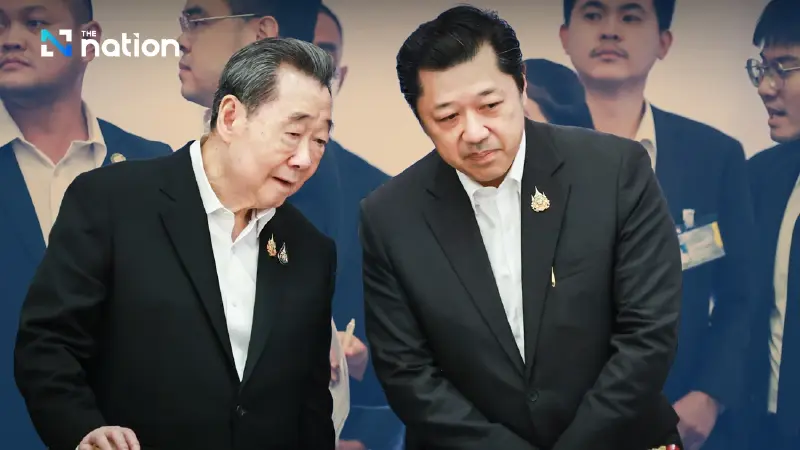


Suphachai Chearavanont urges Thailand to build an AI Nation through startups, talent, digital infrastructure and AI government
Suphachai Chearavanont, senior vice-chairman of Charoen Pokphand Group and chairman and chief executive officer of Arise Ventures Group, has urged the government to accelerate the creation of an AI Nation and position Thailand as a technology and innovation hub for ASEAN.

Suphachai presented his vision to the government on May 15, 2026, at “The Listening Forum: Voices to the PM – Entrepreneurs Speak, Government Listens” at Government House.
He said Thailand is now at a critical turning point and must quickly build a new economic structure based on technology, innovation and human-capital development if the country is to compete in the age of AI and a new geopolitical landscape.
Startup ecosystem and human capital
Suphachai said the most important starting point is to build a startup ecosystem and develop human resources.
He proposed that Thailand support seed funds and give younger generations opportunities to experiment with new ideas, which could grow into the country’s future small, medium and large businesses.
He also called for a major upgrade of Thailand’s education system by making AI, computer science and digital technology core subjects from the early stages of learning.
This, he said, should be done alongside efforts to instil AI governance and responsible technology use.
“Thailand today has more than 2 million undergraduate students and more than 9 million students in the basic education system. If we can upgrade AI and technology skills for the younger generation, Thailand will make a huge leap in human resources,” Suphachai said.

Digital infrastructure for young people
Suphachai also proposed that Thailand rapidly develop cloud platforms and digital infrastructure that can help screen inappropriate content and support creative content.
He said children and young people should have broad access to the internet, computers and technology learning.
Vocational education should also be upgraded and linked with the future digital economy.
Drawing global talent to Thailand
Another key proposal was to attract high-quality talent from around the world.
Suphachai said Thailand has strong potential to become a Global Talent Destination, bringing in skilled people in fields where the country still faces shortages.
These could include specialists in future industries, advanced technology and high-demand sectors who can help build Thailand’s capabilities, introduce new technologies, create jobs and generate a new economy.
He said Thailand would need to design the right incentives, including tax measures, quality of life, an innovation ecosystem and career opportunities.
“Thailand has strengths in food, tourism, culture and quality of life, which are admired by people around the world. If we have the right support system, Thailand can attract a large number of world-class talents in the long term,” Suphachai said.
He added that attracting people with advanced knowledge and high-level skills would become an important mechanism for building a new economy and raising Thailand’s competitiveness.
From digital government to AI government
On technology, Suphachai said the world is moving from Digital Government towards AI Government, a shift that will rapidly transform how countries are run.
He cited Estonia as an example of a country that has built a world-class Digital ID system and innovation ecosystem despite having a population of only about 1.37 million.
Suphachai said that if Thailand succeeds, it could move from E-Government towards AI Government and potentially become one of the first countries in the world to do so.
Data centres, hyperscalers and advanced technology
Suphachai said Thailand should seize the opportunity created by the global wave of investment in data centres and AI infrastructure.
He proposed that Thailand set conditions requiring hyperscalers investing in the country to establish research and development centres linked with leading Thai universities.
These centres should help develop high-tech industries, from AI to semiconductors.
He also urged the government to support tax incentives, researchers’ salaries and the hiring of Thai workers in advanced technology fields, similar to Singapore’s approach.
Such measures, he said, would help attract global technology companies, research work and talent to Thailand, while pushing the country towards becoming a regional centre for education, research and technology.
Thailand’s geopolitical advantage
Suphachai also said Thailand has a strong geopolitical advantage because of its central location in the region, linking China, the Indian Ocean, Malaysia and Singapore: areas with enormous combined economic value.
If Thailand can upgrade its infrastructure in logistics, trade and digital connectivity, he said, the country could become a regional hub for trade, finance and the digital economy in the future.
At the same time, he said Thailand must maintain stability and balance among major powers in an era of geopolitical volatility, turning “crisis” into “opportunity”.
This includes accelerating the development of energy independence, clean energy and the green economy, which he said would become new economic engines and create important opportunities to raise Thailand’s long-term competitiveness.
“The world is changing very quickly. Countries that can develop people, technology and ecosystems that attract innovation first will be the countries with an advantage in the future,” Suphachai said.
He added that Thailand has the potential to become a regional hub for the economy, technology and innovation if all sectors work together seriously and continuously.

