
NIDA Poll: Thais urge Education Ministry to end hidden school costs, tackle inequality
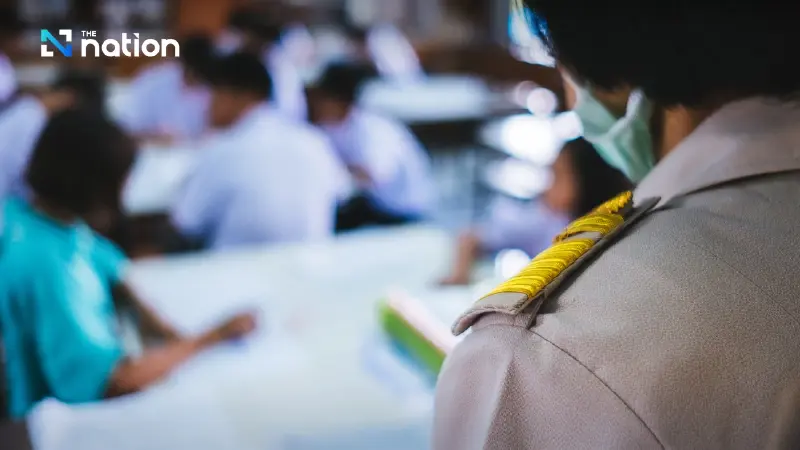


A new NIDA Poll shows Thais want free education to be genuinely free, with hidden school costs and unequal school quality topping public concerns ahead of the 2026 school term.
Thais are calling on the Education Ministry to make free education genuinely free, as hidden school costs and unequal school quality remain the public’s biggest concerns ahead of the new academic year, according to a new NIDA Poll.
The survey found that 35.42% of respondents want the Education Minister to ensure that free education carries no hidden expenses within one year.
At the same time, 35.04% said the most urgent issue the government must address is inequality in education quality, especially the gap between local schools and well-known schools in urban areas.
The poll, titled “Hopes for the new 2026 school term: Voices to the Education Minister on the mission to tackle inequality”, was conducted by the NIDA Poll Centre at the National Institute of Development Administration in collaboration with Thailand Education Partnership (TEP).
The survey was carried out from April 30 to May 5, 2026, among 1,310 people aged 18 and over across the country.
Hidden costs top public demands
When asked what they want the Education Minister to push forward within one year, the largest group of respondents, at 35.42%, said free education must be truly free, with no hidden expenses.

This was followed by 13.51% who wanted the ministry to scrap overlapping projects and reduce teachers’ paperwork burden.
Another 12.29% called for the curriculum to be redesigned on a competency basis to prepare children for a technology-driven world.
Meanwhile, 9.08% wanted education budgets to be allocated according to local needs, especially for small schools and schools in remote areas.
A further 8.70% supported the establishment of a Human Capital Superboard to better connect education with labour market needs, helping students secure jobs and income after graduation.
Other priorities included assessing students based on outcomes rather than grades, expanding the “One District, One Education” scholarship programme to every district, and reducing the number of children outside the education system to zero under the Thailand Zero Dropout policy.
Inequality seen as most urgent problem
On the issue the government must urgently solve to ease the burden on parents and children, 35.04% of respondents cited inequality in school quality.
They said schools near home are often not as good as famous schools in urban areas, forcing many families to spend more or compete for access to better institutions.
The second-biggest concern, cited by 24.50%, was that children study too hard but cannot apply what they learn in daily life.
Another 23.59% pointed to student safety and mental health in schools, including bullying, drugs and stress.
Teacher workload was also a major concern, with 15.95% saying teachers have too many duties, leaving them with insufficient time to teach or care for students properly.
Public still divided on confidence in Thai education
The survey found that public confidence in the Thai education system remains mixed.
Asked whether the current education system can create a good and secure future for children, 41.45% said they were fairly confident.
However, 29.77% said they were not very confident, while 11.53% said they had no confidence at all, citing reliance on private tutoring or the need for children to struggle on their own.
Only 17.25% said they were very confident, saying they believed today’s schools could take good care of children and teach them well.
Schools seen as only ‘fairly good’ at preparing children
When asked whether current schools and teaching methods can help Thai children think critically, work effectively and live in the modern world, 46.41% of respondents said they were fairly good.
However, 33.89% said they were not very good, arguing that schools still focus too heavily on memorisation and fail to equip children with practical skills for work.
Another 8.40% said the system could not meet modern needs at all, while 10.99% said schools were doing very well in preparing students for work and life.
Jobs after graduation seen as clearest sign of progress
Asked what would clearly show that the government had genuinely improved Thai education, 28.78% said Thai students should graduate and find jobs in their field, avoid unemployment and receive appropriate salaries.
Another 16.64% said Thai children should be able to communicate in English and compete with children from other countries.
For 14.81%, real improvement would mean teachers having more time to devote fully to teaching, instead of being burdened by paperwork or other duties.
Meanwhile, 14.35% said children should be happy going to school and not suffer stress or depression from studying.
Another 14.05% said parents should not have to borrow money or pay high costs to get their children into famous schools.
A further 6.10% said news about school violence, teachers harming students or other school-related problems should decline clearly.
Poll conducted nationwide
NIDA Poll said the survey used probability sampling from its Master Sample database and multi-stage sampling. Data was collected through telephone interviews, with a margin of error of no more than five percentage points at a 97% confidence level.
The sample covered people across all regions, education levels, occupations and income groups.
Of the respondents, 8.55% were from Bangkok, 18.70% from the Central region, 17.79% from the North, 33.28% from the Northeast, 13.82% from the South and 7.86% from the East.
By gender, 47.94% were male and 52.06% were female.
