
US confirms first evidence of H5N1 bird flu spread from cats to humans
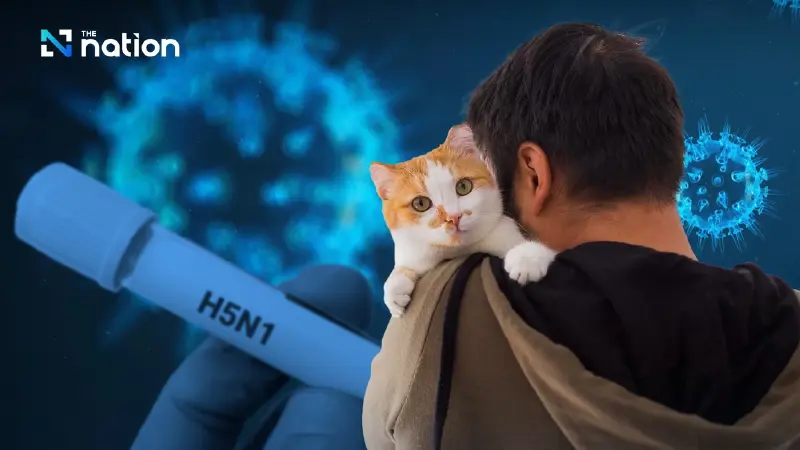


The US agency says 19 domestic cats in Los Angeles County became severely ill after consuming raw animal products, with one veterinary professional showing evidence of infection.
- The US CDC has confirmed the first evidence of H5N1 bird flu transmission from a domestic cat to a human in Los Angeles County.
- The outbreak among the cats was traced to them being fed H5N1-contaminated raw animal products, such as raw milk and meat.
- A veterinary professional contracted the virus after having close contact with a sick cat while not wearing personal protective equipment (PPE).
- Officials are warning pet owners to avoid feeding raw animal products to pets and advising veterinary personnel to use strict PPE when handling animals with flu-like symptoms.
The US Centres for Disease Control and Prevention (CDC) published a report on Thursday (May 7, 2026) setting out official information on evidence of H5N1 bird flu infection spreading from cats to humans between November 2024 and January 2025.
The report found that 19 domestic cats in Los Angeles County became severely ill with serious respiratory, liver and neurological symptoms.
Of these, 14 cats died or had to be euthanised, and tests found that nine cats were positive for H5N1 bird flu.
Follow-up of 139 people who had been in close contact with the infected cats, including pet owners and veterinary personnel, and blood testing of 25 volunteers found that one veterinary professional had contracted H5N1, despite showing no signs of illness.
Information from all the cat owners pointed to the same cause: they had fed their cats raw animal products, such as raw milk, raw meat or raw pet food.
Some of the products were found to be contaminated with H5N1.
The veterinary professional identified above had close contact with a sick cat while working, without wearing eye protection or a face mask as personal protective equipment (PPE).
Initial laboratory test results from the cats stated only that the infection was “unsubtypeable influenza A”.
As a result, veterinary officials were not aware of the zoonotic risk until the strain was later confirmed by public health agencies.
The incident is regarded as the first serological evidence indicating the possibility of H5N1 bird flu transmission from domestic cats to humans.
It also confirms that feeding pets raw meat or raw milk significantly increases the risk of H5N1 infection and could lead to transmission to humans.
Veterinary medical personnel and veterinarians should strictly wear PPE when caring for animals with symptoms consistent with the disease.
Pet owners should avoid feeding pets any raw animal products, and if a cat develops unusual respiratory or neurological symptoms, they should promptly consult a veterinarian and report the animal’s feeding history.
The detection of evidence of H5N1 bird flu infection spreading from cats to humans is highly significant for public health surveillance, as it occurred during a seasonal influenza outbreak involving H3N2, which could increase the risk of viral reassortment and the emergence of a new strain capable of spreading from human to human.
Chanlada Harnonta
