
Seismic warning — Seas and storms may raise quake risks, study warns
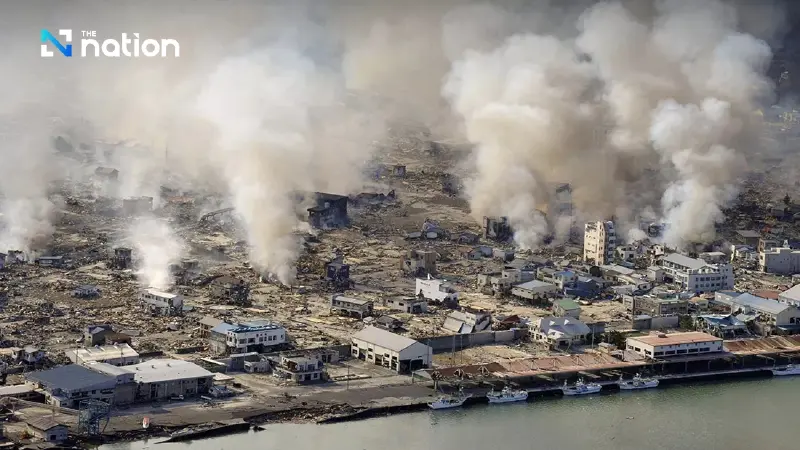


Rising seas and stronger storms could add pressure to faults, raising earthquake-related risks in coastal cities, researchers warn
Scientists are warning that global warming could add a new and under-recognised layer of risk to earthquake-prone coastal regions, as rising sea levels and more powerful storms increase pressure on faults beneath the Earth’s surface.
The warning does not mean the world is suddenly experiencing more earthquakes, nor does a short-term rise or fall in seismic activity signal that a major quake is imminent. The US Geological Survey says temporary fluctuations in earthquake numbers are part of natural variation, while the growing number of recorded quakes in recent years is largely due to more seismic instruments and better detection of small events.
The National Earthquake Information Center now locates about 20,000 earthquakes around the world each year, or roughly 55 a day. Long-term records since around 1900 show that the planet typically experiences about 16 major earthquakes annually, around 15 in the magnitude-7 range and one at magnitude 8.0 or higher. Some years exceed that average, such as 2010 with 23 major earthquakes, while others fall below it, including 1989 with six and 1988 with seven.

The deeper concern raised by new research is not that climate change is replacing tectonics as the cause of earthquakes, but that it may interfere with the seismic cycle in areas already under stress.
A study by researchers from the GFZ German Research Centre for Geosciences and the University of Southern California, published in Seismological Research Letters in 2024, argues that global warming could increase earthquake hazards through rising sea levels and cascading effects. The researchers point to two main drivers: the steady rise of global sea levels and the increasing intensity of extreme weather events, including strong storms.
Earthquakes occur when rock masses suddenly slip along faults, releasing energy that has built up over long periods as tectonic plates move. This process repeats over years, decades or even centuries, forming what scientists call the seismic cycle.
The movement of tectonic plates is driven by deep geological forces, including mantle convection, ridge push and slab pull. The British Geological Survey notes that research points to slab pull as a major force behind most plate movement, while ridge push also plays an important role. At plate boundaries, faults form as plates move apart, collide or slide past one another, creating the conditions for earthquakes.
Climate change may add pressure to that system. As land ice melts in Greenland, Antarctica and other regions, sea levels continue to rise. According to figures cited by GFZ, the rate of sea-level rise increased from about 1.4 millimetres per year between 1901 and 1990 to as much as 3.6 millimetres per year between 2006 and 2015. By 2100, global sea levels are projected to rise by around 0.43 to 0.84 metres compared with the 1986-2000 average.

That extra water does more than reshape coastlines. Researchers say higher sea levels increase hydrostatic pressure beneath the surface, adding stress to tectonic faults in areas covered by seawater. Even small changes may matter where a fault is already close to rupture.
Prof Dr Marco Bohnhoff, lead author of the study and head of GFZ’s geomechanics and scientific drilling section, said sea-level fluctuations of only a few decimetres can be enough to trigger earthquakes. The conclusion is based partly on observations from human-induced seismicity, including water injection for oil, gas and geothermal energy, as well as changes linked to reservoirs and Earth tides.
Coastal regions are considered especially vulnerable because many major faults and subduction zones lie near the sea. They are also home to about 40% of the world’s population, including fast-growing urban areas and megacities such as San Francisco, Los Angeles, Istanbul and Tokyo-Yokohama.
The risk is not limited to ground shaking. Researchers warn that climate-related stress on faults could worsen cascading hazards, including landslides, tsunamis and liquefaction, especially in low-lying coastal areas with soft soils and critical infrastructure. Dr Patricia Martínez-Garzón of GFZ said such climate-linked earthquake hazards should be considered in the next generation of seismic hazard maps.
Prof Yehuda Ben-Zion of the University of Southern California, a co-author of the study, also warned that stronger and more frequent storms could make coastal areas more susceptible to landslides, tsunamis and liquefaction during seismic shaking. The researchers called for better monitoring in regions experiencing rapid ice melt, such as Greenland and glacier zones, as well as more detailed assessment of high-risk coastal areas.
The study’s broader message is that earthquake planning can no longer treat climate change as a separate issue. While tectonic forces remain the fundamental cause of earthquakes, rising seas and stronger storms may alter the timing and impact of some events, particularly where faults are already near the end of their seismic cycle.
Scientists say reducing greenhouse-gas emissions, improving earthquake monitoring and designing more resilient infrastructure will be critical to lowering long-term risk in a warming world.
References: GeoScienceWorld, BGS, USGS
