
Global heating threatens life expectancy and economic stability
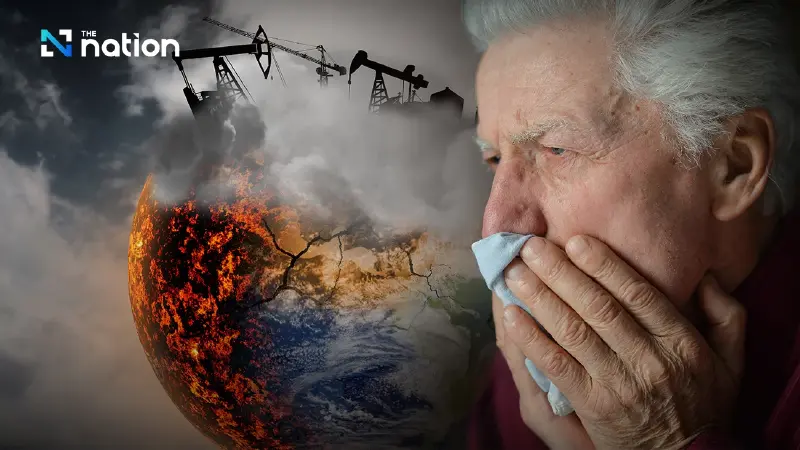


Rising heat is emerging as a major threat to life expectancy, public health systems and economic resilience in ageing societies such as Thailand
Humanity has spent more than a century pushing life expectancy steadily upwards, lifting the global average from just 32 years in 1900 to around 73 years today, thanks largely to vaccines, medical advances and stronger public health systems.
But that long-running achievement is now being shaken by the intensifying effects of global heating.
The world is moving from an era defined by longer lives into one in which simply living well is becoming harder, as extreme heat emerges as a silent killer. The World Health Organization estimates that between 2030 and 2050, climate change will cause around 250,000 additional deaths each year from malnutrition, malaria, diarrhoea and heat stroke.
The greatest risks are expected to fall on the most vulnerable groups. Older people face rising exposure to cardiovascular illness, while children are increasingly at risk from worsening air pollution that can affect both lung and brain development.
This growing threat is also exposing a costly longevity gap between greener and greyer communities. Data suggests that people living in wealthier neighbourhoods with more green space may live nearly a decade longer than those in overcrowded, heat-stressed districts.
The result is a deepening form of health inequity, in which environmental conditions increasingly shape survival itself.
For Thailand, the challenge is especially acute. The country has already entered a fully aged society, meaning climate-related health risks are likely to place even heavier strain on national systems.
Public healthcare is being pulled in two directions at once: it must cope with a rapidly expanding elderly population while also confronting new and recurring diseases linked to climate instability.
Evidence suggests Thailand ranks among the more exposed countries globally.
In health terms, data from the Department of Health indicates that in 2024 many parts of Thailand experienced heat index levels classified as “extremely dangerous”, with heat stroke deaths showing a significant upward trend.
The economic toll could also be severe. Research cited from the International Labour Organization suggests that by 2030 Thailand could lose 1.2% of total working hours because of heat, translating into substantial economic damage, particularly in construction, agriculture and tourism.
At the same time, climate conditions are making infectious disease control more difficult. Reports from the Department of Disease Control show that rising temperatures and irregular rainfall are expanding the transmission zones of dengue fever and malaria, making outbreaks harder to contain than in the past.
Against this backdrop, a new strategic idea is beginning to take shape: climate-resilient longevity.
The world is no longer focusing only on the number of years people survive, but on how to create years of life that remain resilient in a harsher climate. That shift is becoming a major challenge and opportunity for business and society alike.
The so-called longevity economy is expected to grow far beyond walking sticks or dietary supplements. It may increasingly include smart housing designed to reduce heat exposure, health insurance products that cover pollution-related risks, and precision agriculture technologies aimed at protecting food security.
Infrastructure will also need to change. Hospitals and office buildings must adapt through renewable energy systems and designs capable of withstanding extreme weather, allowing businesses and essential services to continue operating even during disasters.
This also points to a broader policy convergence. Ageing society strategies and net-zero policy can no longer be treated as separate agendas. Expanding urban green space is not simply about beautification. It is increasingly tied to reducing hospital admissions, easing pressure on the healthcare system and improving workers’ quality of life.
Every tonne of emissions cut and every degree of warming prevented is no longer just an act of environmental responsibility. It is an investment in human longevity.
If societies want children born in 2026 to still be living well in 2106, the planet must remain a safe and healthy home, not an overheated world that burns through both public health and economic stability at the same time.
