
Anutin ducks question over Saksayam case after NACC drops asset complaint
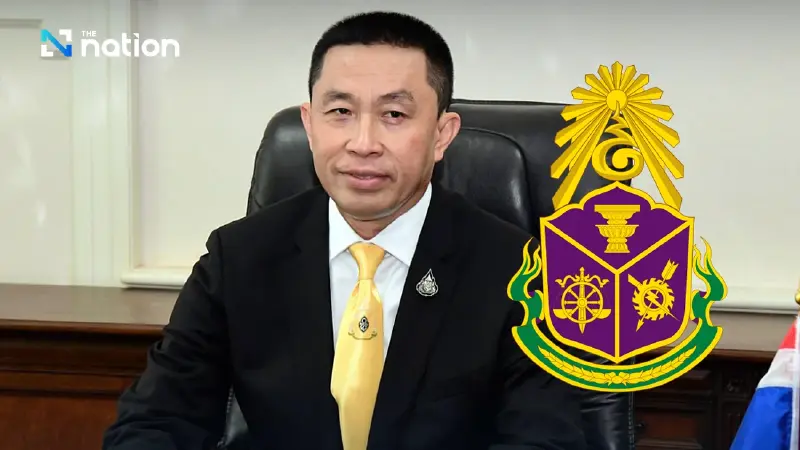


Anutin refuses to comment after the NACC drops an asset declaration complaint against Saksayam, despite a prior Constitutional Court ruling over nominee-held shares
Prime Minister and Interior Minister Anutin Charnvirakul refused to answer questions on Tuesday over the National Anti-Corruption Commission’s decision to dismiss a complaint against Saksayam Chidchob, despite a previous Constitutional Court ruling that found the former transport minister had used a nominee to hold shares.
Speaking at the Interior Ministry after chairing a meeting on key ministry missions and issuing policy instructions to senior officials, the Bangkok governor and provincial governors nationwide, Anutin declined to respond when reporters asked about the NACC’s reported decision to drop the case involving Saksayam’s asset and liability declaration.
The complaint concerned allegations that Saksayam had falsely declared his holding in Burijarearn Construction Limited Partnership.
When asked whether criticism from the People’s Party that the case reflected double standards, especially when compared with legal action involving 44 former Move Forward MPs, Anutin replied only: “We agreed already that we would not do a walking interview,” before immediately leaving the ministry.
The issue has drawn particular attention because the Constitutional Court previously ruled against Saksayam in a case centred on Burijarearn Construction.
The court found that he had concealed his interest in the business through a nominee arrangement, and he was removed from office as a result.
That earlier ruling has become central to the latest criticism. Questions are now being raised over how the NACC could dismiss the complaint when the Constitutional Court had already pointed to nominee-held shares and referred to financial transactions allegedly used to create the appearance of a genuine share sale.
The renewed controversy has also prompted calls for greater transparency.
Some legal observers believe the case files should be disclosed under the Official Information Act so the public can examine how the NACC reached its conclusion after the case had already been dismissed.
They argue that once proceedings have ended, disclosure would no longer undermine enforcement and could instead help restore public confidence.
One legal view says publication of the full investigation record could help determine whether the NACC’s handling of the case was consistent with the evidentiary standard established by the Constitutional Court, while still allowing sensitive personal information, such as witness identities, to be redacted.
The same view notes that if disclosure is refused, applicants could appeal to the Official Information Board or pursue the matter through the Administrative Court.
Beyond the immediate question of Saksayam’s asset declaration, the controversy is also being framed as a broader test of institutional credibility.
The debate is no longer only about one politician’s conduct, but about whether Thailand’s independent anti-graft bodies can still command public trust in high-profile and politically sensitive cases.
